For those interested, here’s a fun Do Good Conversations with Boise Radio Hannah and Greg that just aired, and was recorded a few weeks ago… good timing and fun discussions about El Niño, Lost River basins, aquifer recharge and more ! Greg keeps it simple and easy to understand while Hannah keeps the conversation rolling and flowing like our weather…
Author: Ron Abramovich
ABOUT ME Ron Abramovich is a retired Idaho Water Supply Specialist who still watches the snow, weather and flow.
El Nino Update
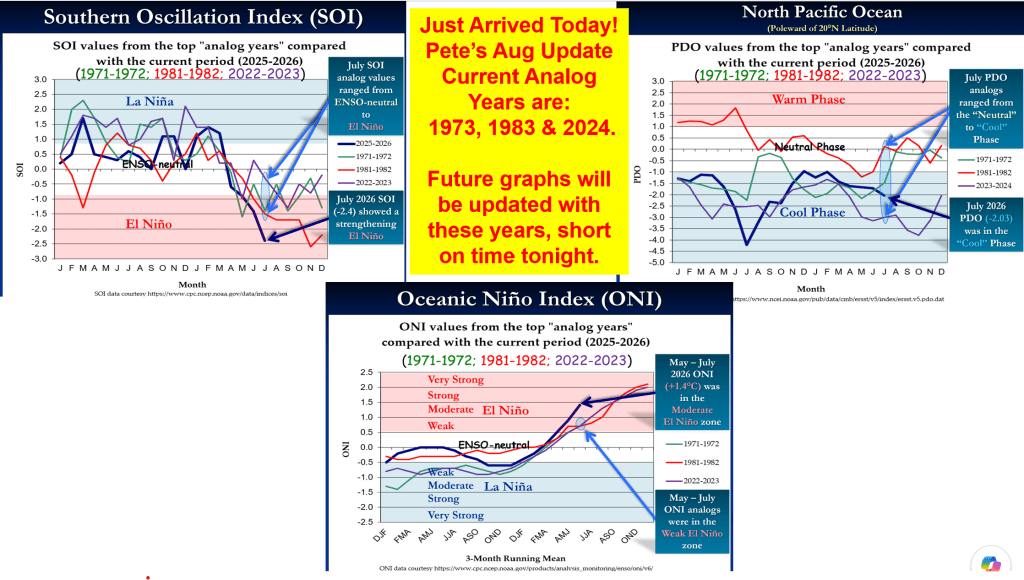
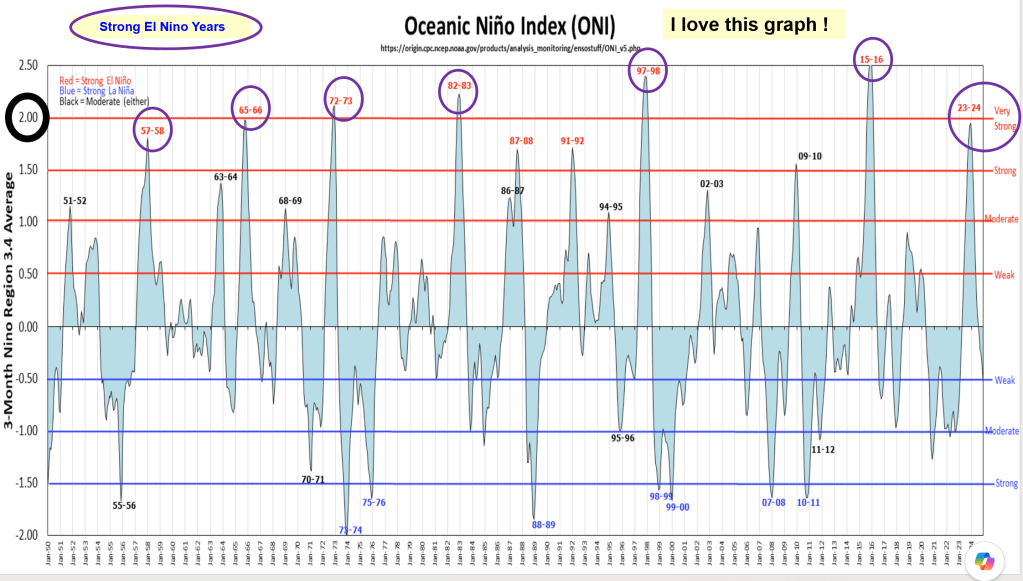
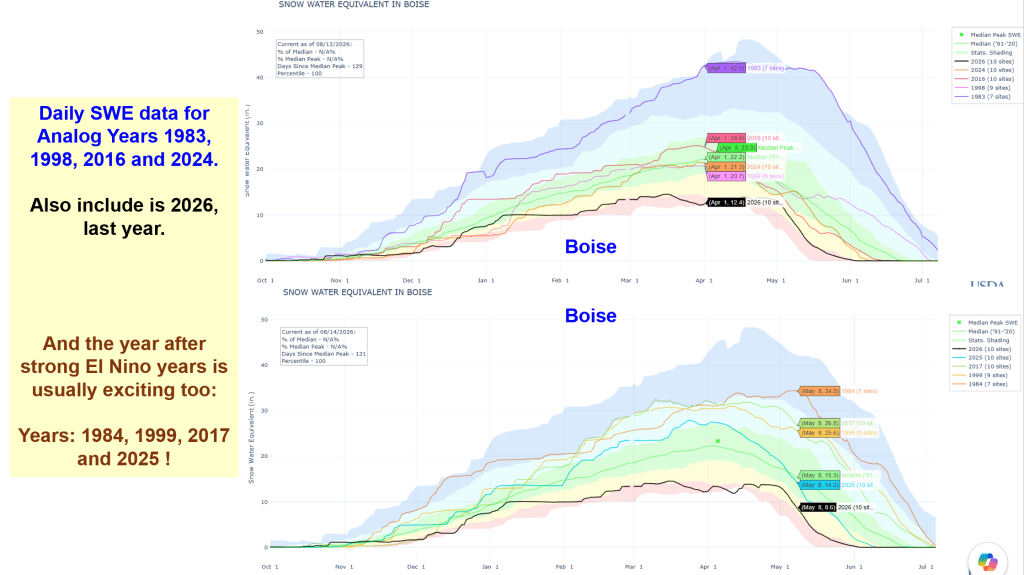
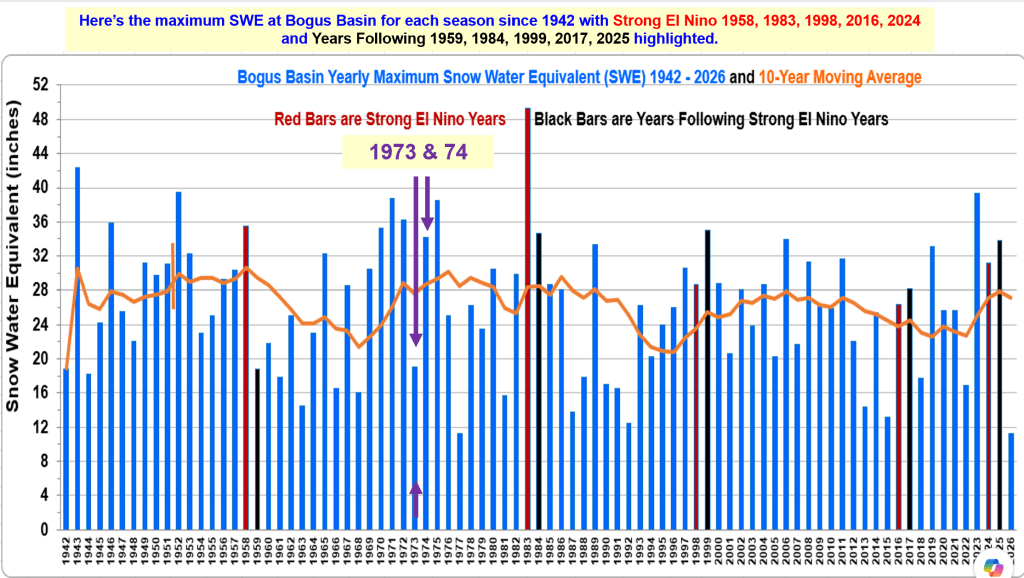
Here’s an El Nino update with lots of info about how we got here, analog years for this year along with snowfall for the analog years. Also included are many different outlooks for you to look for overlapping weather patterns and to dig in deeper. Pete’s August Update just arrived in my mail box yesterday, so I didn’t have time to update all the graphs for with his current Analog Years that are: 1971-72, 1981-82, and 2022-23 which are Water Years 1973, 1983 and 2024. Get ready to enjoy the ride !
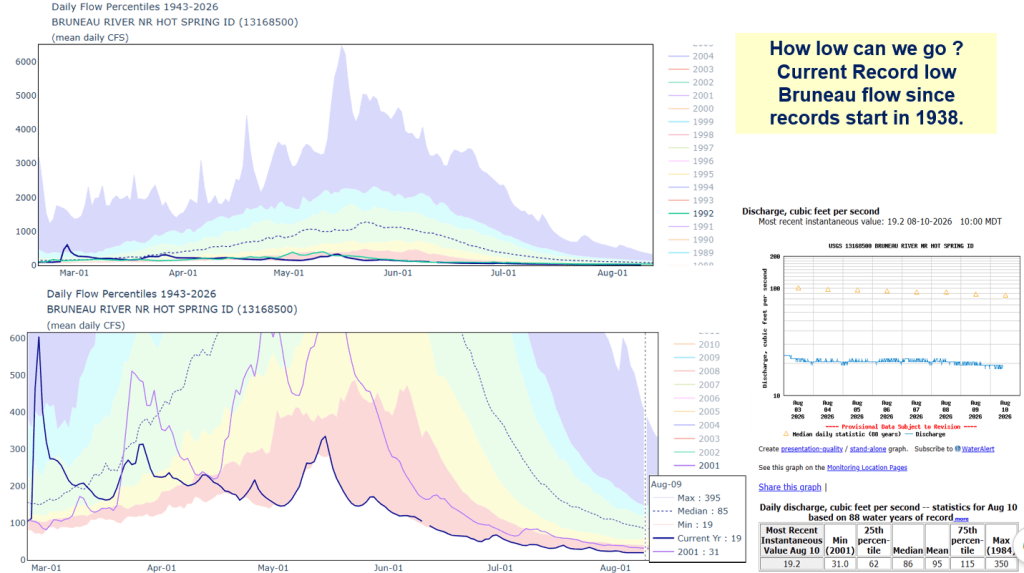
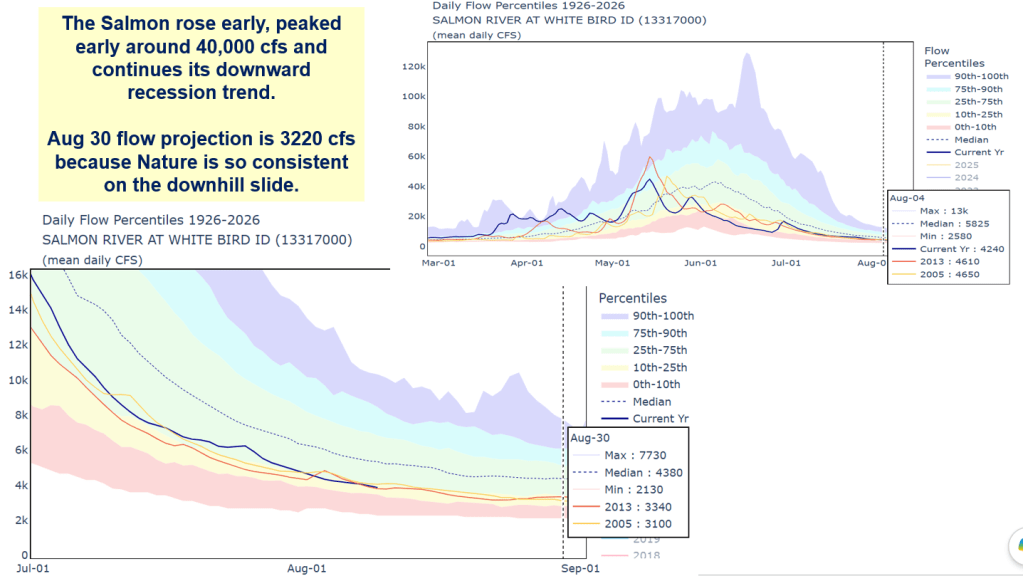
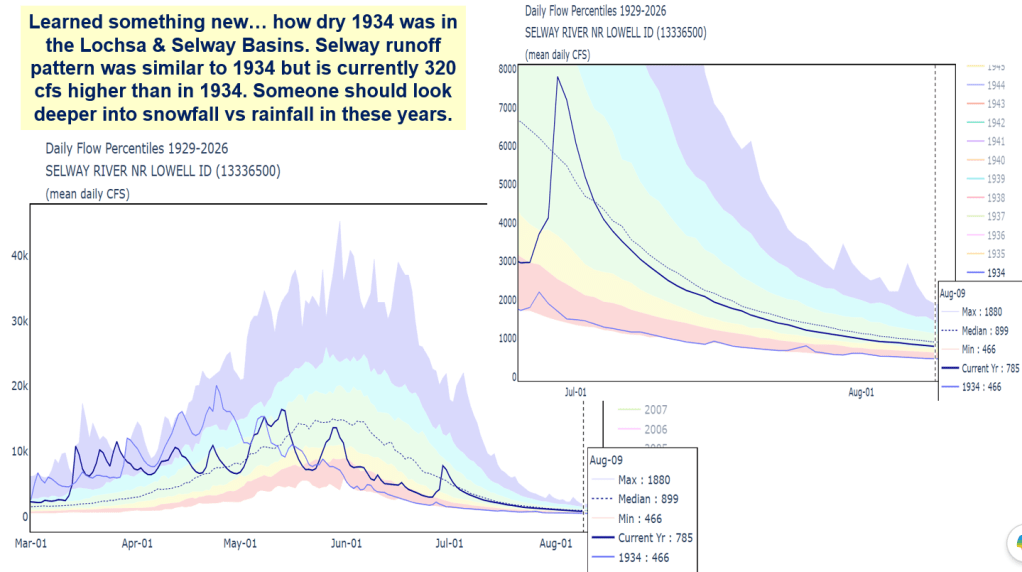
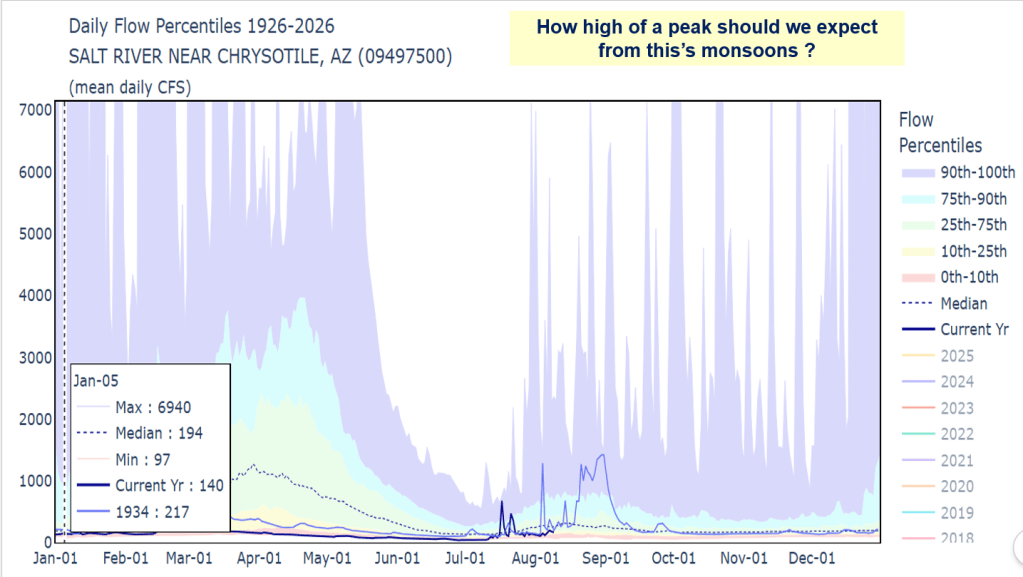
How Low Can the Rivers Go ?
Mid-June update and the Bruneau and Owhyee are tracking their record low levels from 1992.
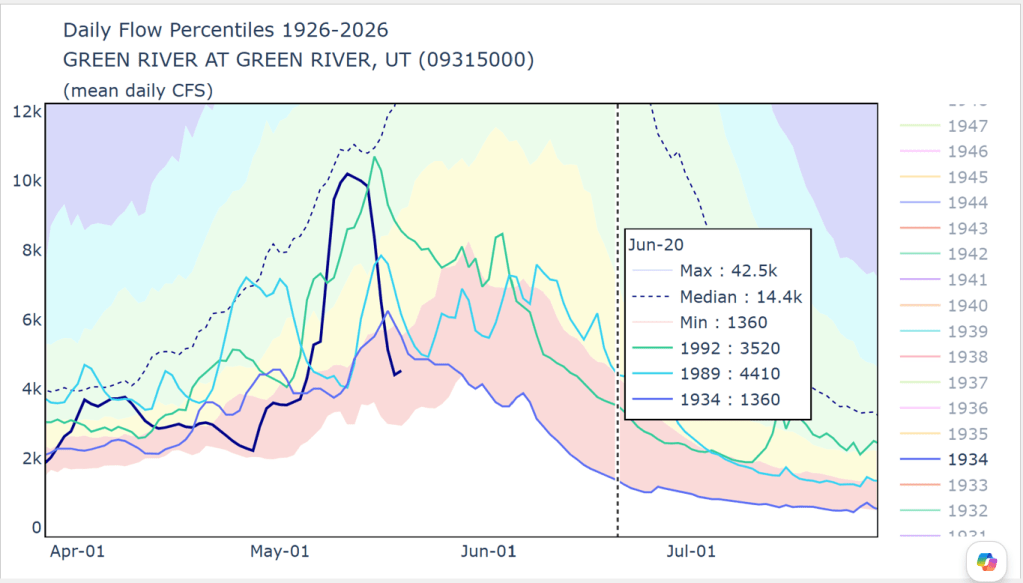
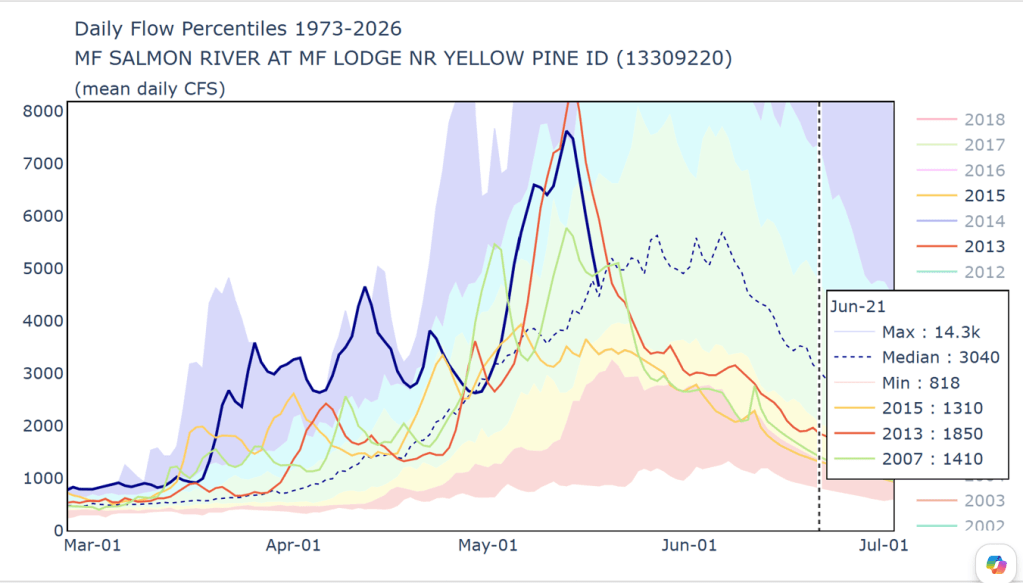
Here’s a few updates for Idaho’s favorite rivers and bonus graphs for the Green, Grand Ronde and Salmon Falls.
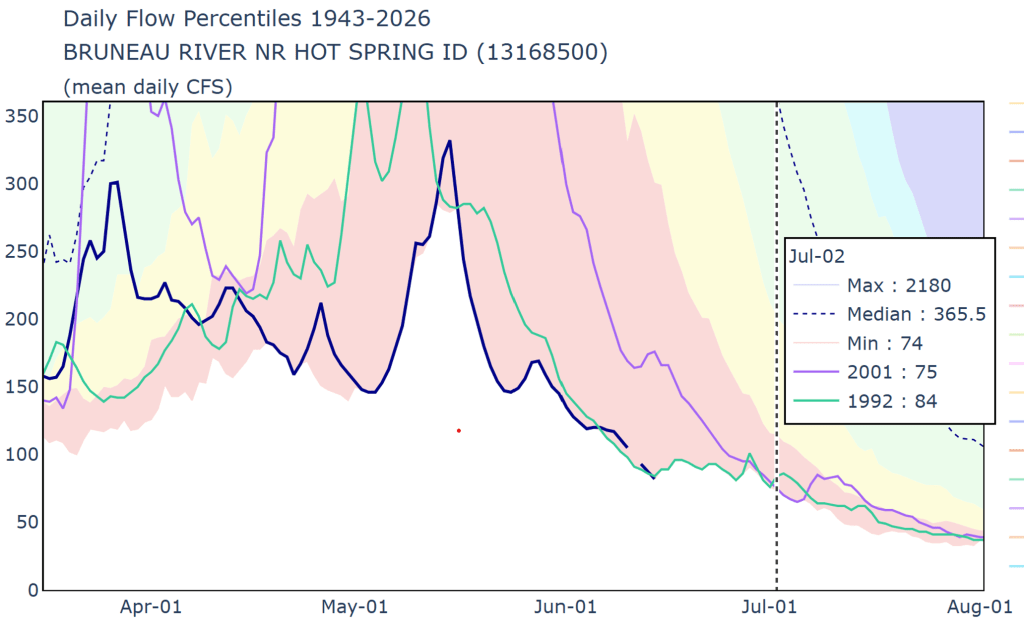
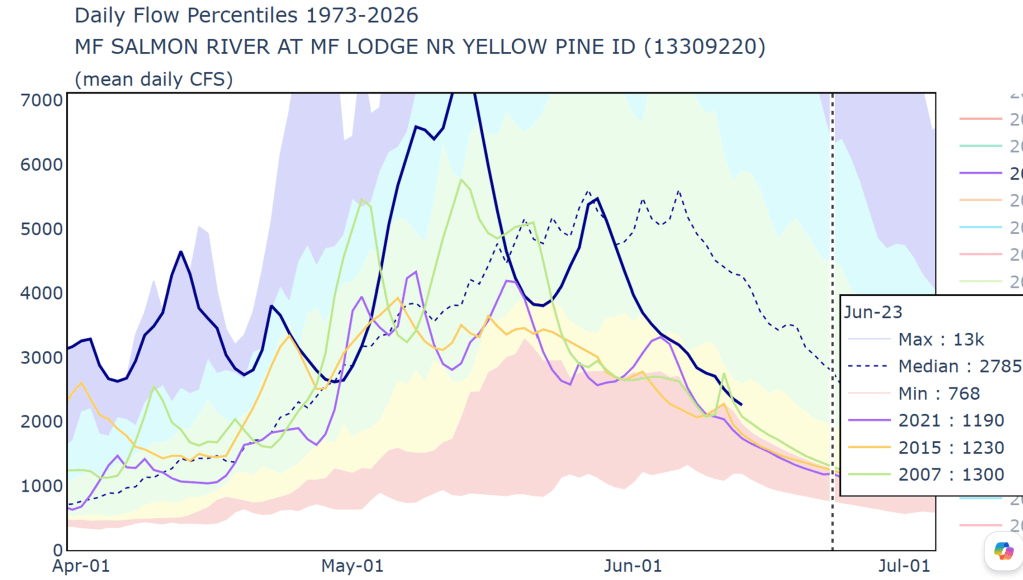
Recession Flows
Only looked for similar flow levels, didn’t look at any remaining snow levels. Green River is interesting with comparison to 1934, which was also a warm winter in Idaho.
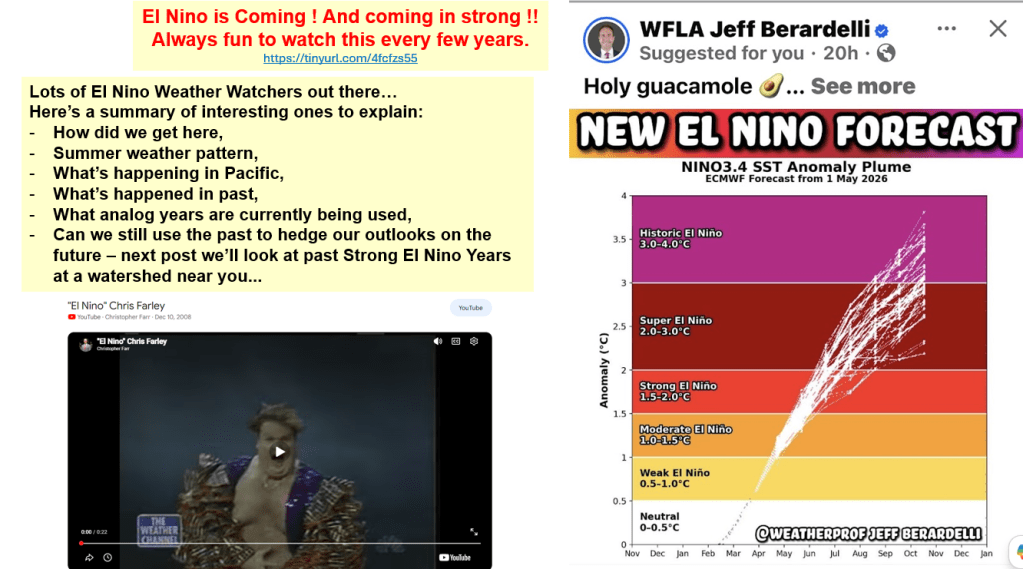
El Nino is Coming !
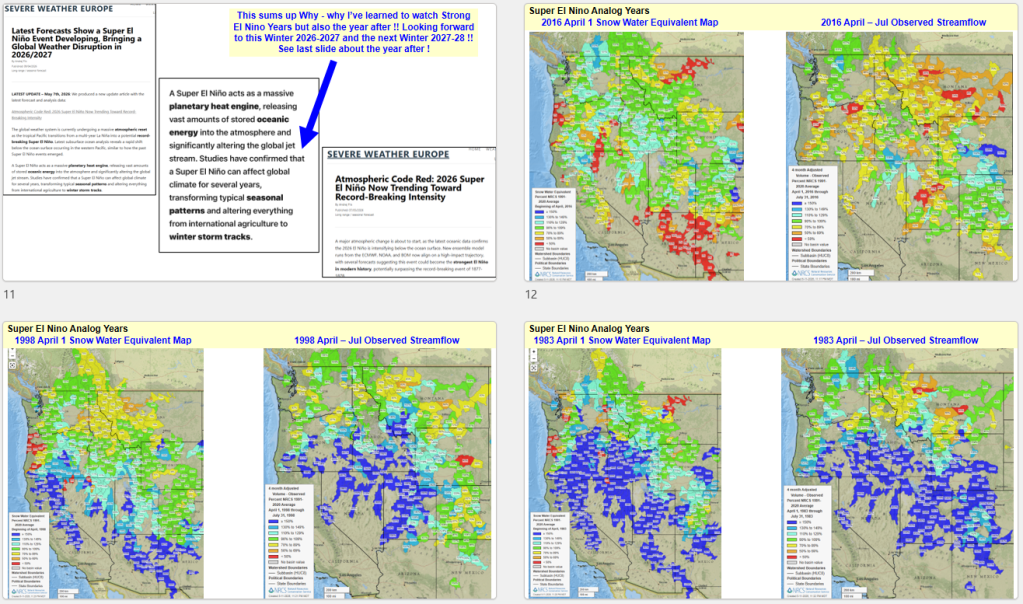
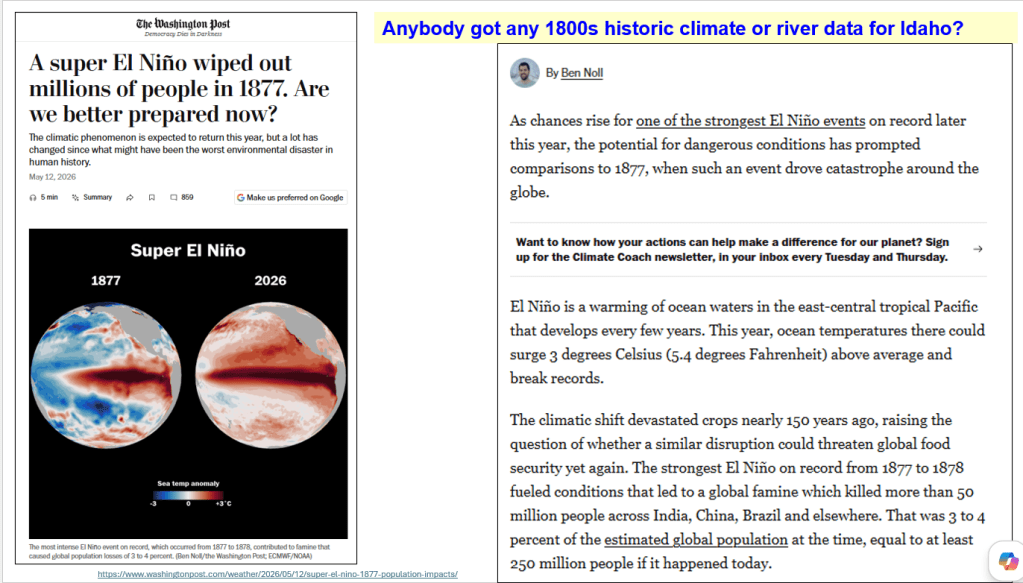
Now that the snow has melted and rivers peaked or peaking, let’s talk about next winter. Here are highlights about this developing Super El Nino and how we got here. Next Post – we’ll look at the details and zoom into your local watershed to see what happened in past Supper El Nino years as we wait to see if history will repeat itself !
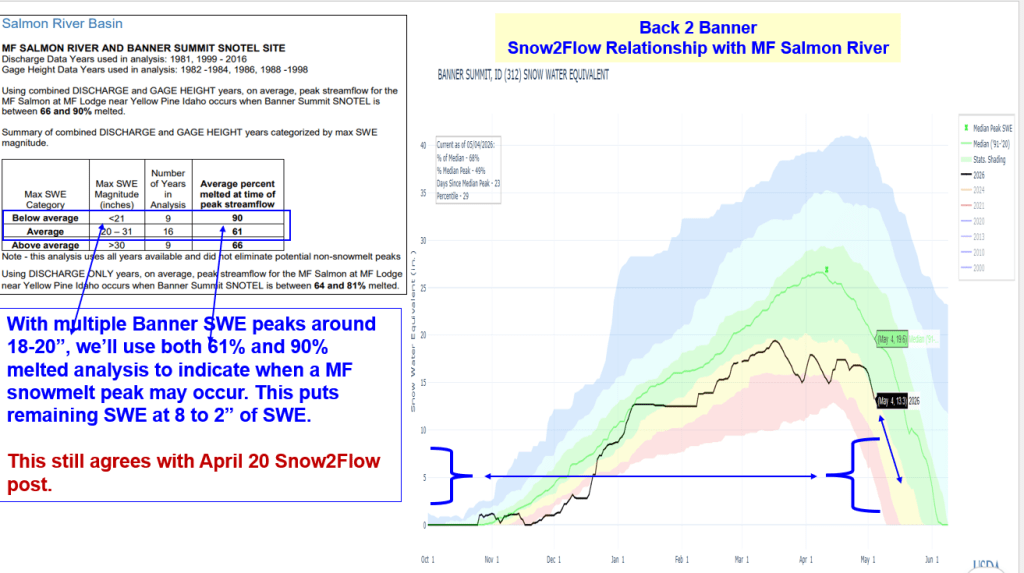
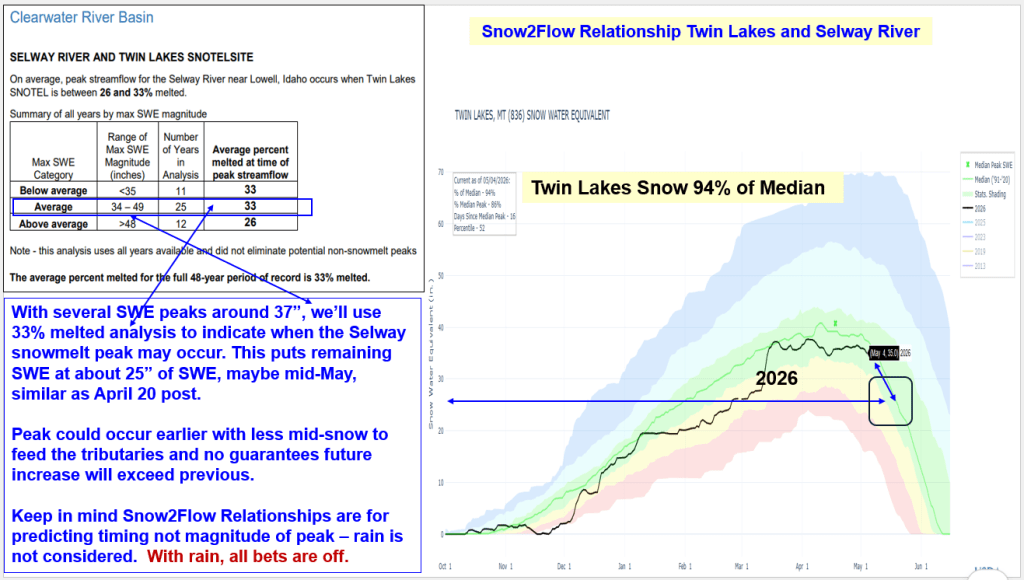
Early May Snow2Flow Update
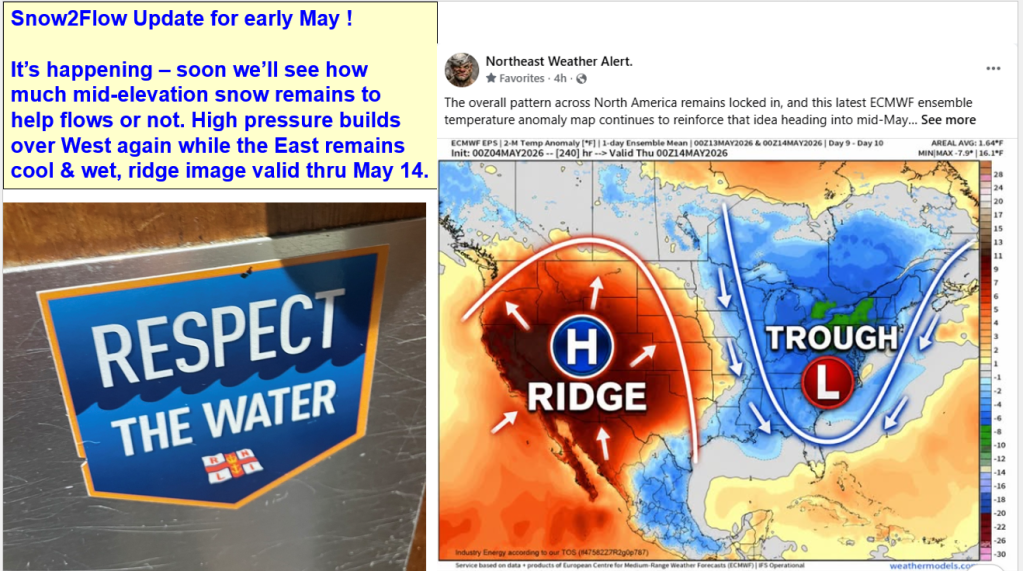
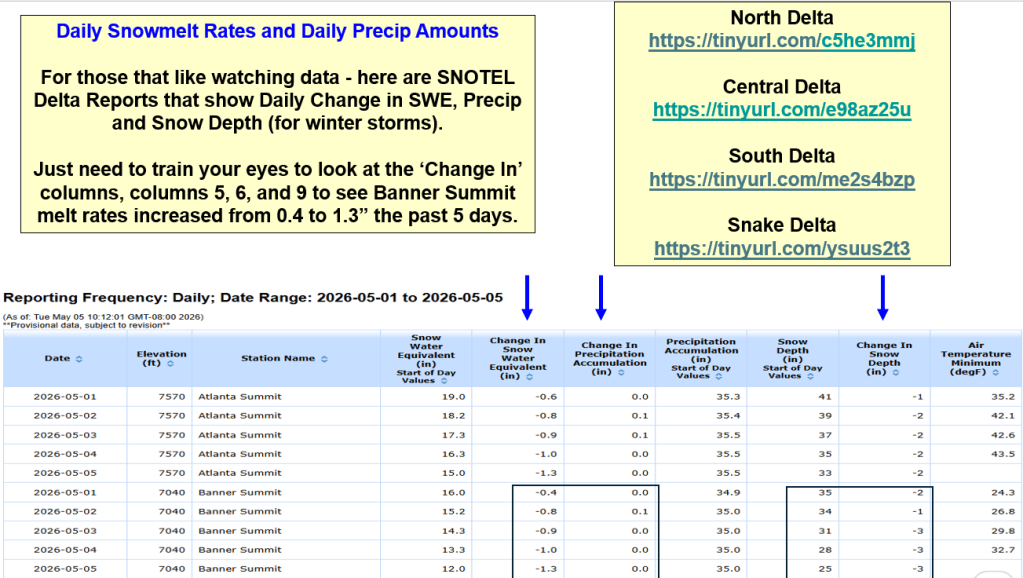
It’s Happening ! Details are in the data and if you like data, checkout the SNOTEL Delta Reports to watch daily snowmelt rates increase from half an inch a day to 1″/day. And if the sites are melting 2″/day for several days, you know the rivers are rocking while there’s snow to feed `em. Be safe, enjoy the ride and Respect the Water !!!
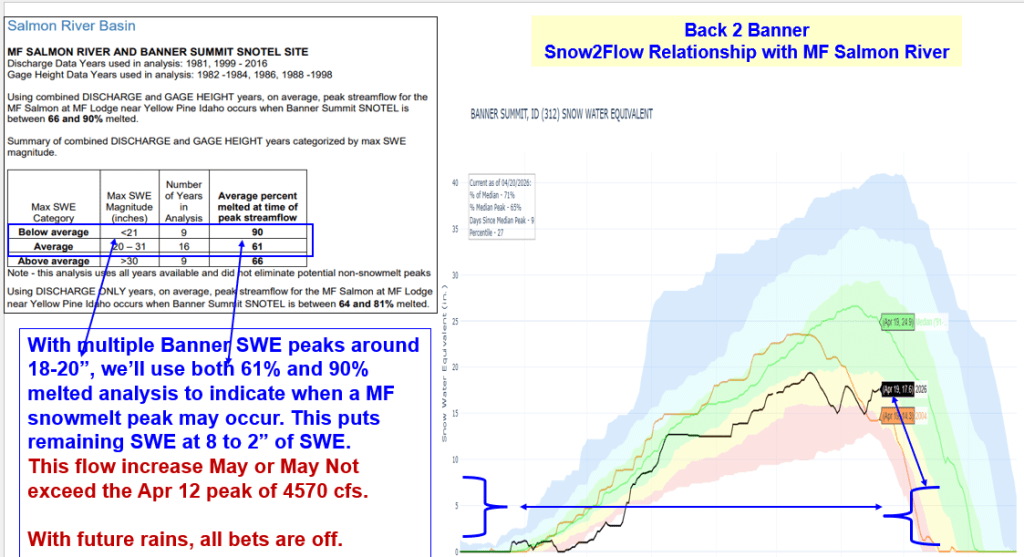
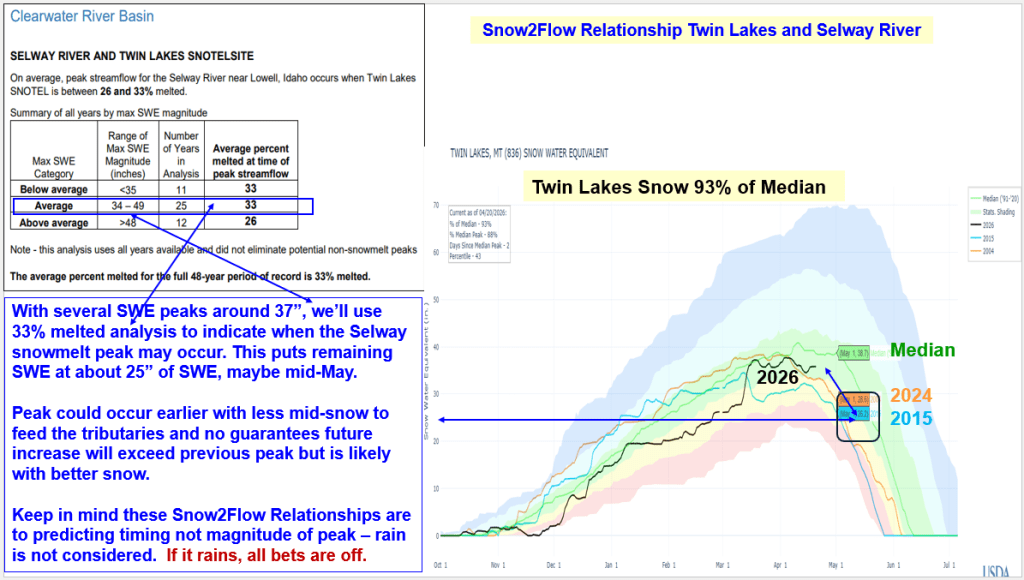
April 22 Snow2Flow Update
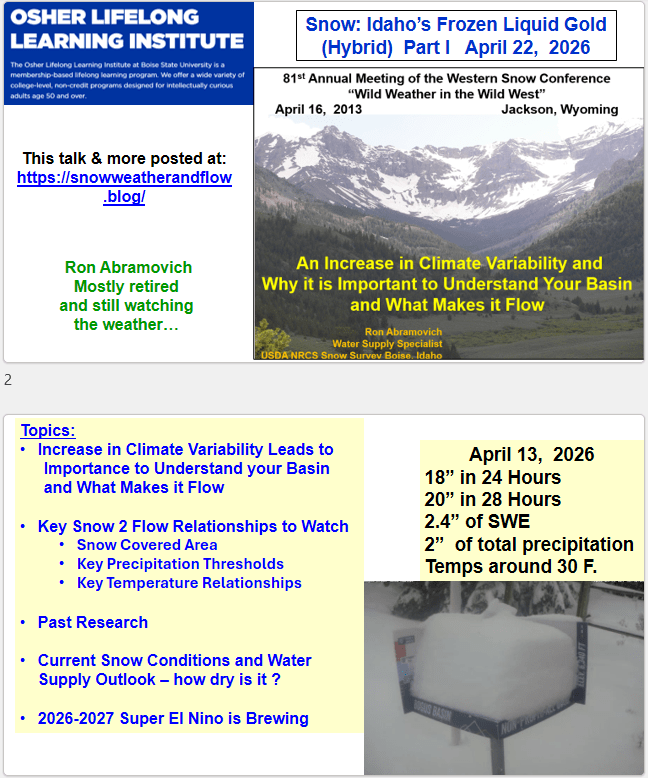
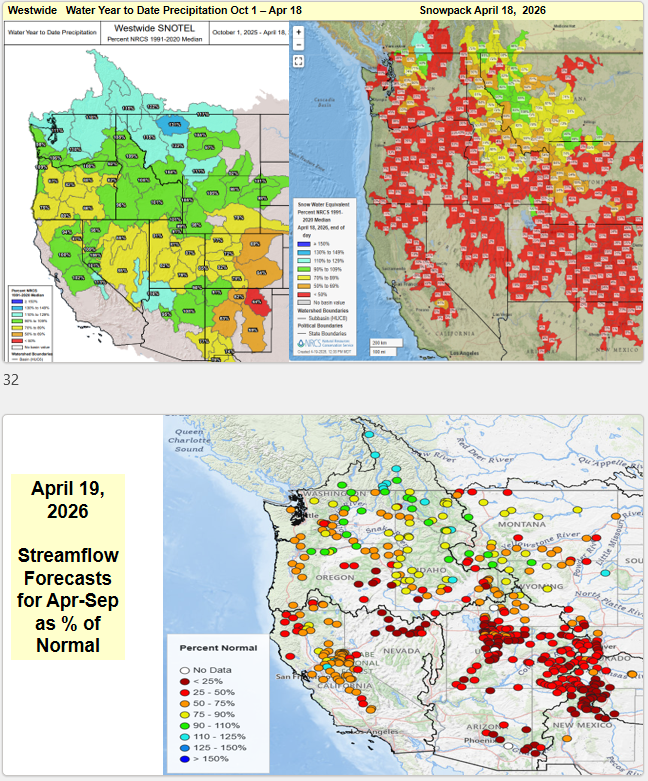
This Part II talk was given at Osher Lifelong Learning Institute on April 22 about importance to understand your basin, key indicators to watch and current snow to flow information. More detailed snow and flow info is included for Boise, Salmon Falls, Bruneau, MF, Main Salmon, Selway and a preview of next winter’s El Nino that is brewing.

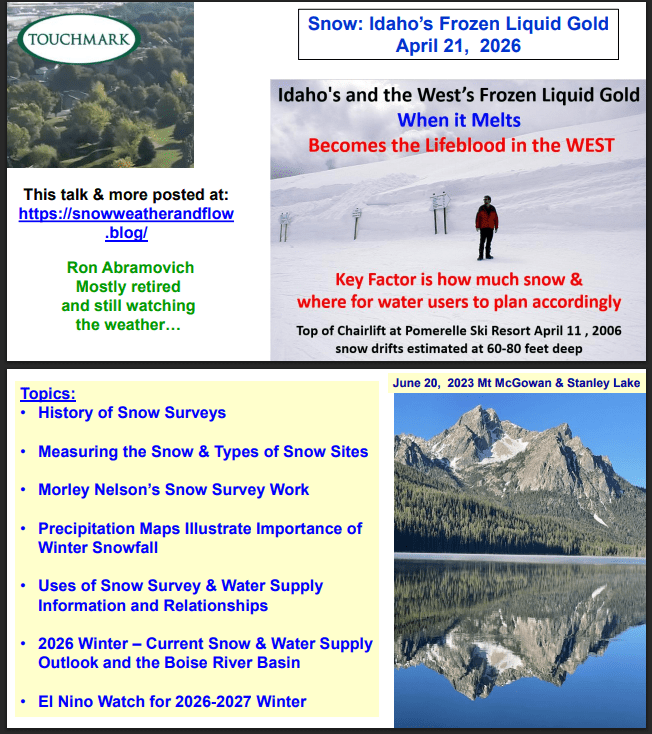
Snow Survey History & Boise Basin
Here’s a Touchmark talk about history of Snow Surveys, Importance of Snow in the West and Current Conditions / Outlook for the Boise Basin. This weird interesting winter just keeps getting more interesting with each storm as the mountain snow tries to melt…
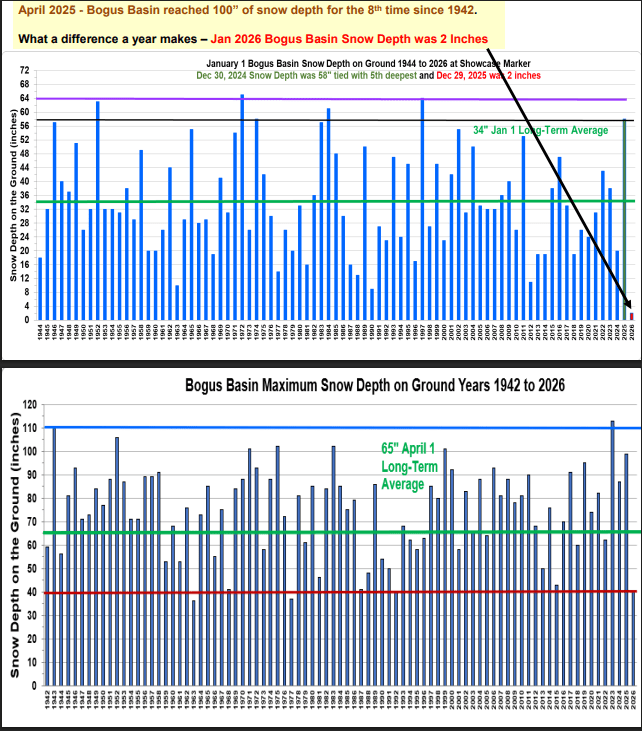
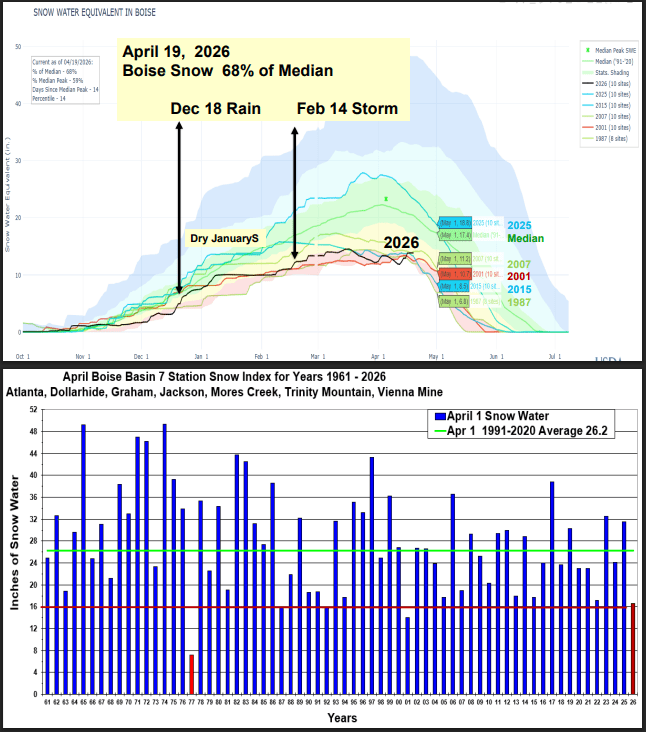
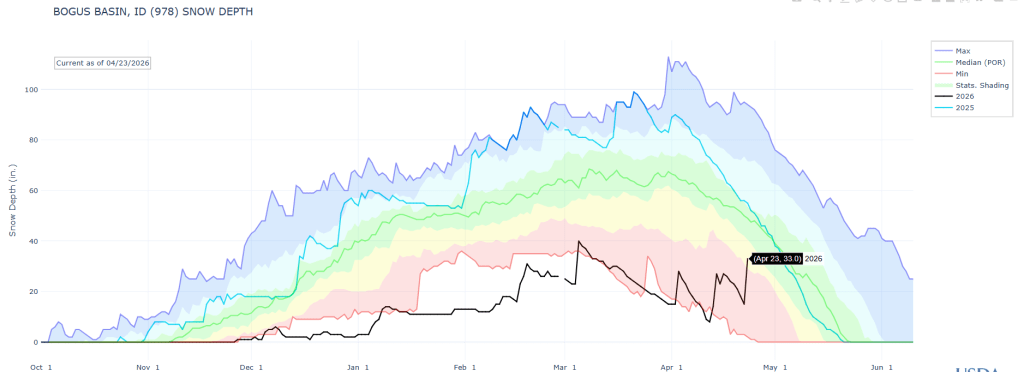
One more storm may exceed the 40″ max snow depth in early March.
April 1, 2026 Snow2Flow Update
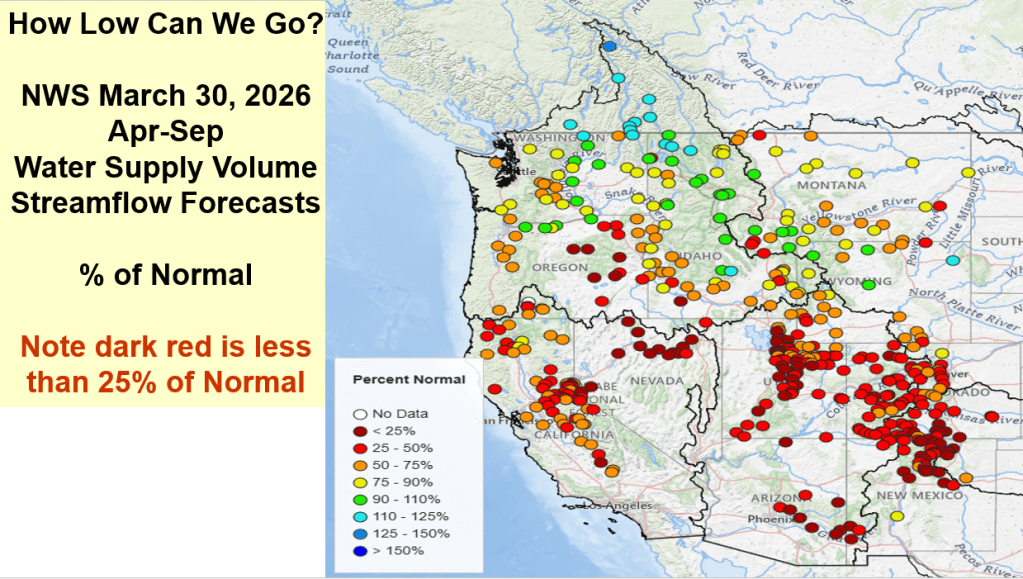
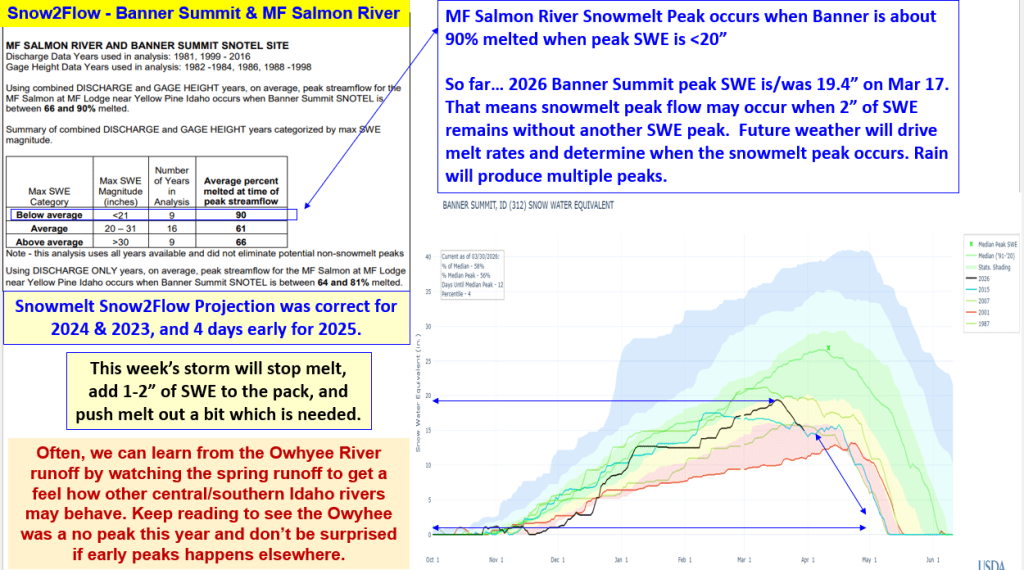
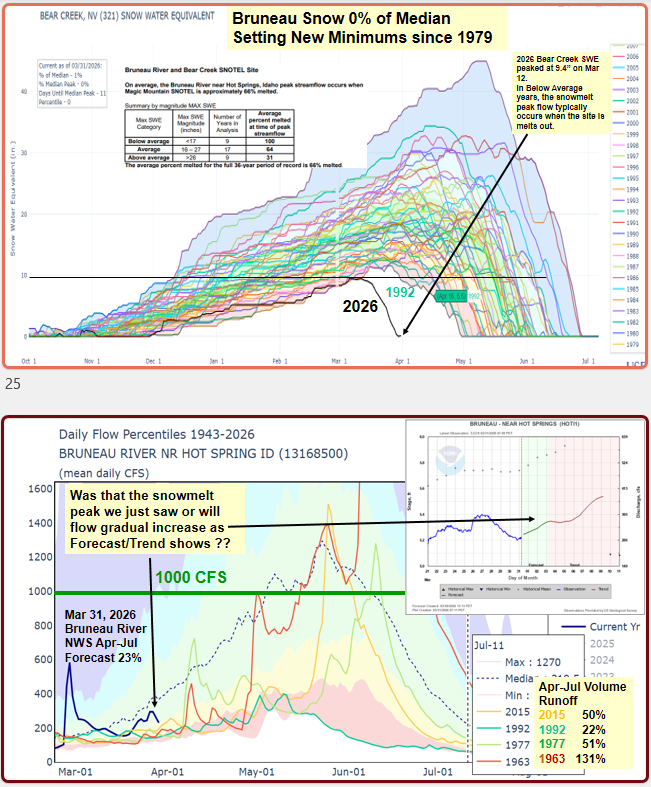
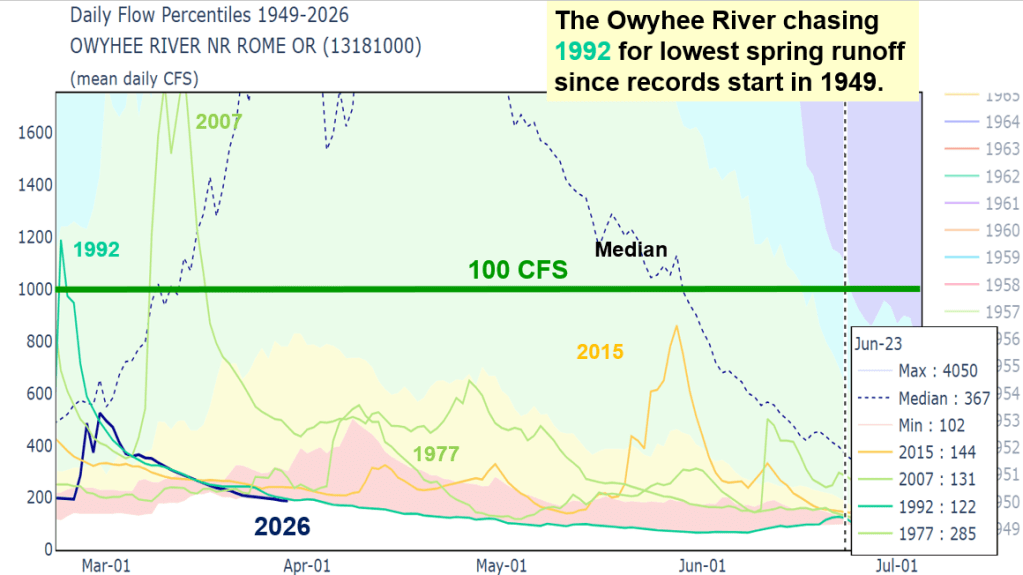
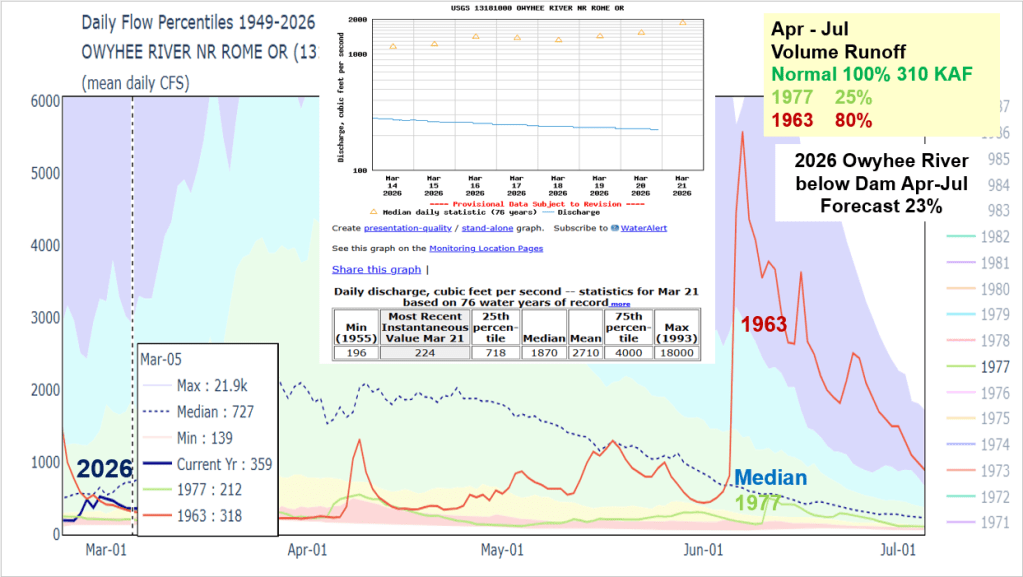
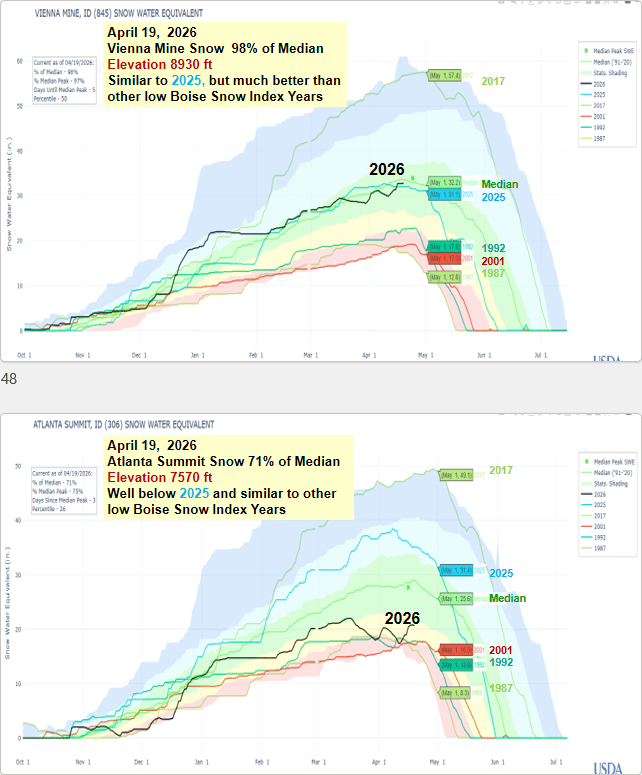
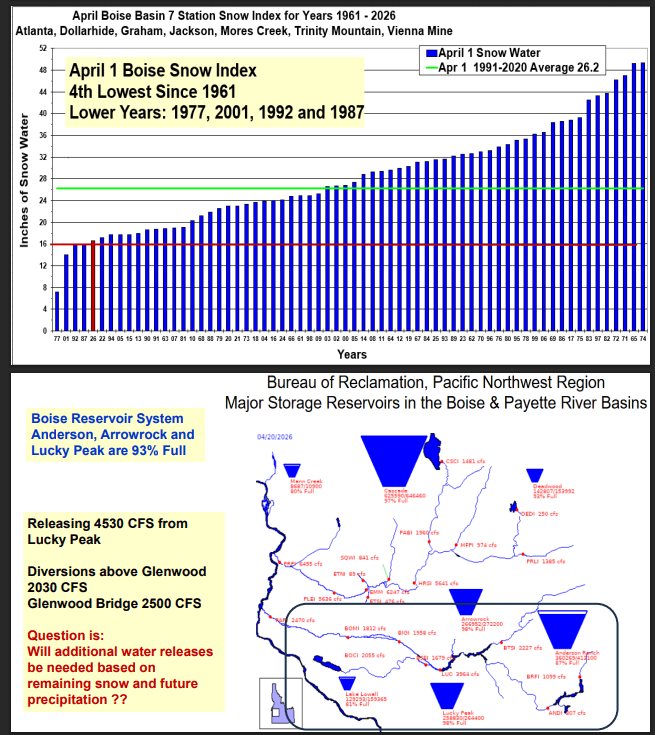
Now this is getting interesting… Usually our western mountain snowpack reaches its peak Snow Water Equivalent (SWE) in early April – not this year the pack peaked in mid-March under the early season Heat Dome. And now some of the rivers have also seen their snowmelt runoff peak. Seems like the snow and flow cycles are 2-3-4 weeks ahead of normal primarily from those warm temps. The Owhyee forgot to peak this year and is flowing at record lows levels very similar to 1992. The Bruneau rose last week and time will tell if there’s another snow increase.
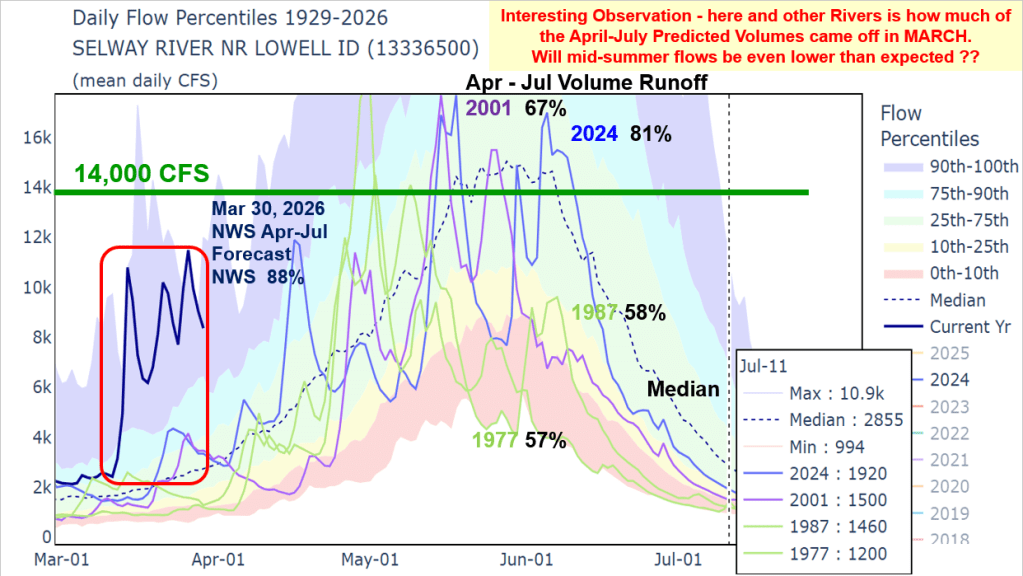
An interesting observation in the Salmon and Selway basins is how much snow melted to provide March flows. This snowmelt was not just from mid-elevations but also higher elevations that are melting. So considering most of the streamflow volume forecasts are for the April-July period, does this shift of runoff into March mean the observed April-July volumes will be less and low summer base flows will occur even early this year. Is it time to consider shifting the primary forecast period from April-July to March-July?
This week’s last winter storm is just what is needed to slow the melt, add a little moisture to the pack, and rain on the soils as the snow melts. A cool wet spring would be ideal along with spring storms. Remember Yellowstone June 2022 and June 1963 Owyhee rain event pushed the river up to 5000 cfs. The least we need is another near record dry April-May-June precipitation like we saw last spring.