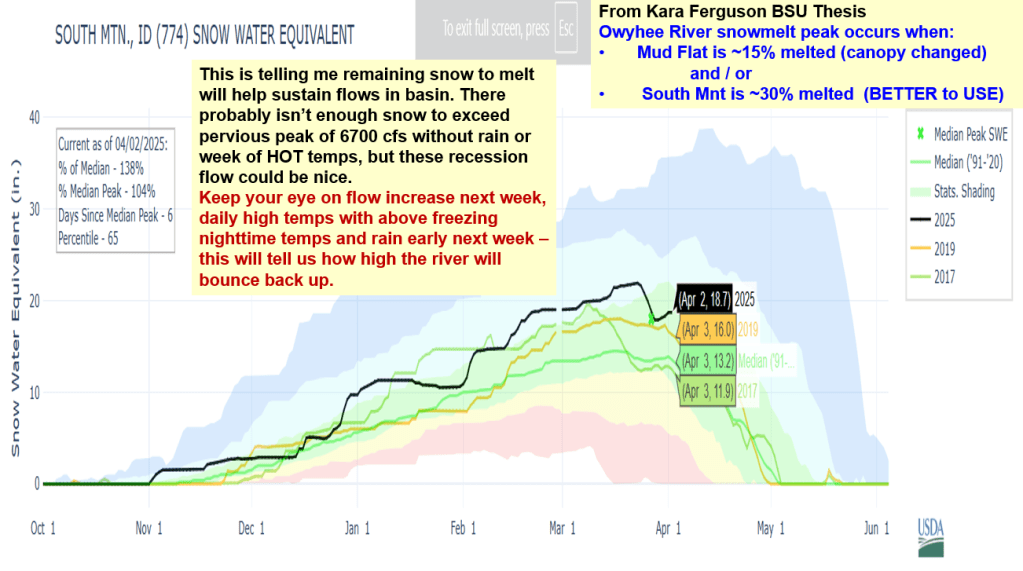
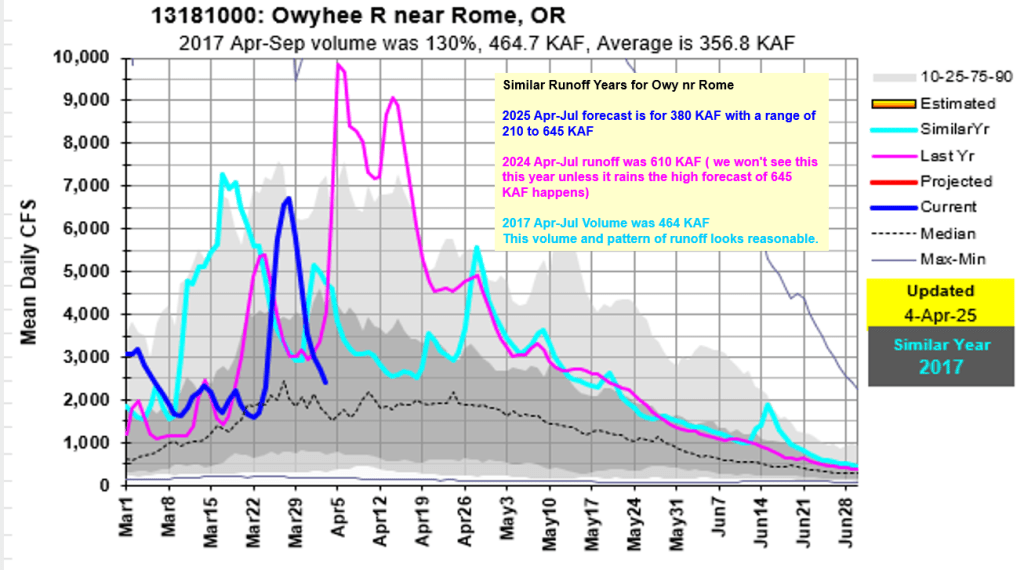
Only looked for similar flow levels, didn’t look at any remaining snow levels. Green River is interesting with comparison to 1934, which was also a warm winter in Idaho.
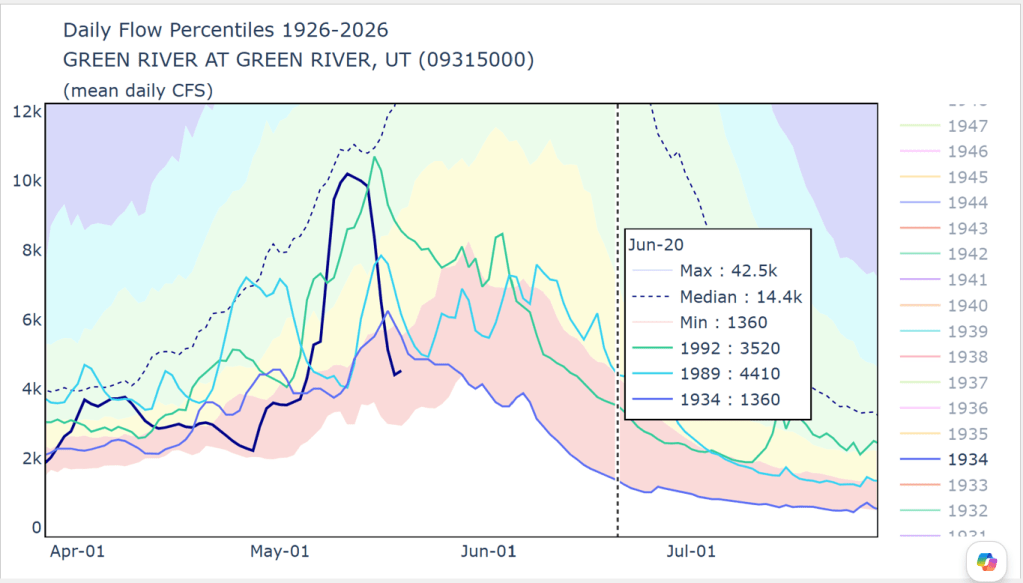
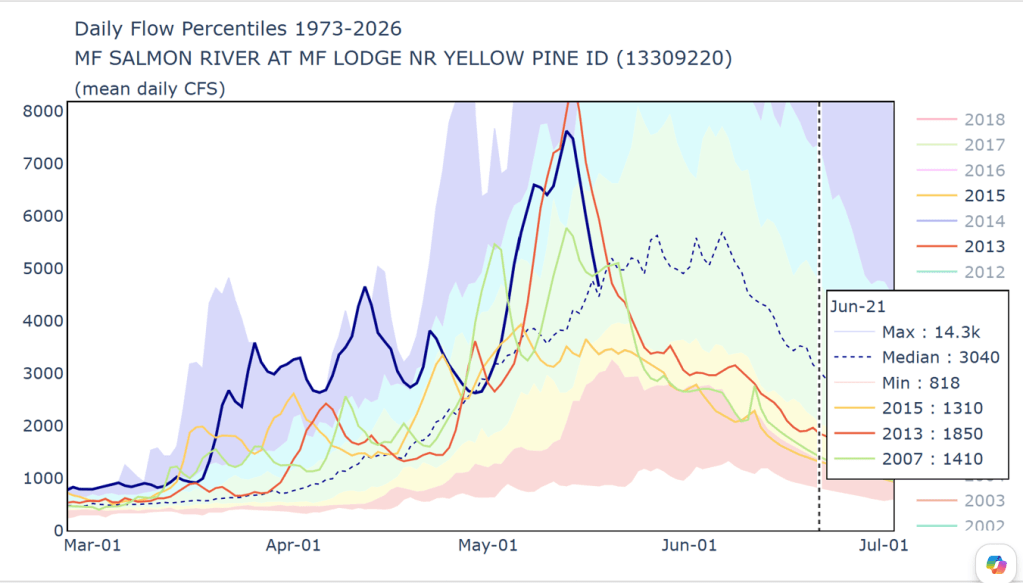
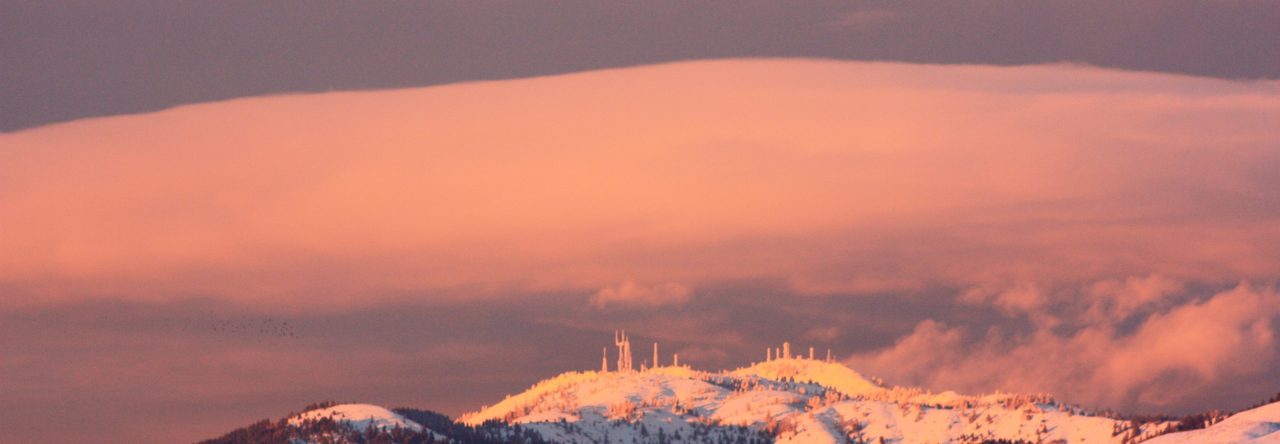
Only looked for similar flow levels, didn’t look at any remaining snow levels. Green River is interesting with comparison to 1934, which was also a warm winter in Idaho.
Now that the snow has melted and rivers peaked or peaking, let’s talk about next winter. Here are highlights about this developing Super El Nino and how we got here. Next Post – we’ll look at the details and zoom into your local watershed to see what happened in past Supper El Nino years as we wait to see if history will repeat itself !
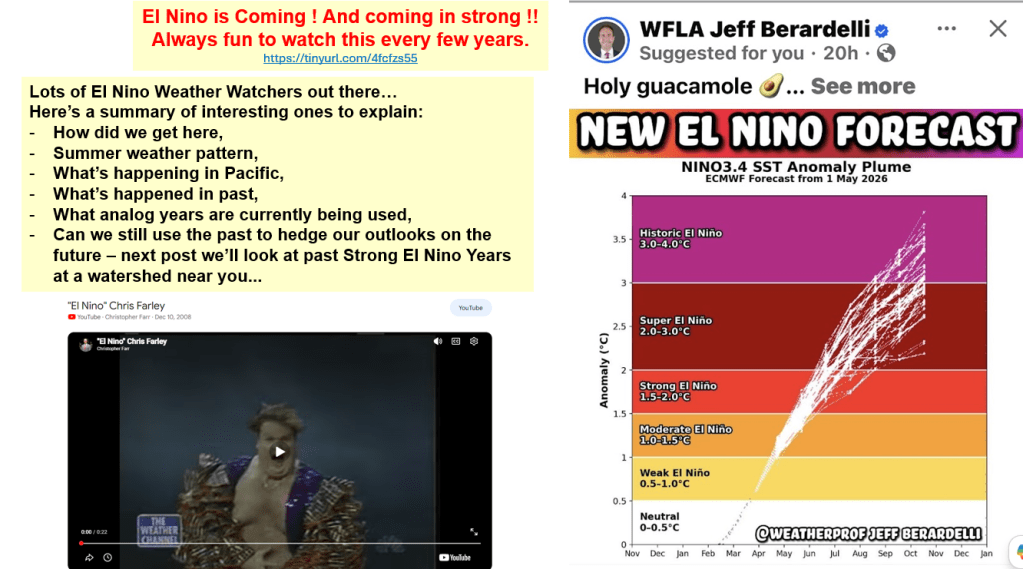
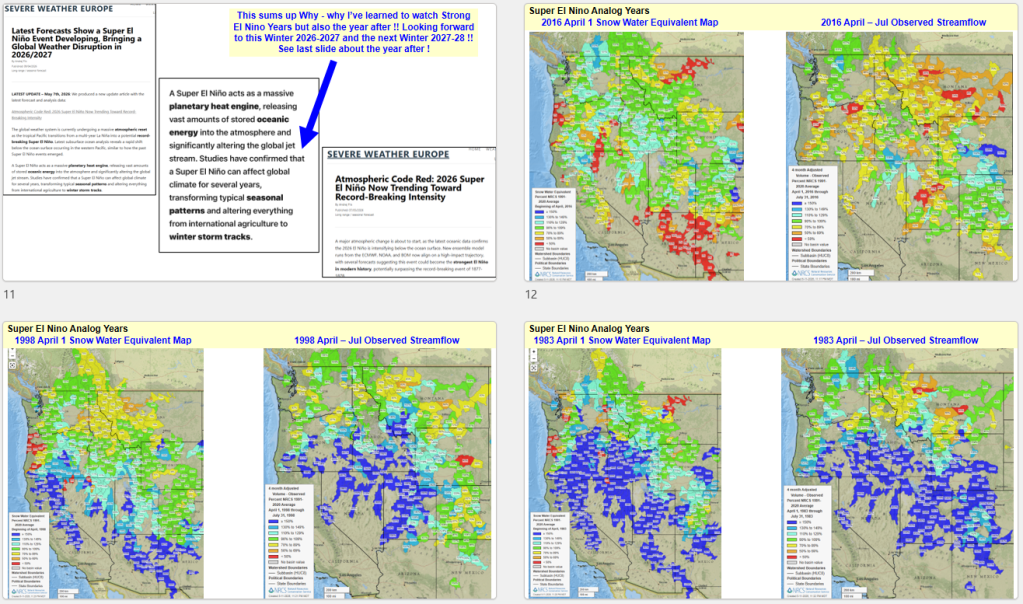
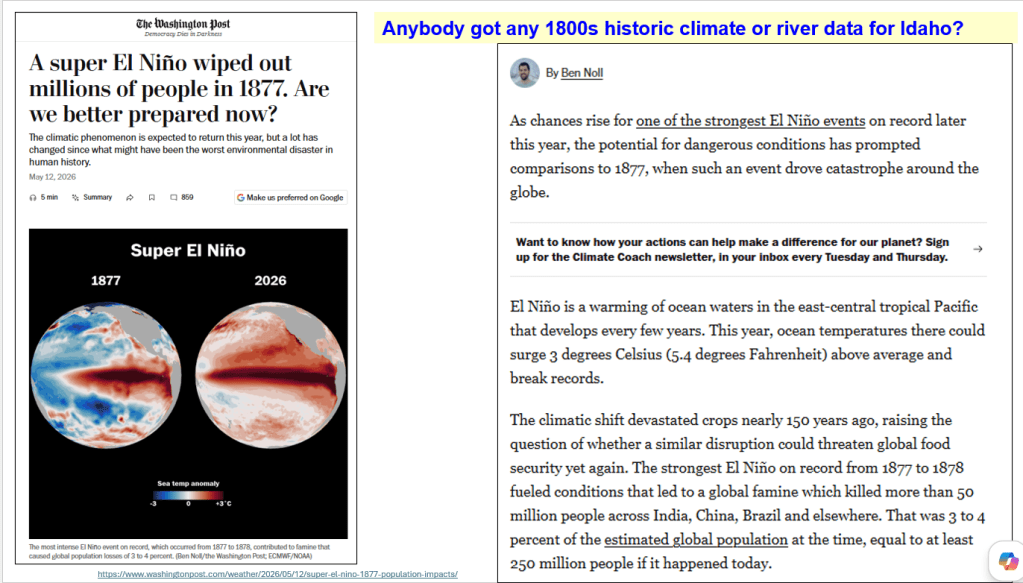
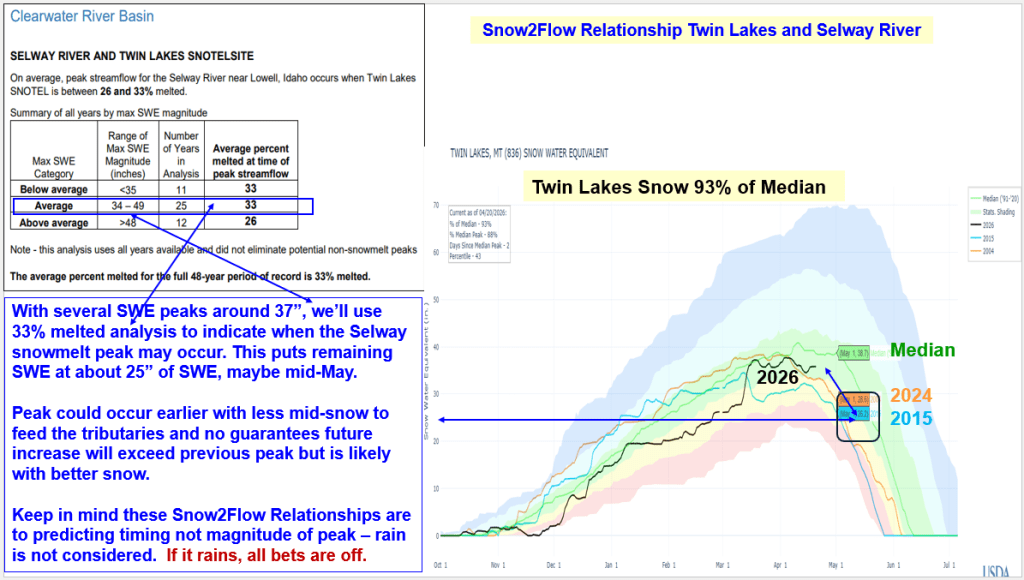
This Part II talk was given at Osher Lifelong Learning Institute on April 22 about importance to understand your basin, key indicators to watch and current snow to flow information. More detailed snow and flow info is included for Boise, Salmon Falls, Bruneau, MF, Main Salmon, Selway and a preview of next winter’s El Nino that is brewing.
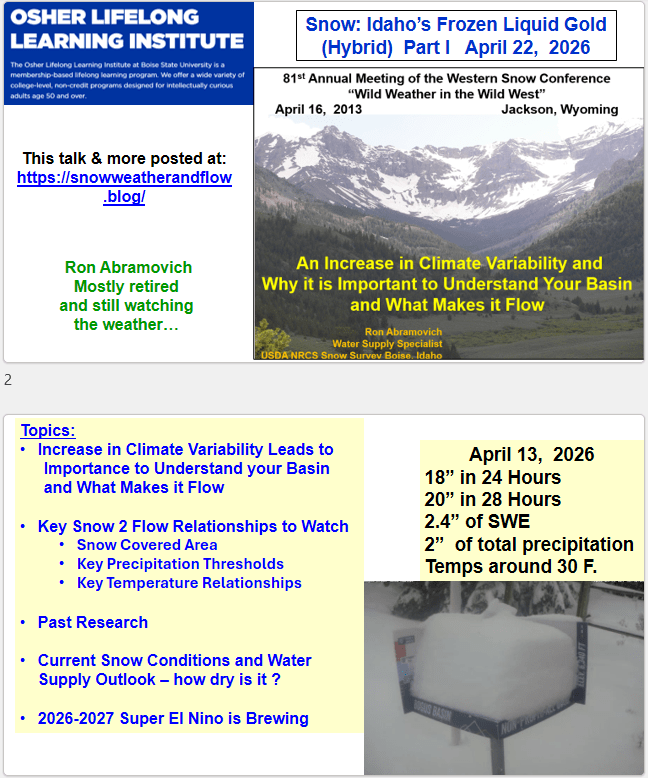
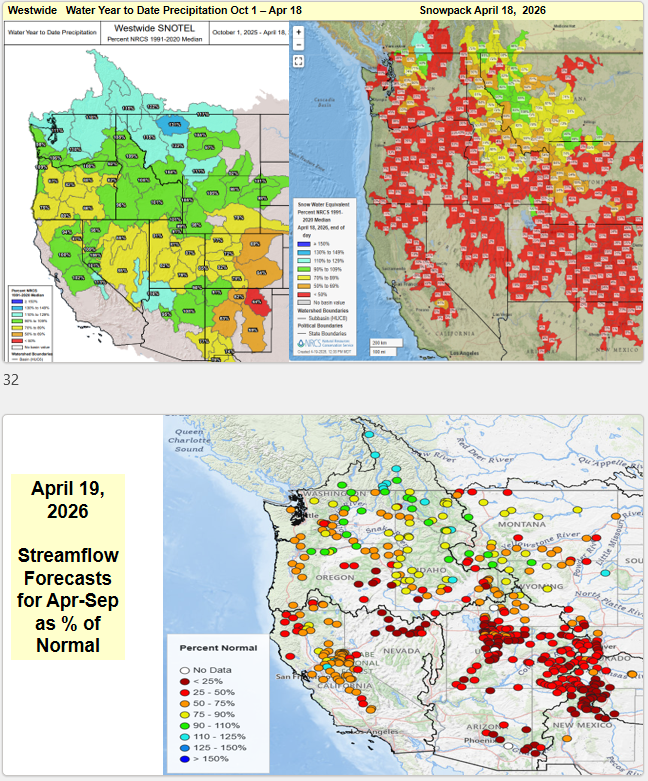
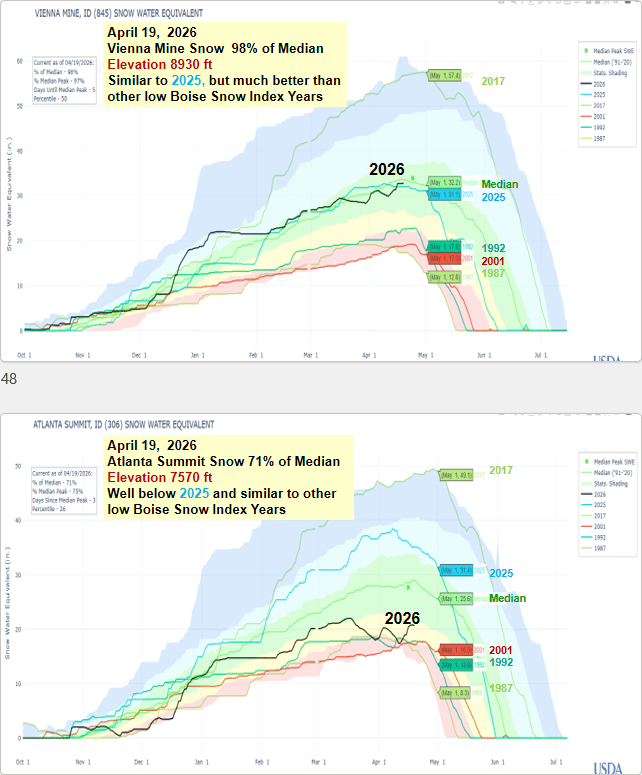

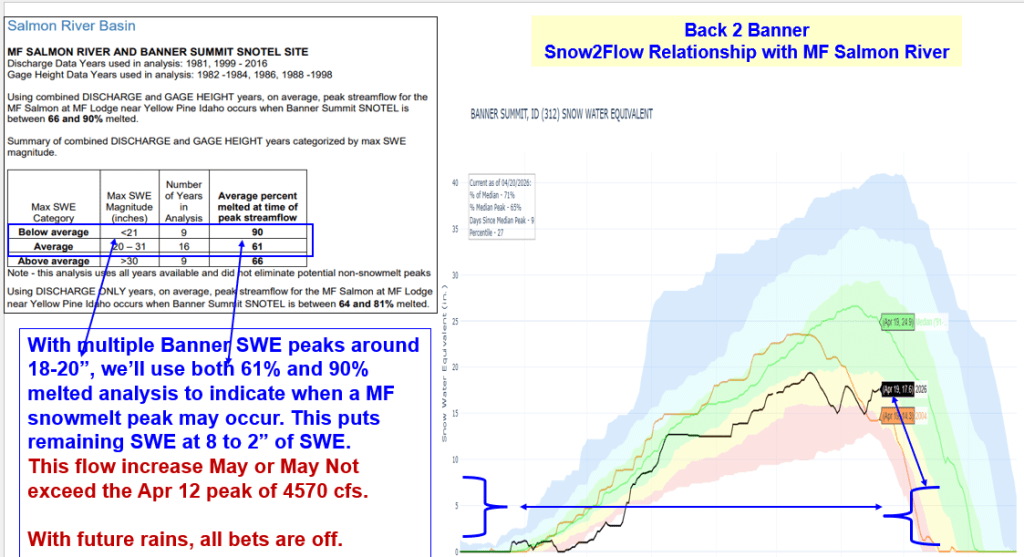
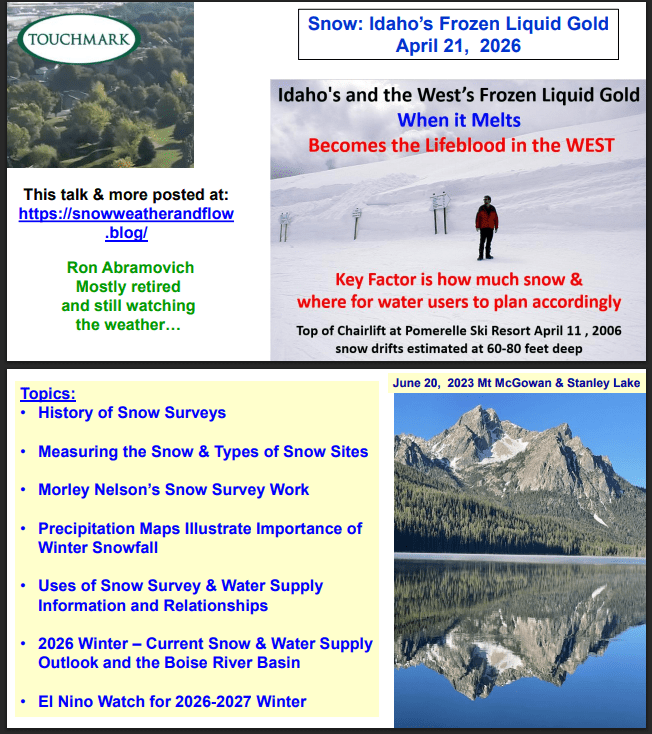
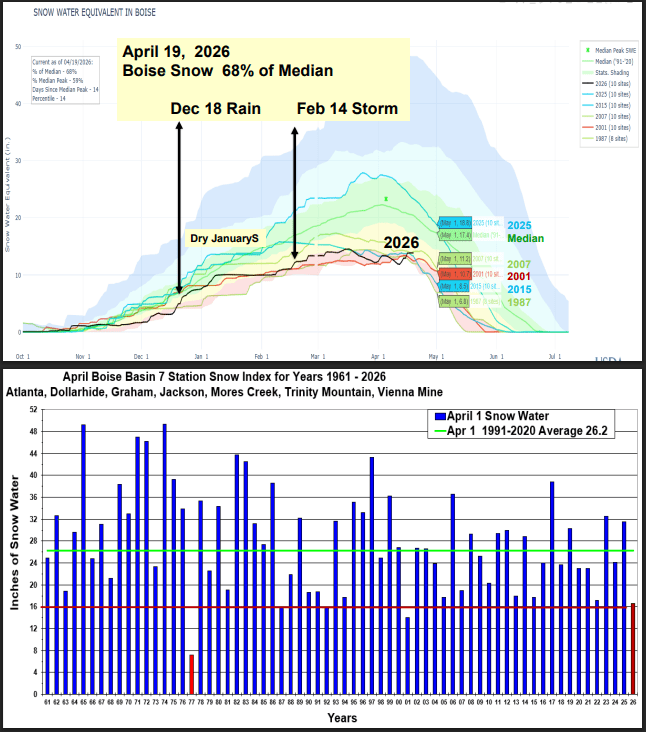
Here’s a Touchmark talk about history of Snow Surveys, Importance of Snow in the West and Current Conditions / Outlook for the Boise Basin. This weird interesting winter just keeps getting more interesting with each storm as the mountain snow tries to melt…
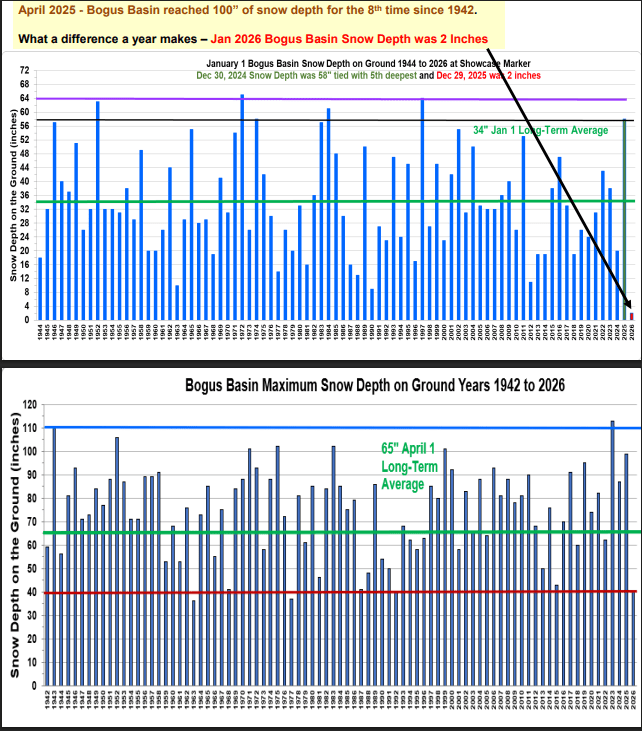
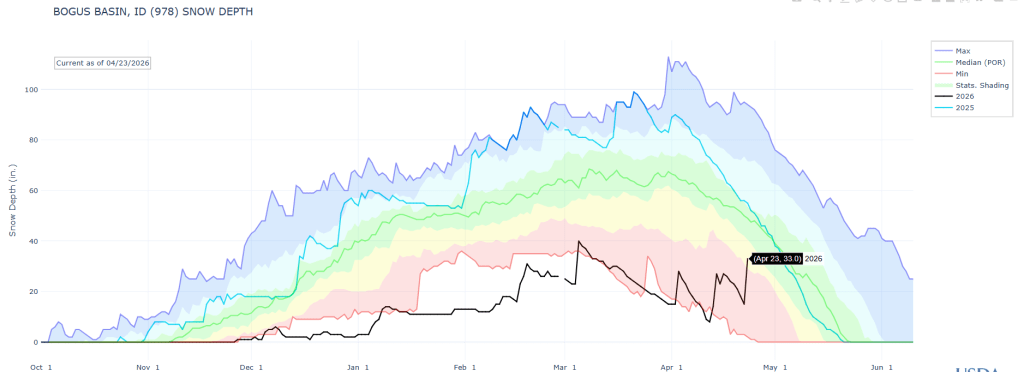
One more storm may exceed the 40″ max snow depth in early March.
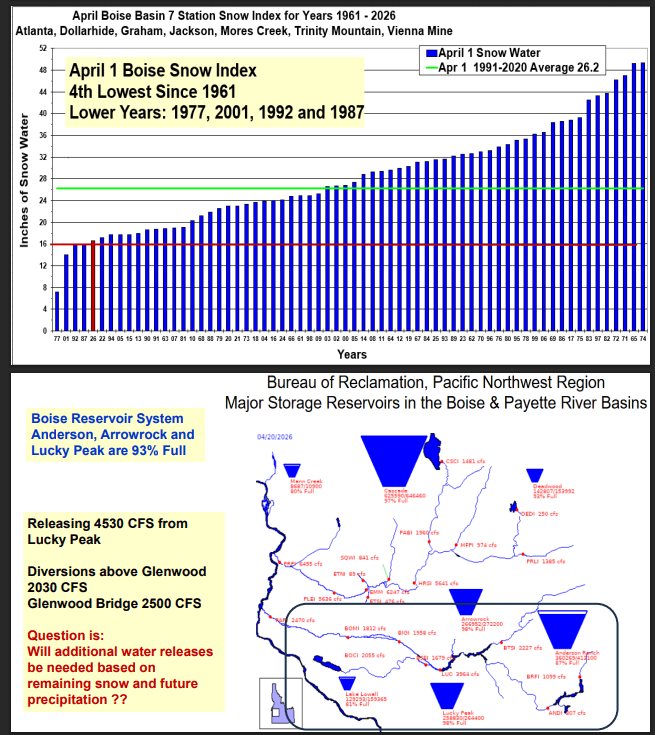
Mid-March heat dome is melting Idaho’s snow way too earlier. Even the higher elevations are starting to melt and rivers are rising. Here’s an update of how we got here and the 3-D Drought that put us in this unique position. Winter 2026 will be remembered as a winter with near normal water year to date precipitation, elevation distributed snowpacks, warm temps and now a spring heat dome that is melting the snow and pushing rivers up, except in the Owyhee because there is very little snow to melt. Let’s hope cooler weather returns by month’s end and a few cool wet storms in Aril arrive to save our remaining higher elevation snow to melt later this spring. A wet spring is needed this year. Another record dry Apr-May-Jun like last year, would not be good. Spring rain are needed now while the snow is melting to increase runoff. Even a late spring rain event like the one that occurred June 1, 1963 pushing the Owyhee River up to 5000 cfs, would be sweet. 1963 is an analog year for this year which also had very low snow runoff in the Owyhee. Lessoned learned from watching Owyhee River runoff – it often sets the stage for runoff trends seen elsewhere in southern Idaho.
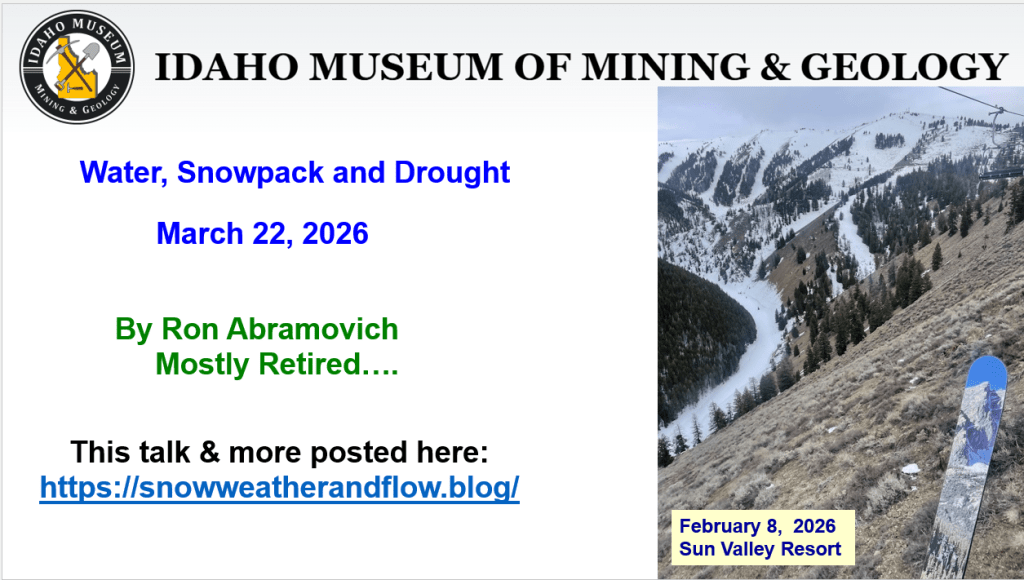
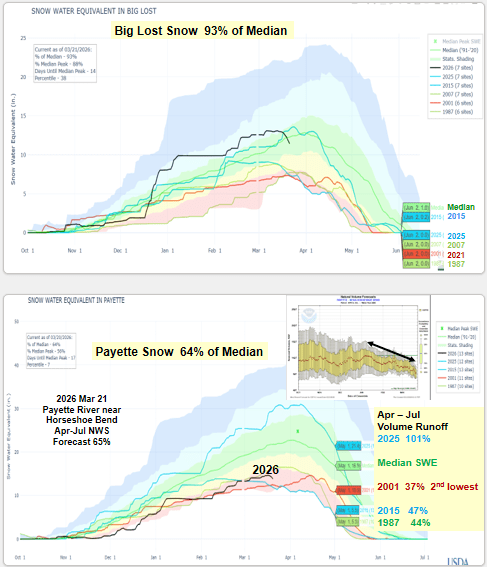
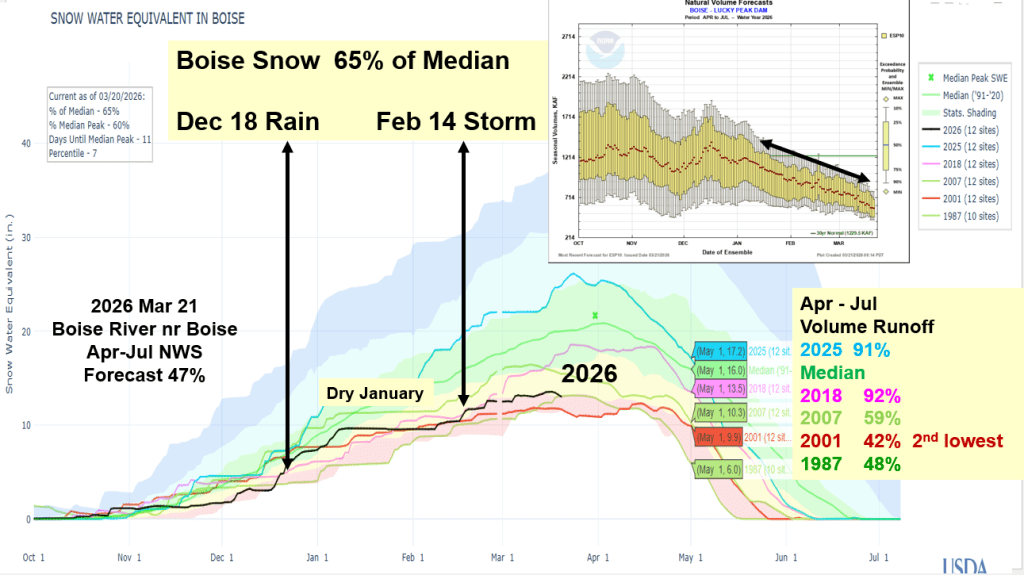
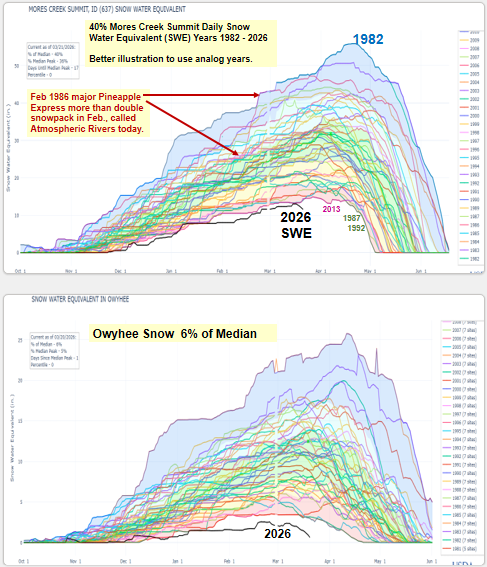
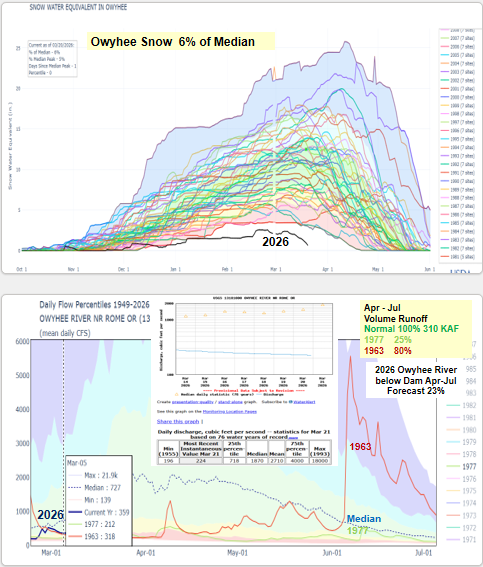
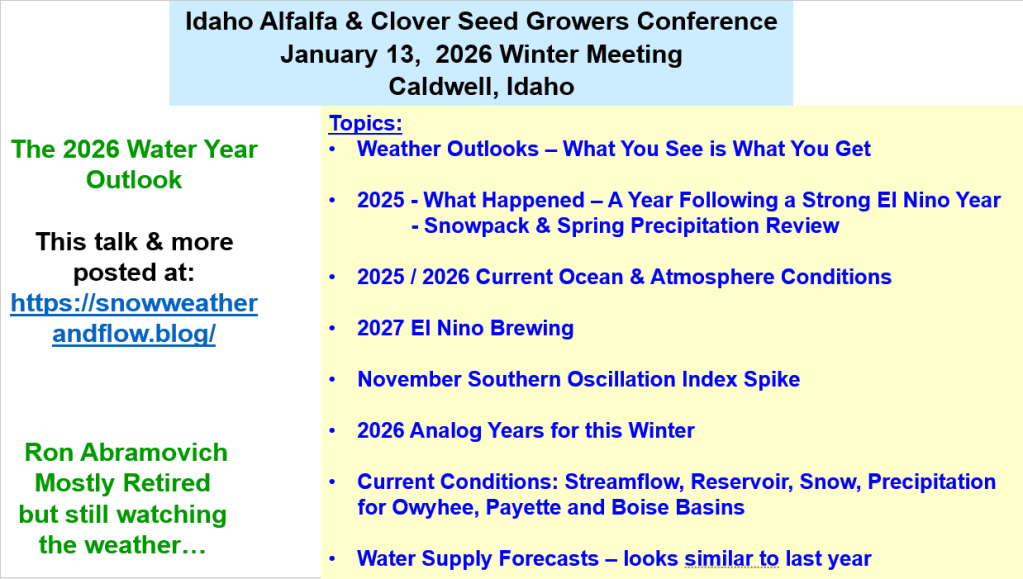
Here’s a summary of the 2025 runoff, the fall and early winter weather that created the unique elevational distribution of the snowpack and water supply outlook for the Payette, Boise & Owyhee basins. This talk was for the Idaho Alfalfa & Seed Growers Conference.
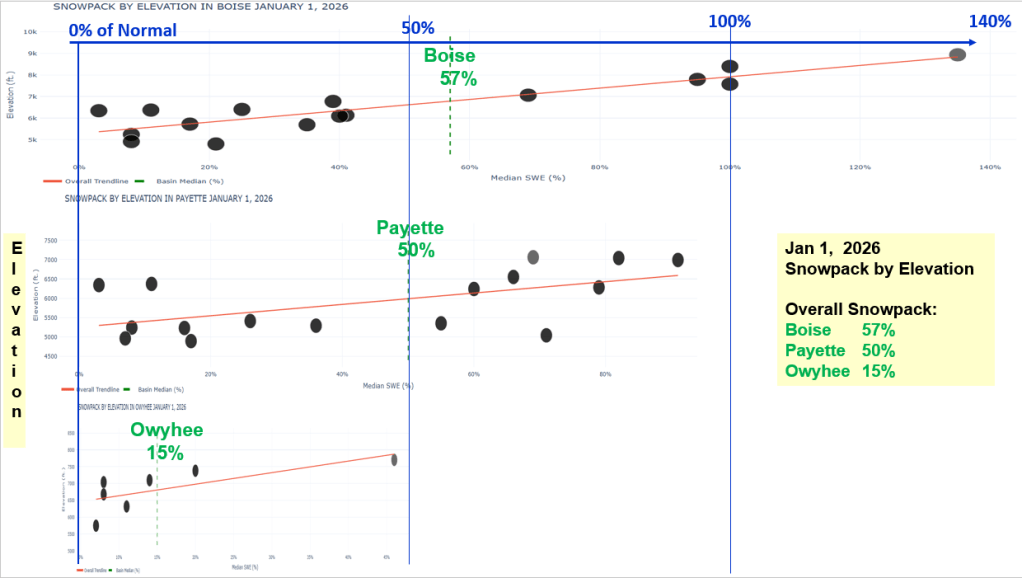
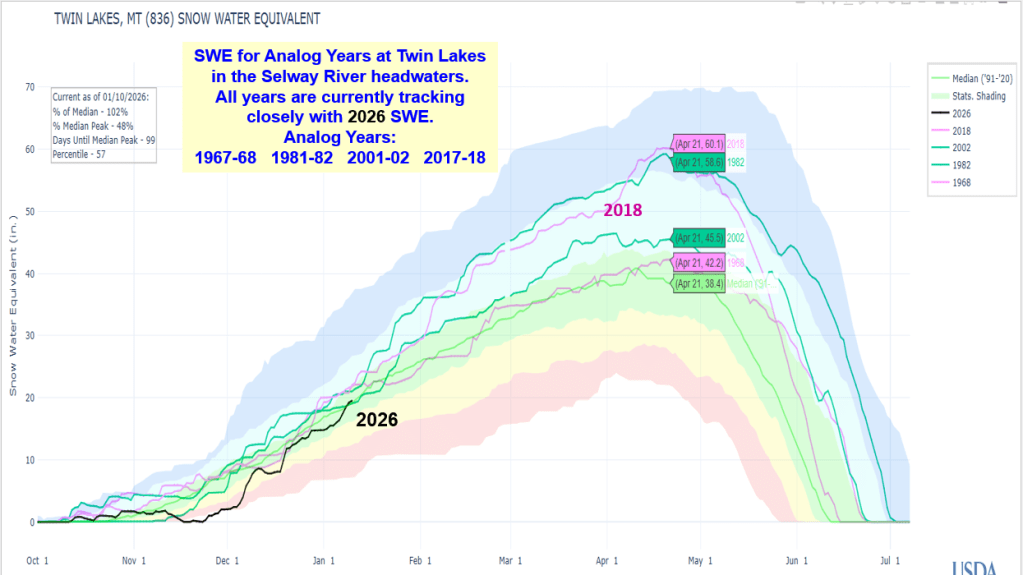
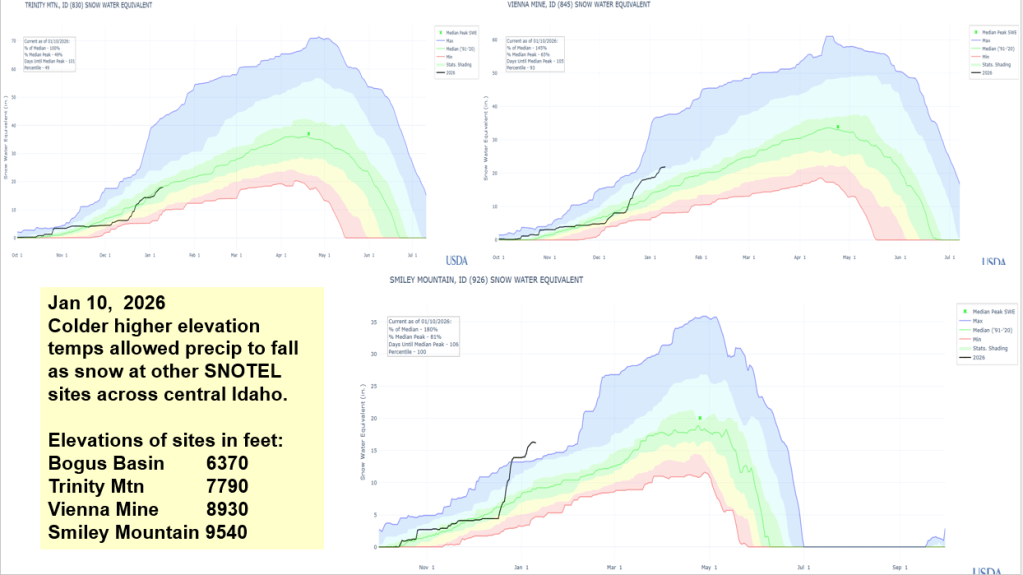
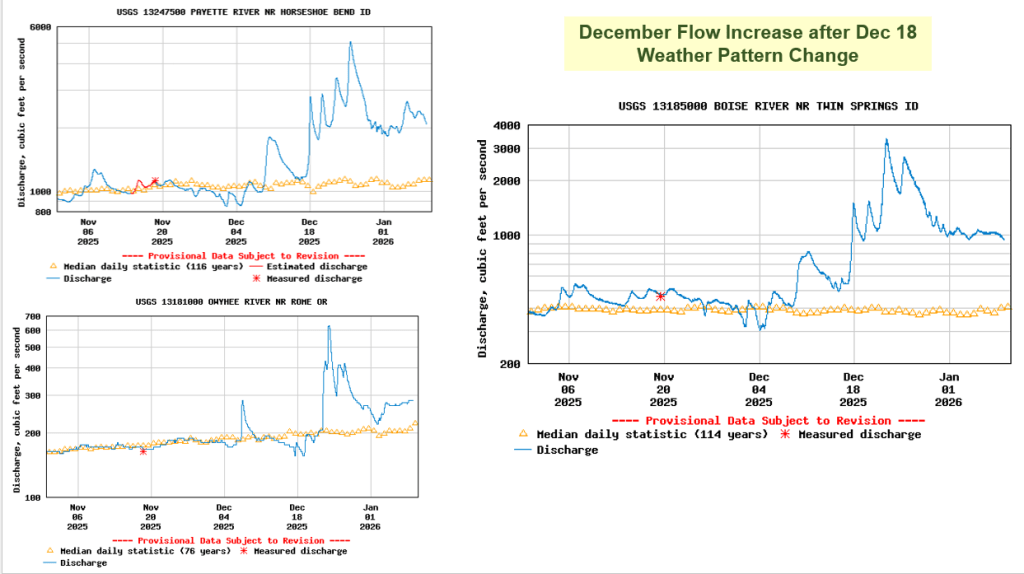
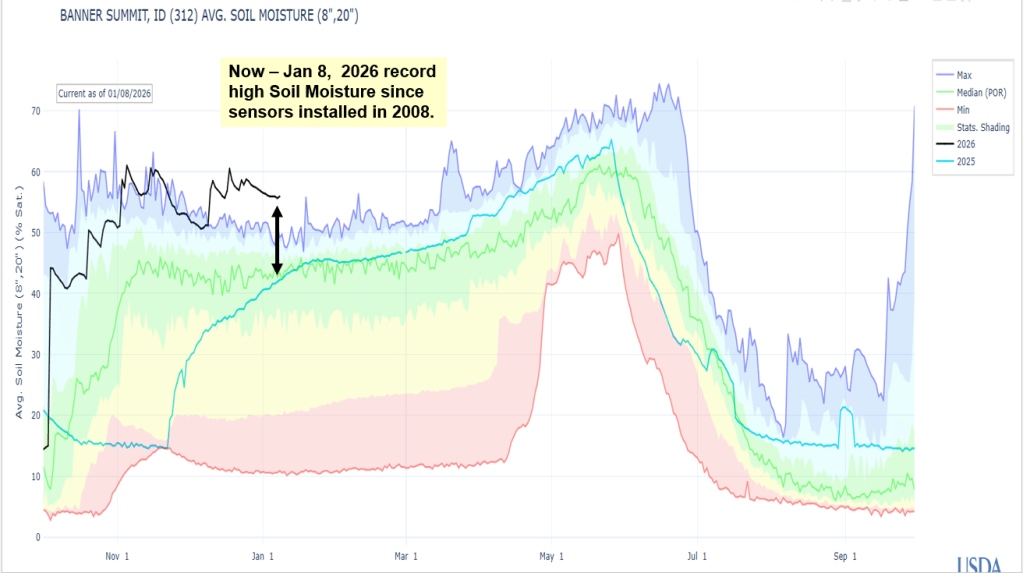
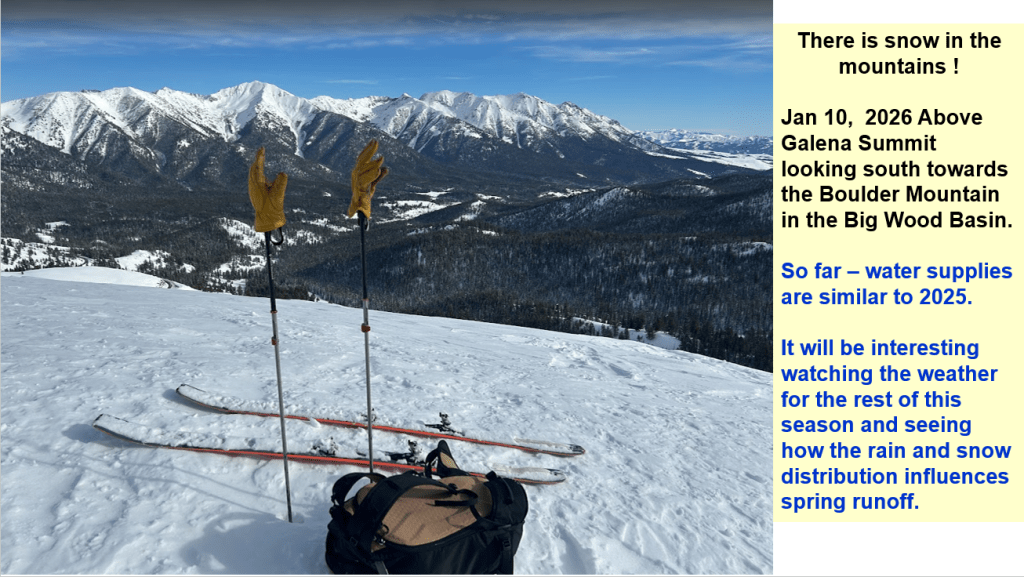
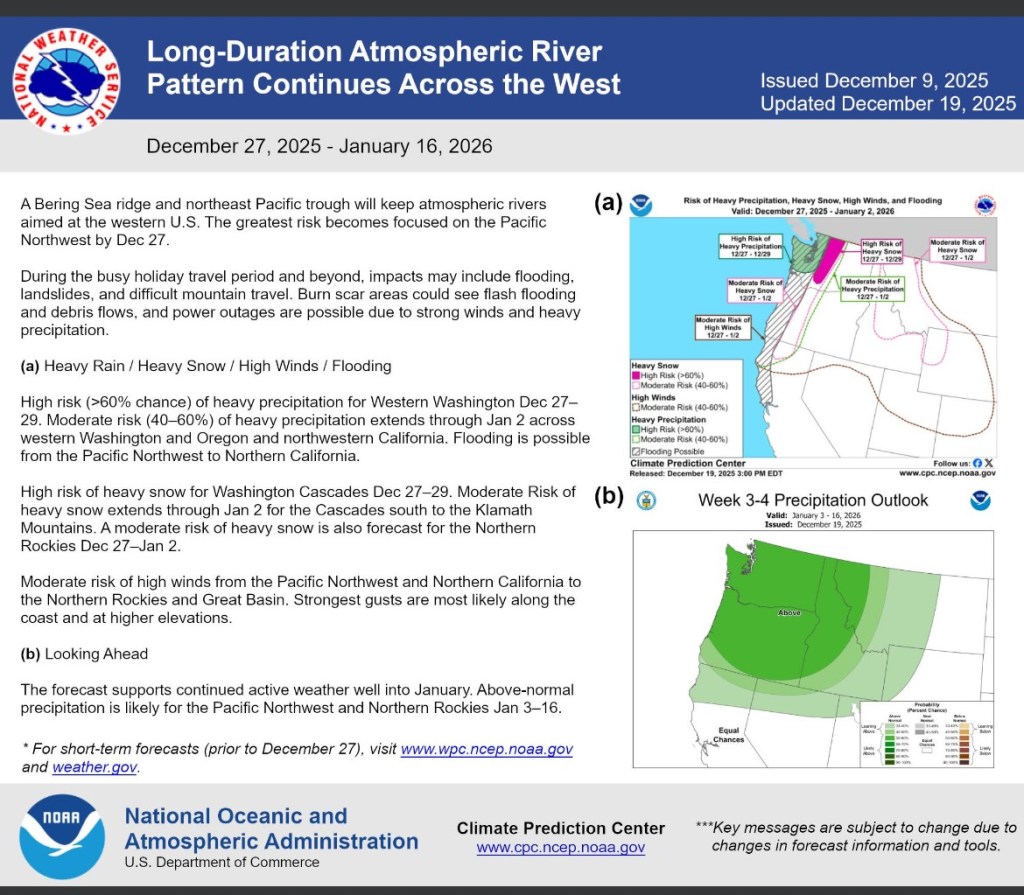
It was an interesting 13 days since last post Dec 6 watching the weather and models coming together and now there’s model agreement of the active weather continuing into mid-January.
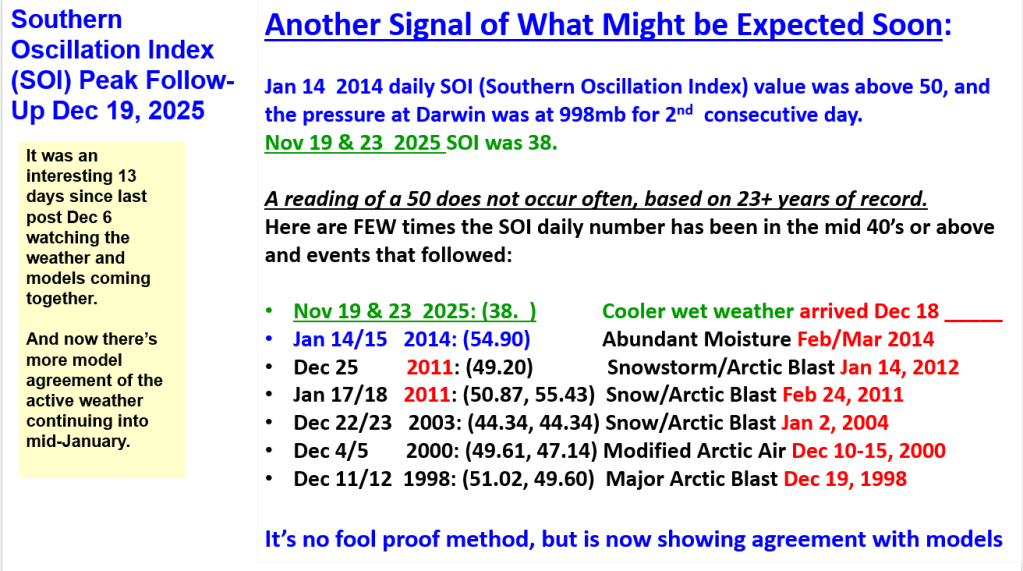

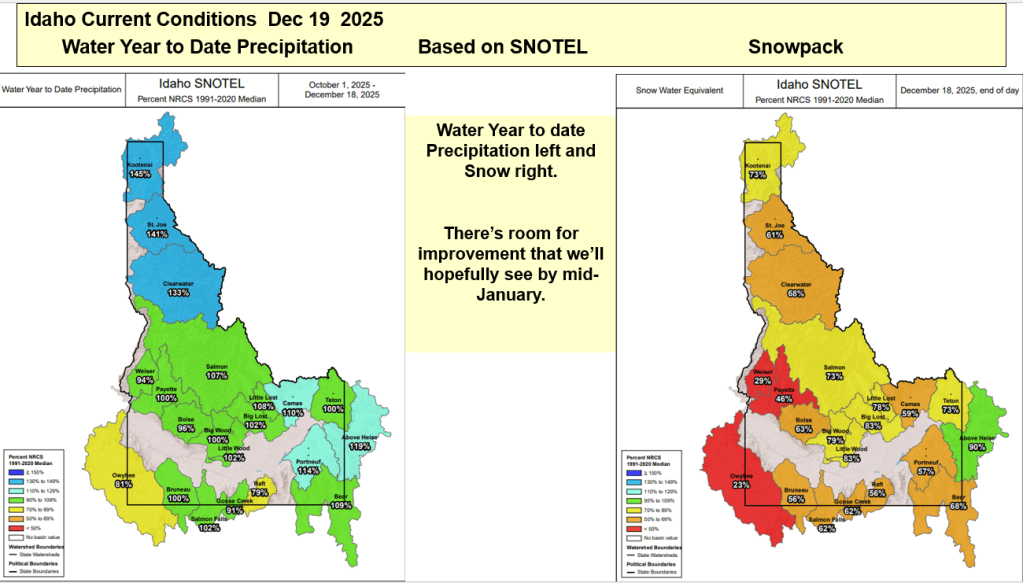
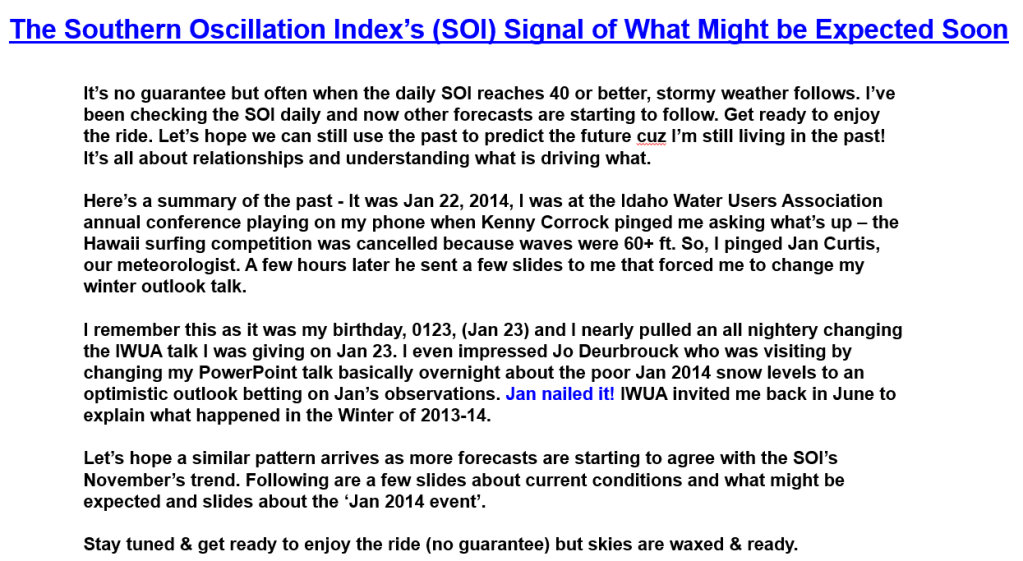
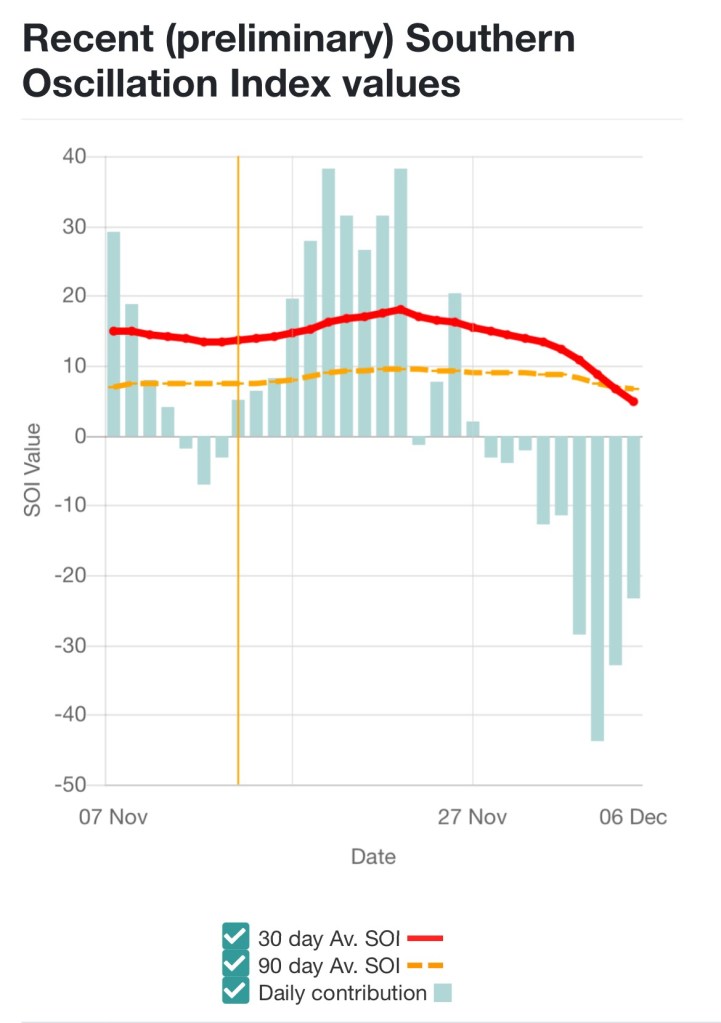
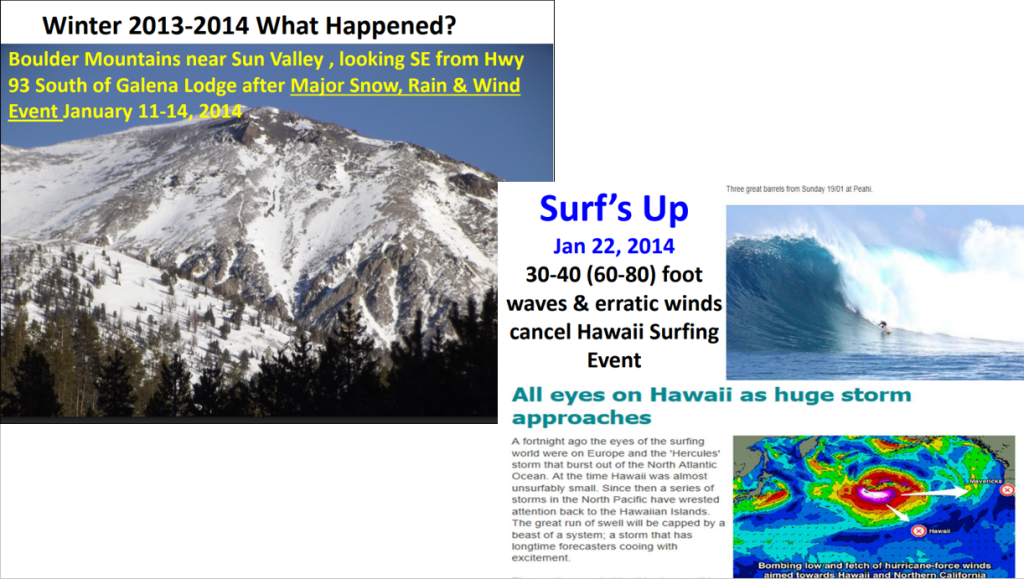
No guarantees, but if history repeats, we could see a weather pattern change around Dec 18. Here’s a summary for the November SOI Event and what I learned the winter of 2014 when it also happened ! Time will tell where the event might arrive or if the event tracks farther east.

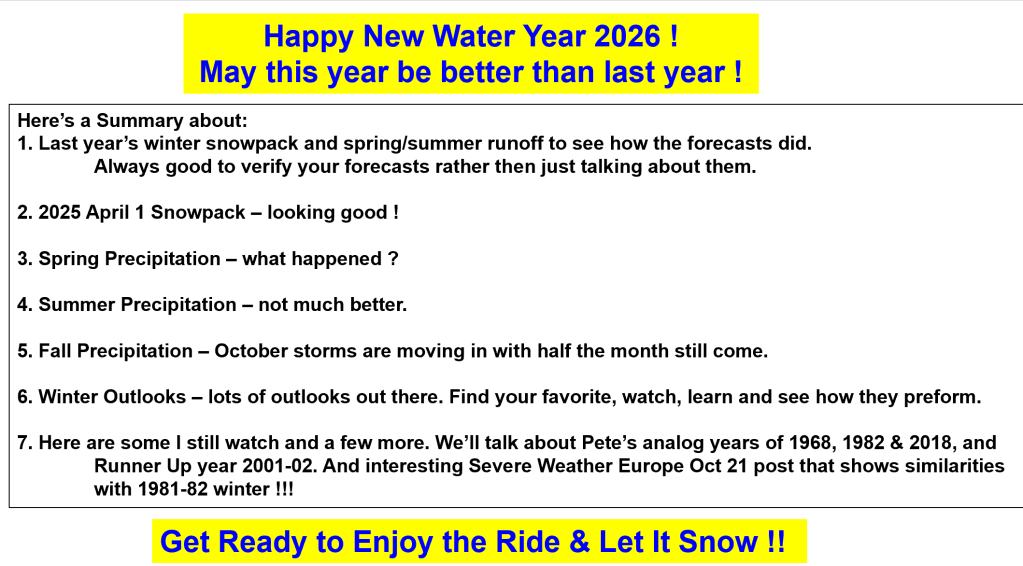
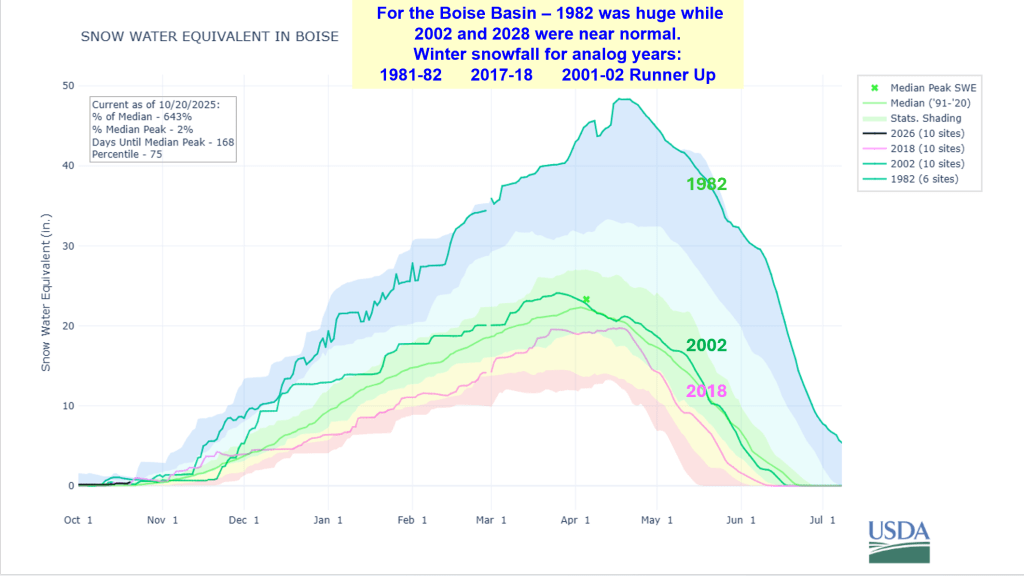
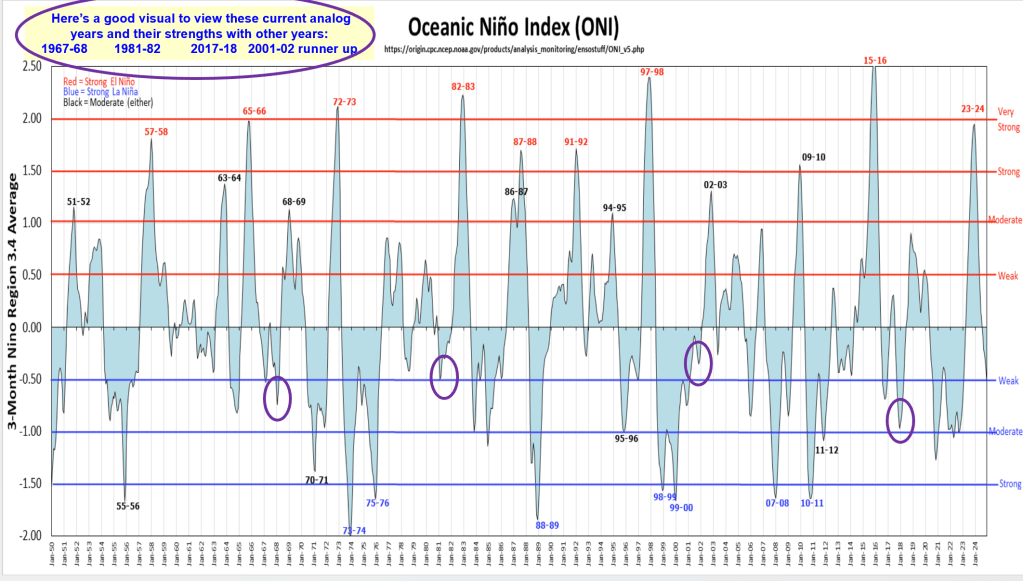
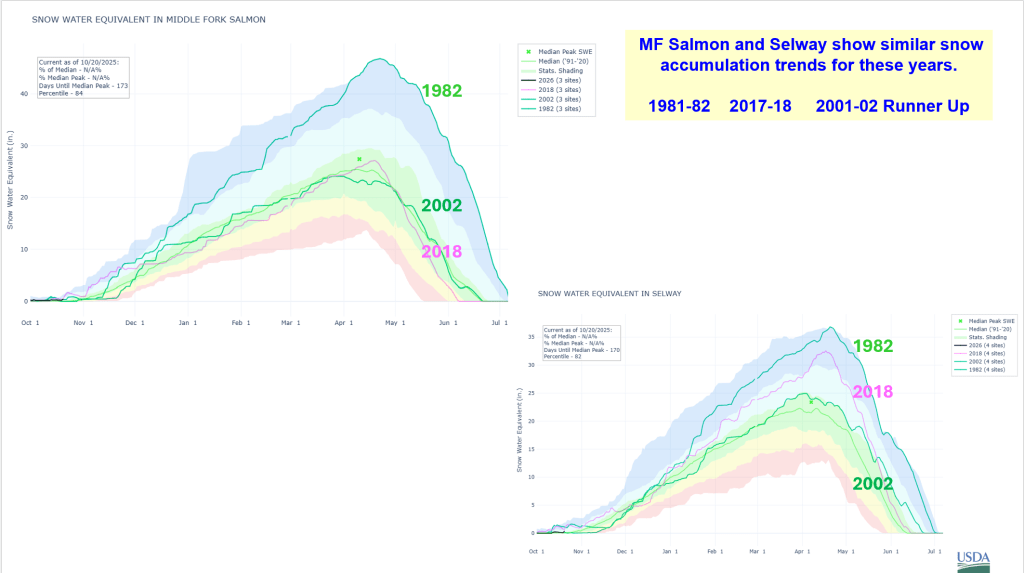
Here’s a summary of what happened to last year’s runoff because of near record dry spring. Summer is over and Fall precip is moving with a huge Atmospheric River tail that stretches over 1000 miles to SE Asia. Winter Outlooks for 2025-26 with analog years based on similar ocean conditions; we’ll watch and updated as we progress into winter. For now enjoy the wet weather as we start the new water by building our mountain snowpack.