Following are long & short term snow analysis that illustrate the Jan 1 snowpack and how it ended up on Apr 1. Short answer – need more storms!
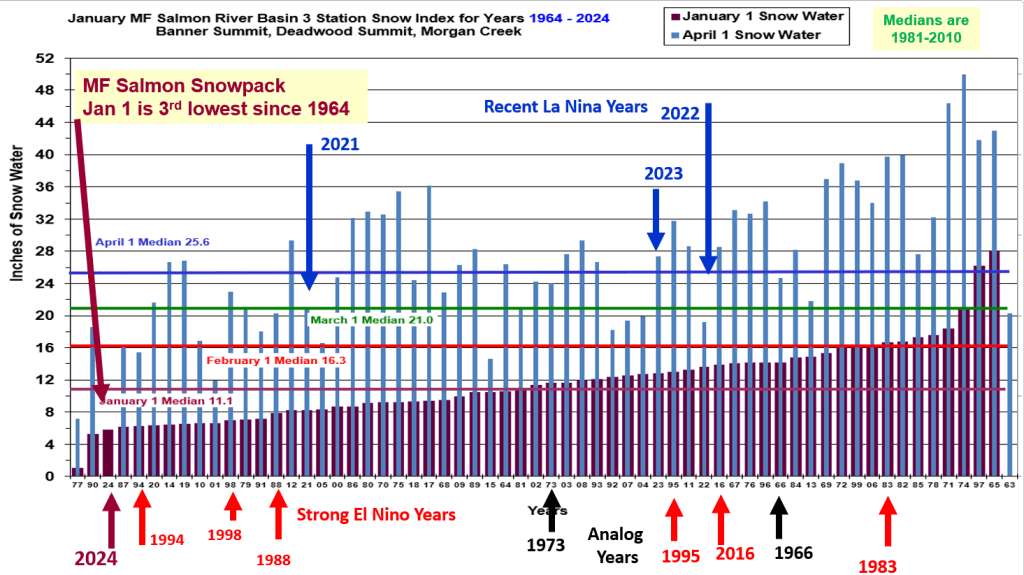


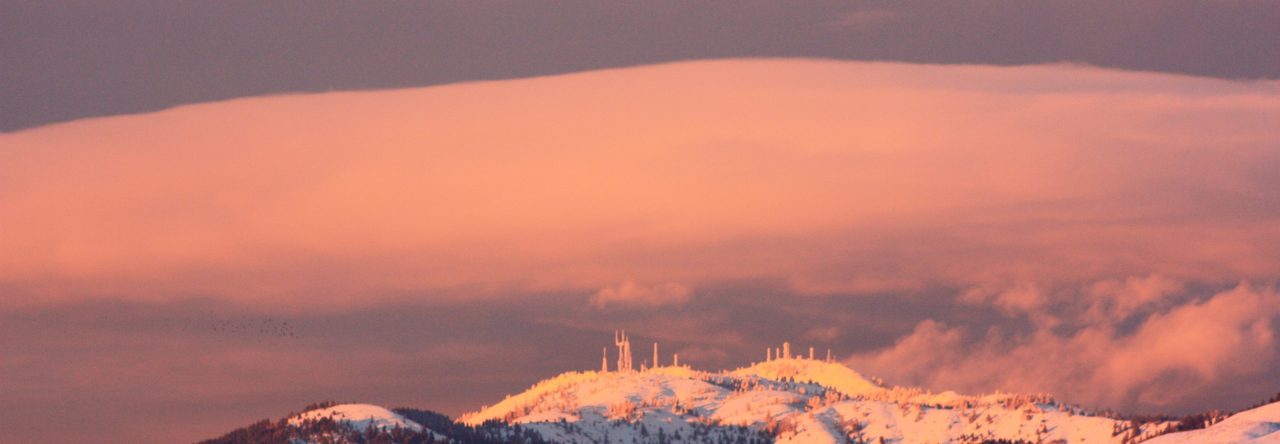
Following are long & short term snow analysis that illustrate the Jan 1 snowpack and how it ended up on Apr 1. Short answer – need more storms!
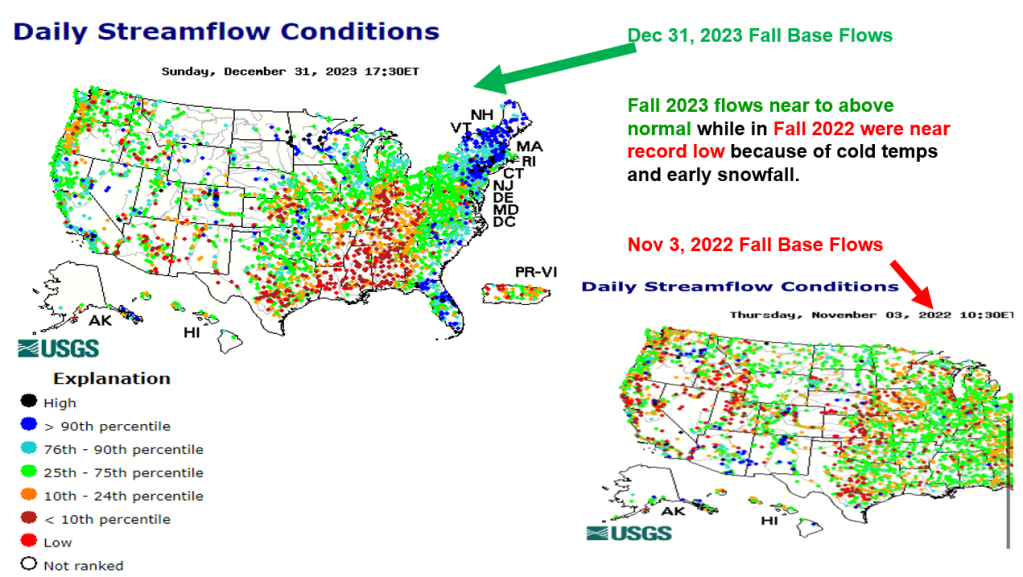
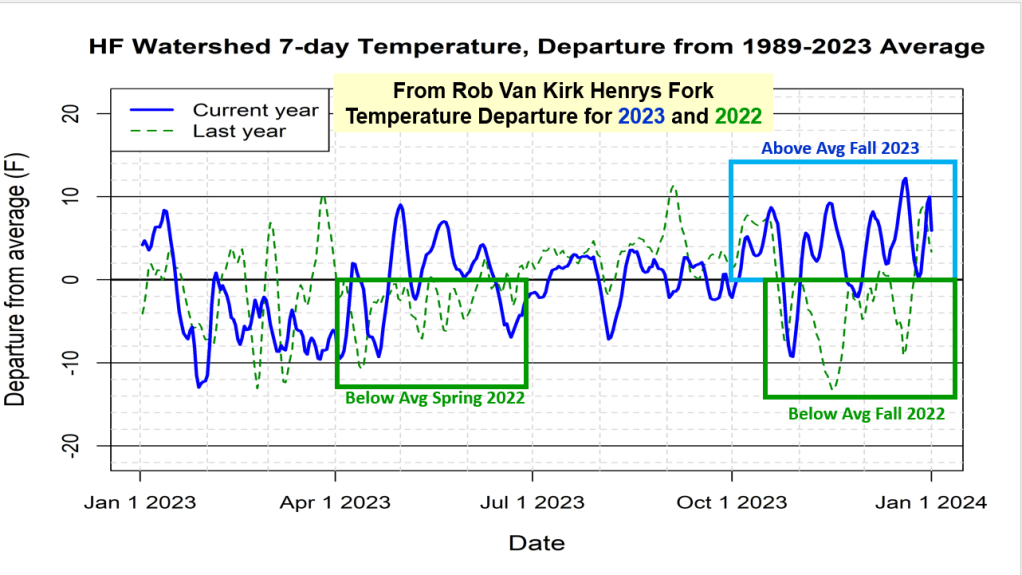
Here’s a summary of the interesting above normal streamflow we are seeing across southern half of the state. This was also observed and mentioned by others hiking, hunting and playing in the mountains this Fall. First I noticed the above average river flow levels and many rivers not freezing. So I had to dig deeper to figure out why and what happened as our Fall was fairly dry with temperatures on the warm and even record high side. Enjoy as we keep dreaming and learning about our rivers. Any other thoughts, let me know.

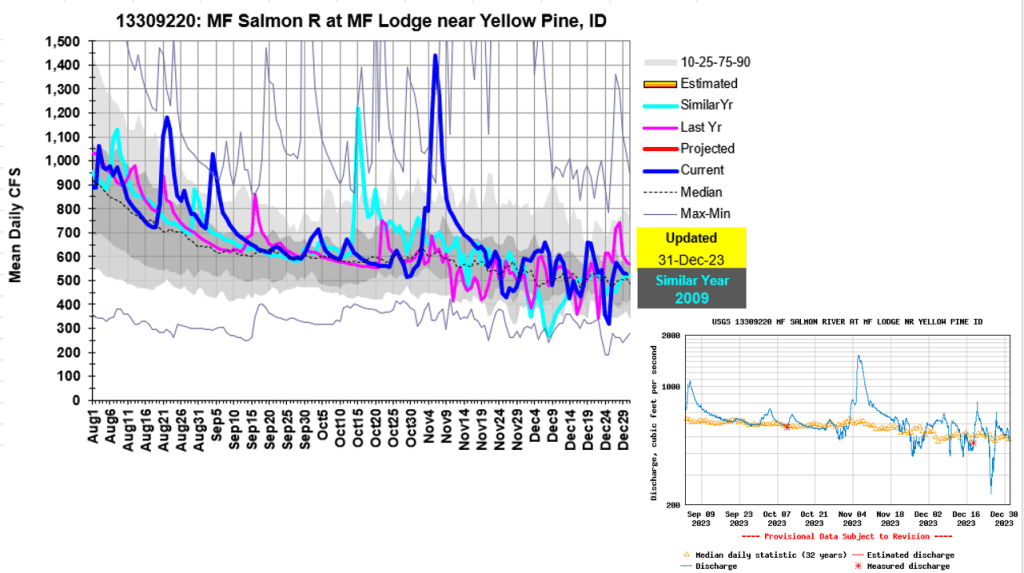
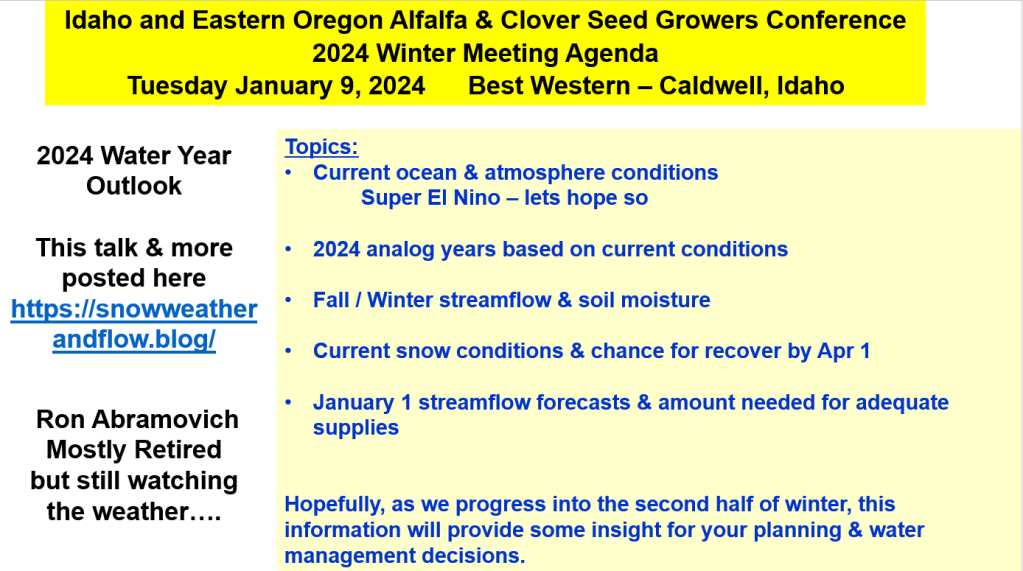
Here’s an update of fall streamflow & soil moisture conditions leading into winter, other strong El Nino years, 2024 Analog Years, chance for Owyhee & Boise basins snow to recover to normal by April 1, and a few streamflow forecasts. More posts and snow will be dropping…
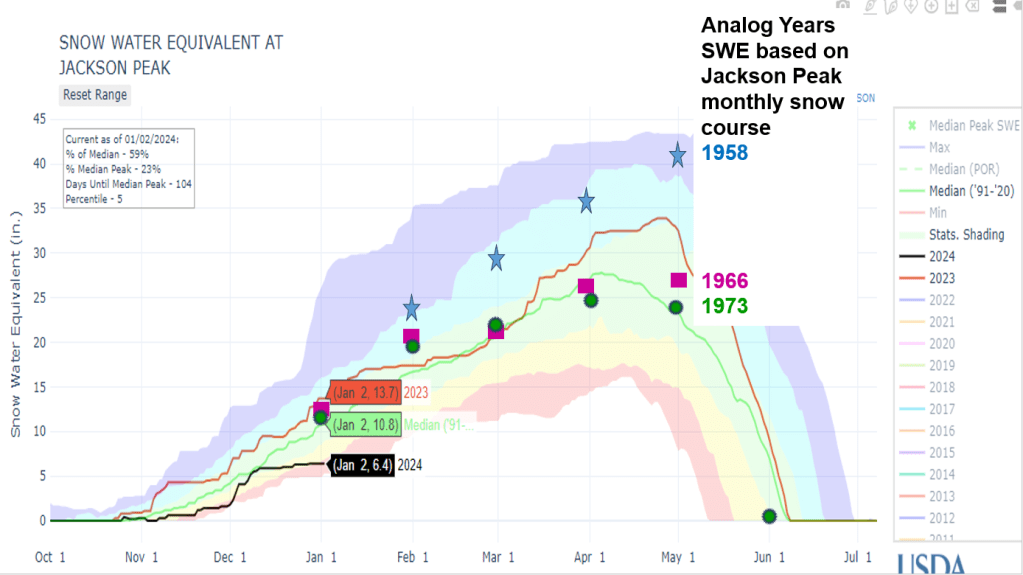
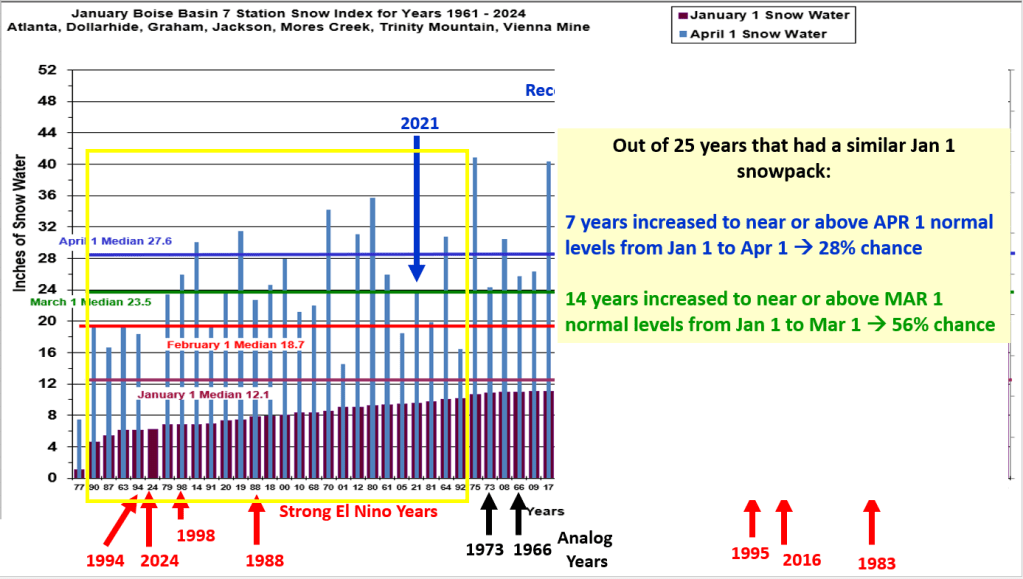
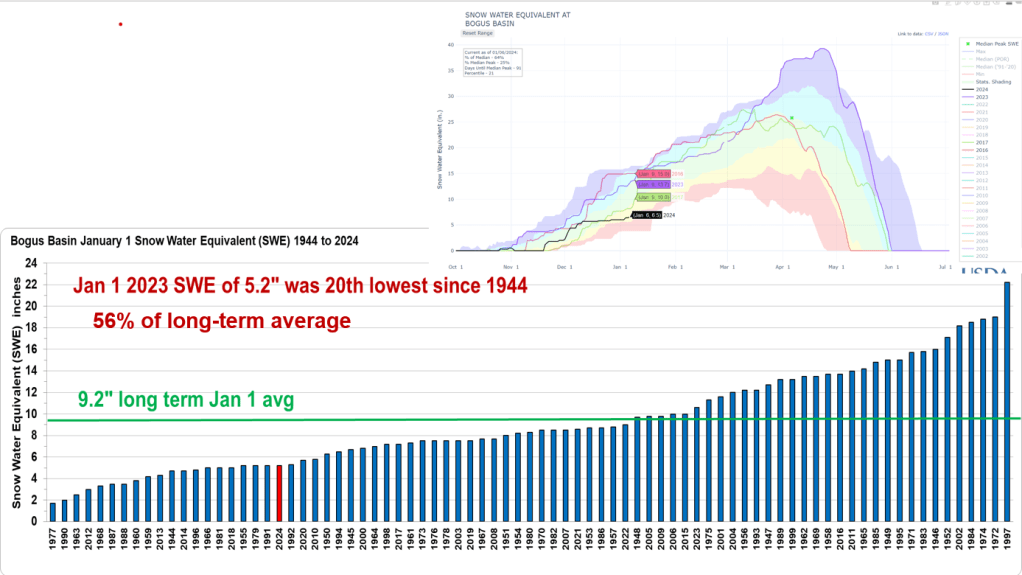
Keep in mind, Pete’s analog years are based on current Pacific Ocean and atmosphere conditions to generate awareness of current conditions and precipitation and temperatures outlooks based on
analog years. They were never intended to zoom down to a basin level or individual station, but let’s have some fun, give it a try to see how they worked to give us a heads up about the winter snowpack for Twin Lakes SNOTEL, Boise Basin and Bogus Basin SNOTEL.
Recession flows are in full swing which makes it easy to see where they’re coming from and going. Flows range from near record low in northern Idaho, below average in the Salmon, to above average in central and southern Idaho. Even the Owyhee is flowing above average. Enjoy the flow where you can and we’ll see what El Nino brings next winter…
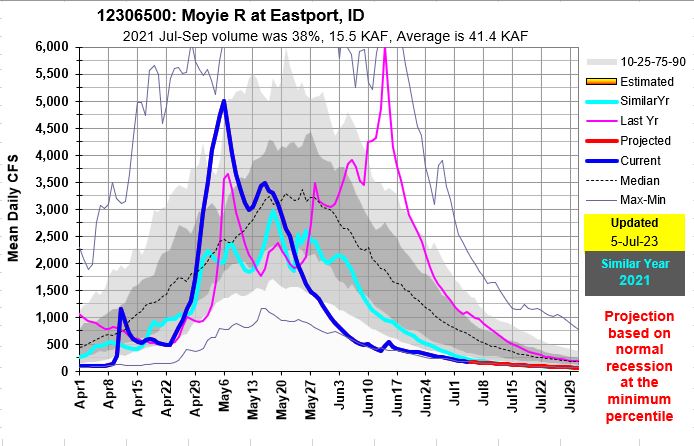
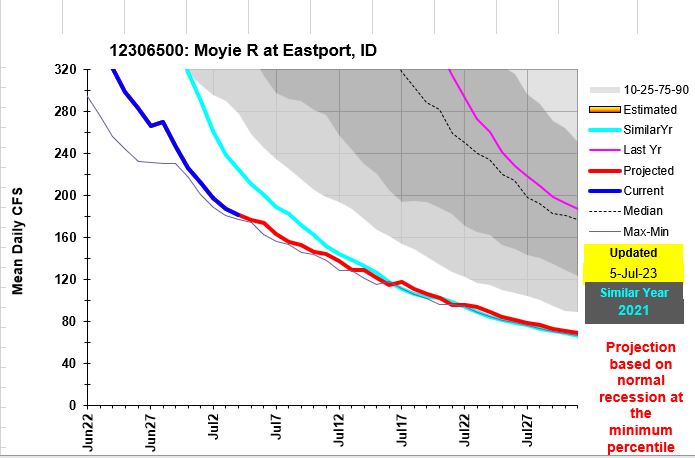
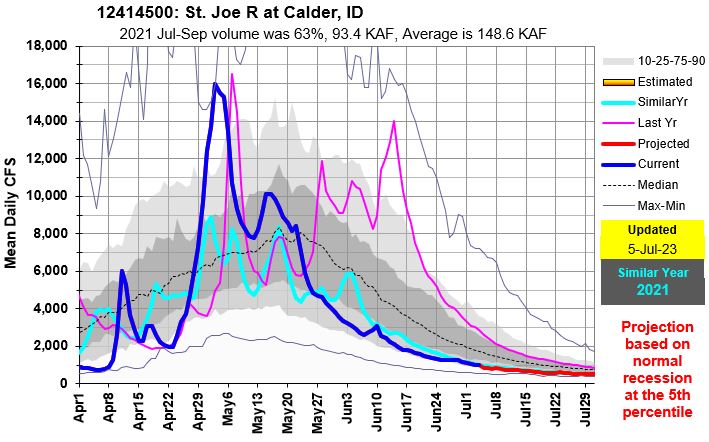
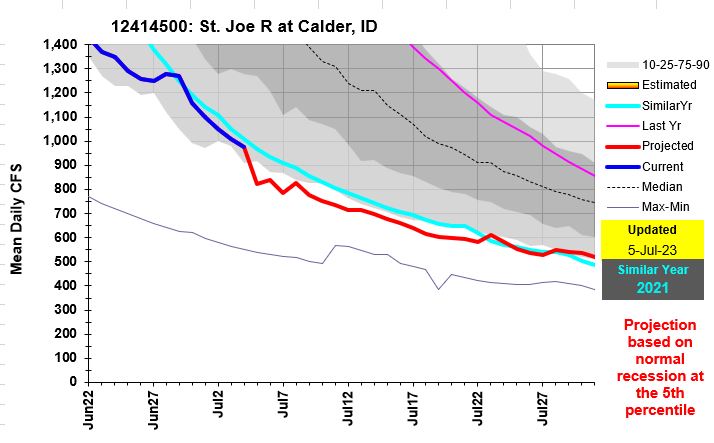
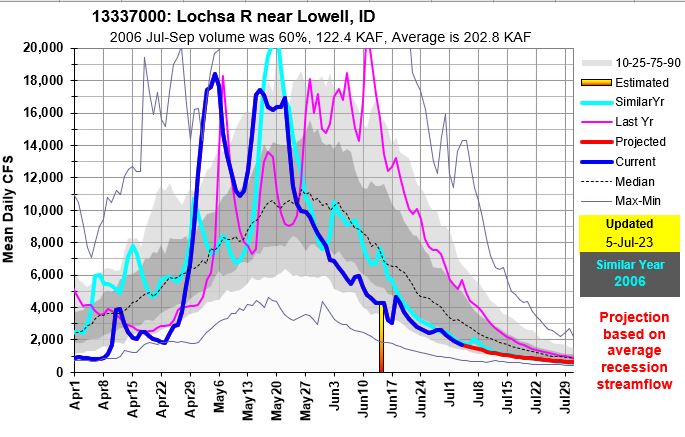

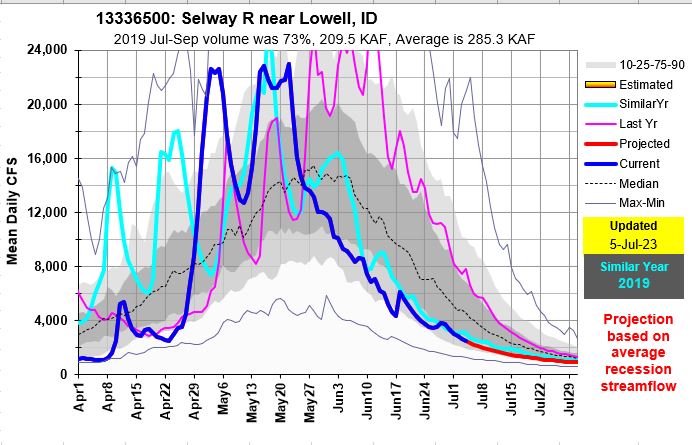
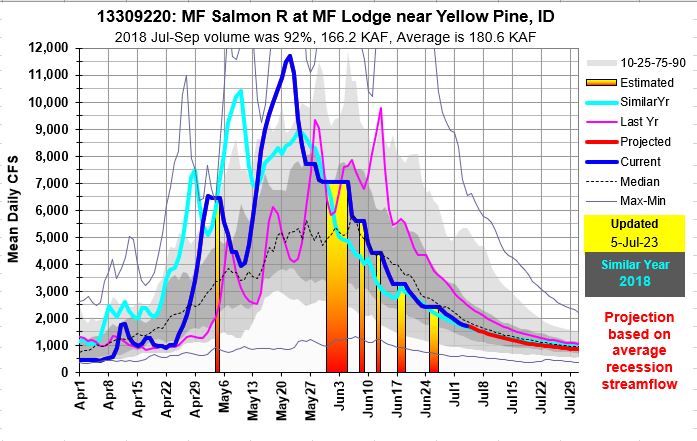
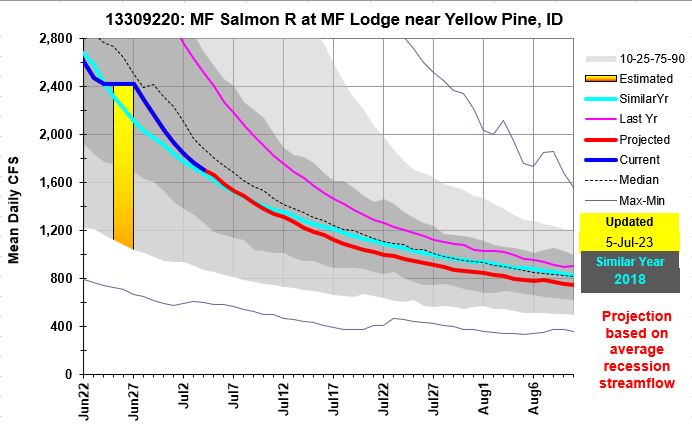
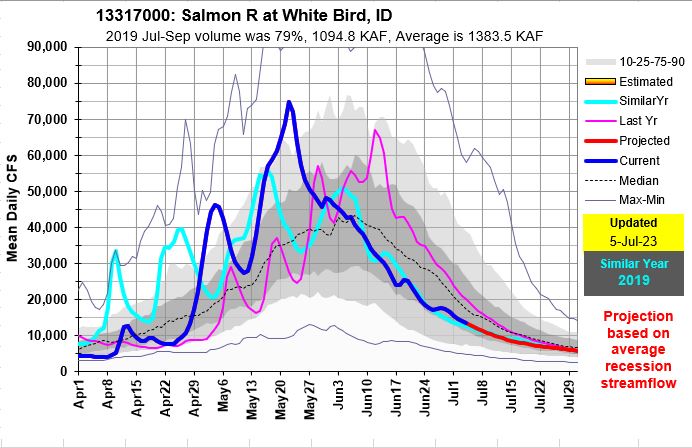
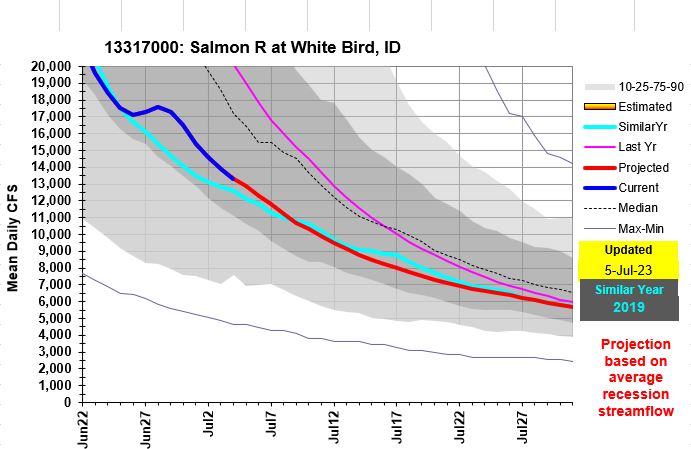

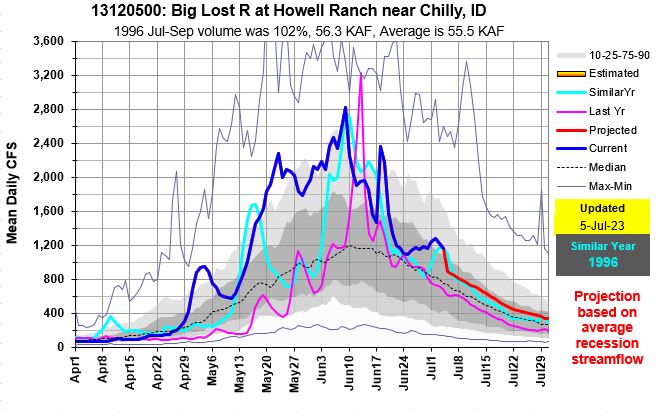
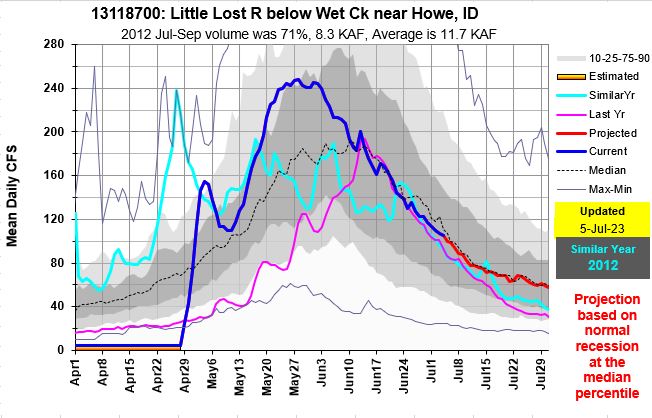
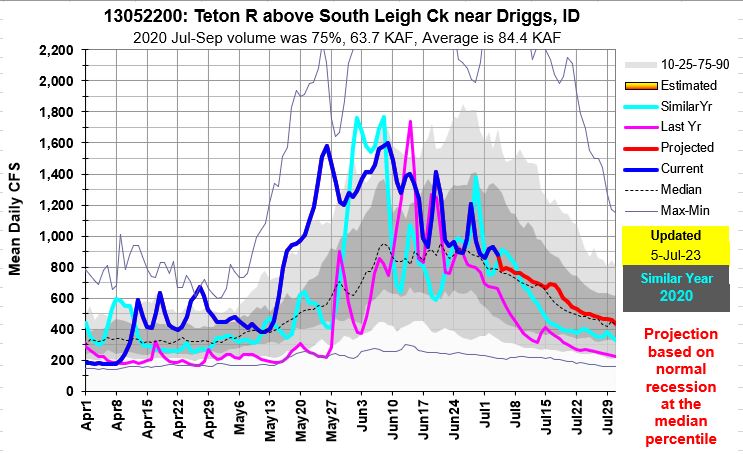
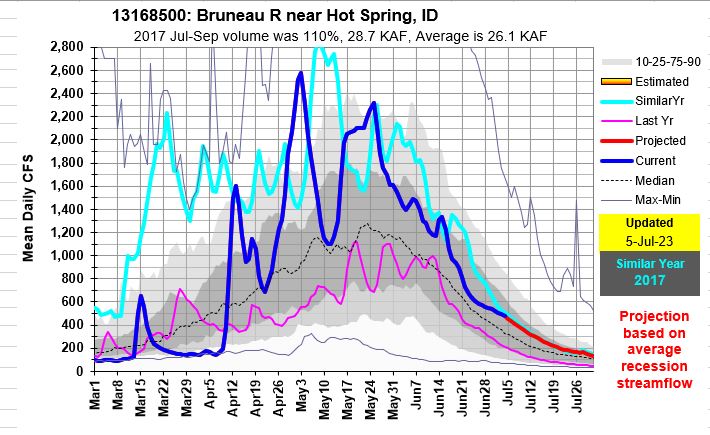

The Teton River is just reaching its snowmelt peak while the Moyie River is flowing near record low. The Owyhee River is just now reaching the tail end of recession flows. Central Idaho’s rivers are receding from their snow driven peaks. May brought warm temps with above freezing nighttime that resulted in 24/7 meting and probably record high SWE loses during the month of May because there was plenty of snow to melt. June’s cooler and wetter weather will help push recession flows out a bit before the normal low flow summer levels arrive. Owyhee and Bruneau recession flows months are a good example of these extended flows. Enjoy the river, know your limits and keep your eye on the weather and those river flow levels.
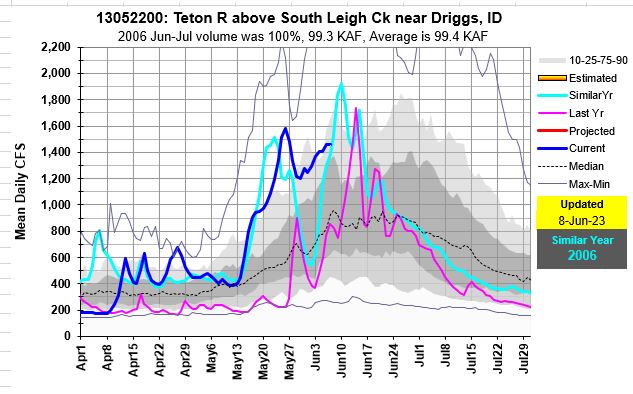
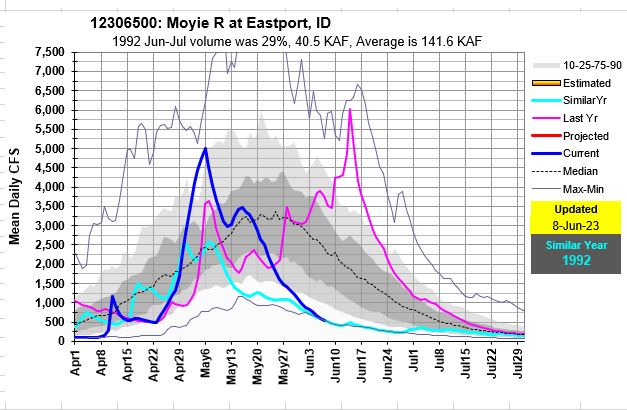
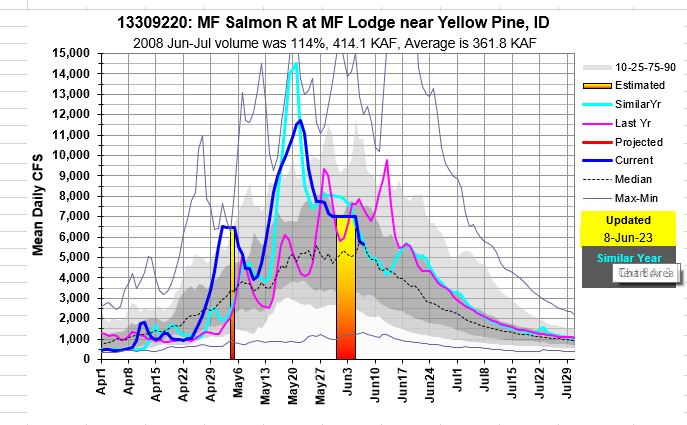

Update for Owyhee, Weiser, Camas, Salmon Falls, Bruneau, Boise & Big Wood
For complete Snow to Flow Relationships see:
Snow Melt / Peak Streamflow Relationships (PDF; 146 KB) – Report by Kara Ferguson (2017) summarizing the relationship between snowmelt and peak streamflow timing on rivers throughout Idaho.
From https://www.nrcs.usda.gov/wps/portal/wcc/home/quicklinks/states/idaho/watersupply/peak
And NWS peak flow products and forecasts:
Peak Flow and Stage Forecasts from NWS
Know your boating limits as rivers will be high for an extended period.


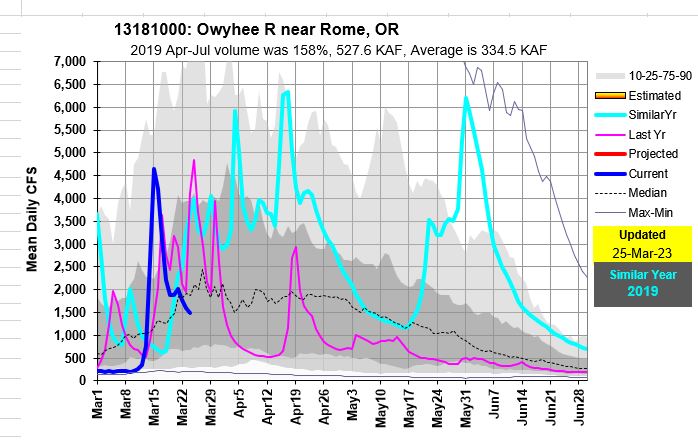
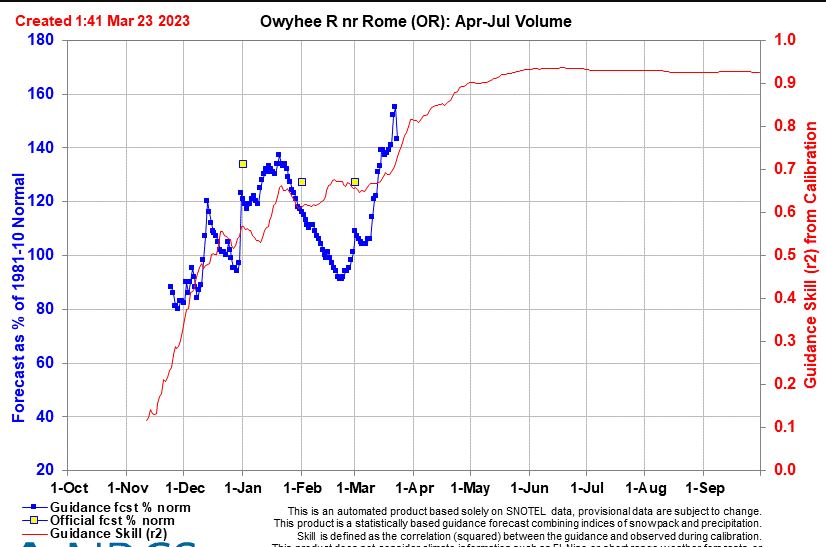
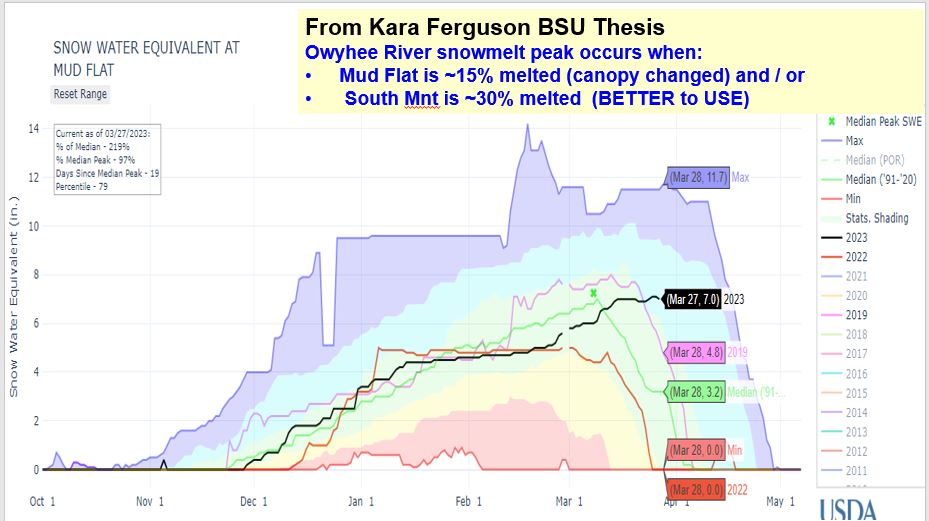
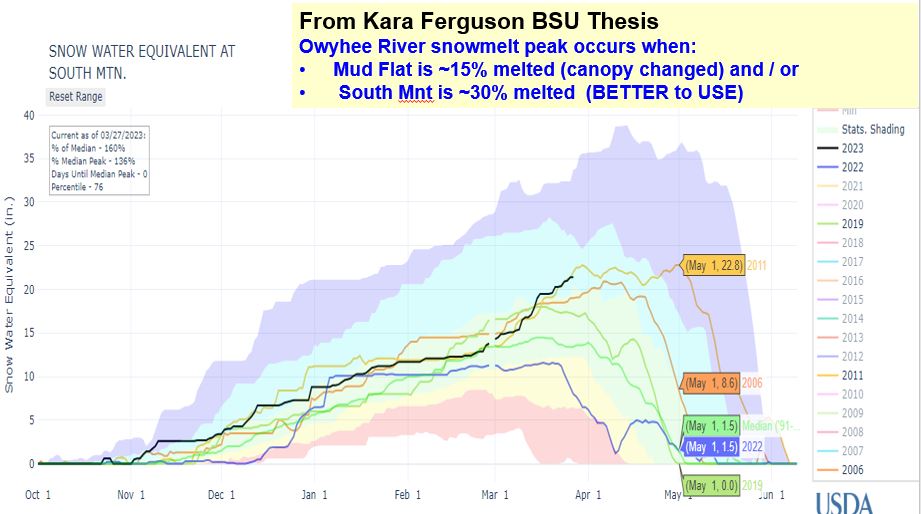
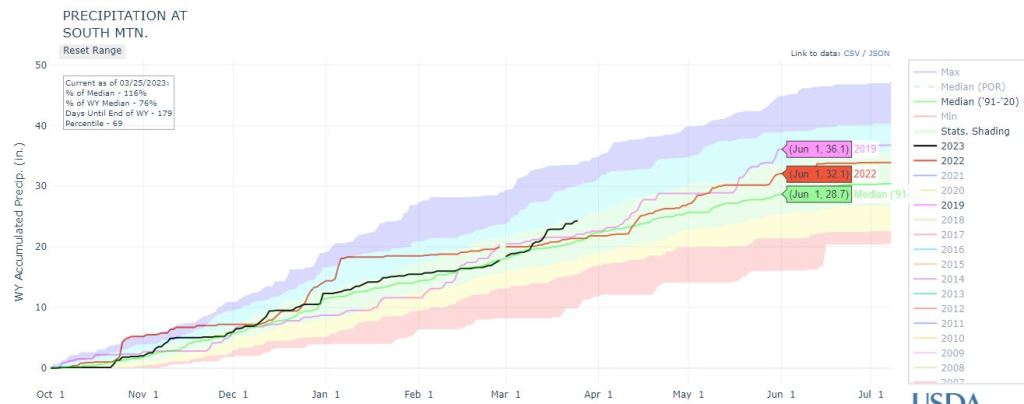
The Owyhee River at Rome increased to 4600 cfs (mean daily flow) on Mar 16 from melting of valley snow and rain for its first peak since last year. The higher elevation snow is still accumulating, even at Mud Flat SNOTEL site which is only 5730 feet in elevations. March precipitation thru March 27 was 144% of median with another storm to continue building the pack as cold will remain until at least early April. Then, get ready as the cold temps will not last for ever…
With an April-July runoff volume of 150% of median predicted, means we could see volumes similar to the first half of the 2019. The 2nd peak on May 31, 2019 depends if the wet /cool spring weather continues into late spring / early summer.
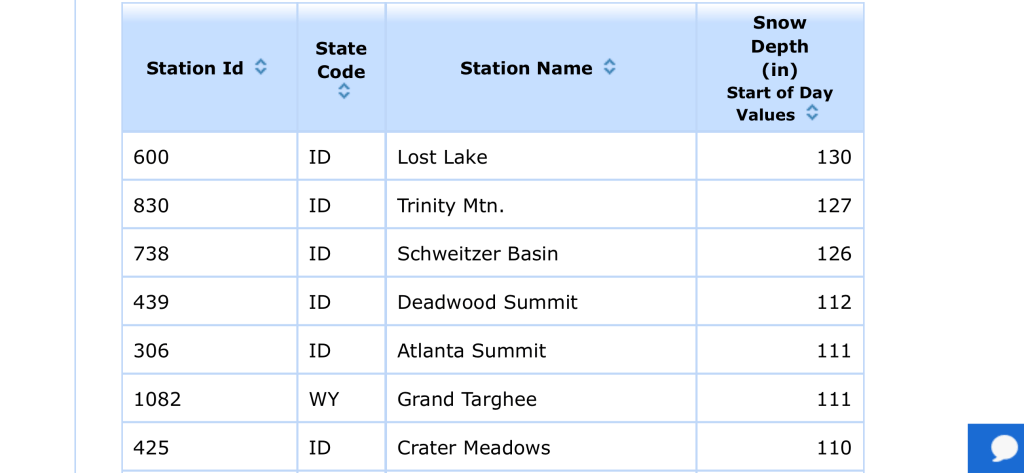
Here’s a link to today’s natural snow depth for all SNOTEL sites in our region in inches. The Report Generator link below gives full report – you can sort columns high to low or alphabetical.
Lost Lake is the winner with 130” along the NF Clearwater/St Joe divide. Last night’s storm allowed Boise basin’s Trinity Mnt with 127” to pass Schweitzer Basin that only has 126” !
Central Idaho’s has a strong snowpack with Deadwood and Atlanta Summits and Grand Targhee making the top 5!
Usually March’s warmer temps allows the snow depth to start settling down and compacting, but not yet… cold is good ! This map shows month to date precip and March storm track across the the West. Another couple of storms are on the horizon that will keep adding to the pack.
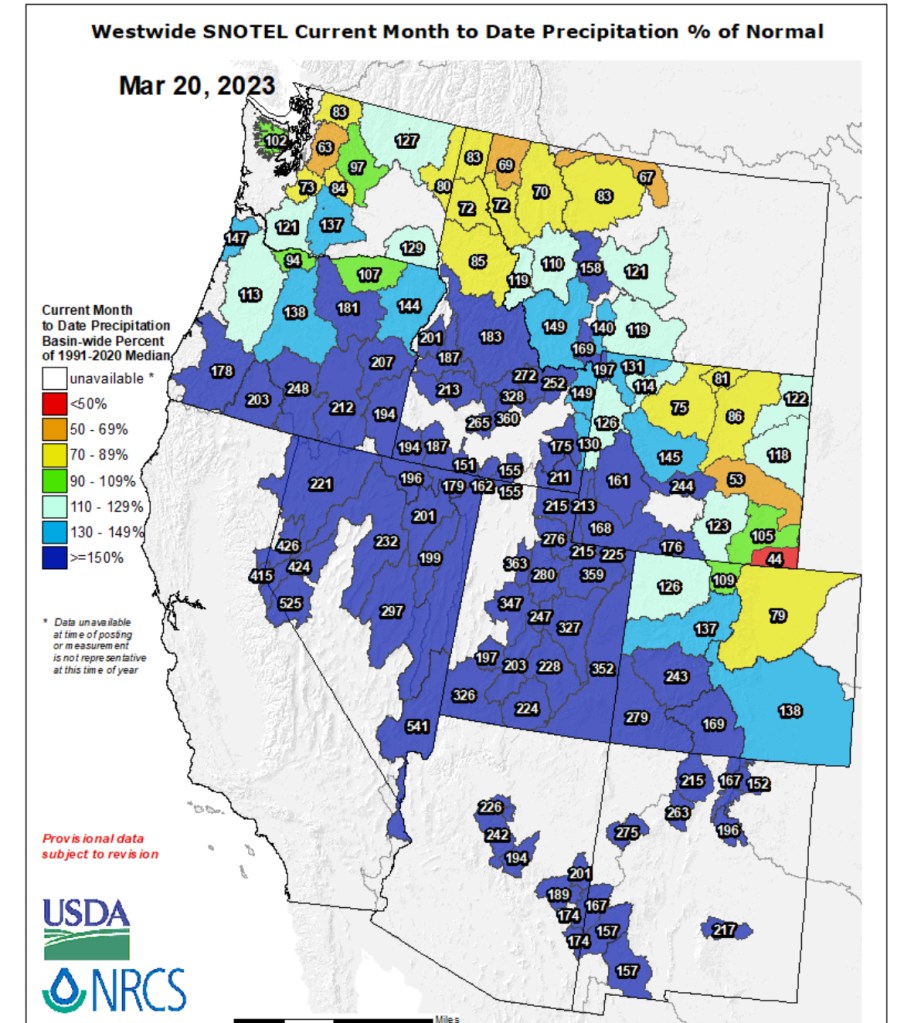
No signs of an early spring in sight yet… so don’t put those skis away.
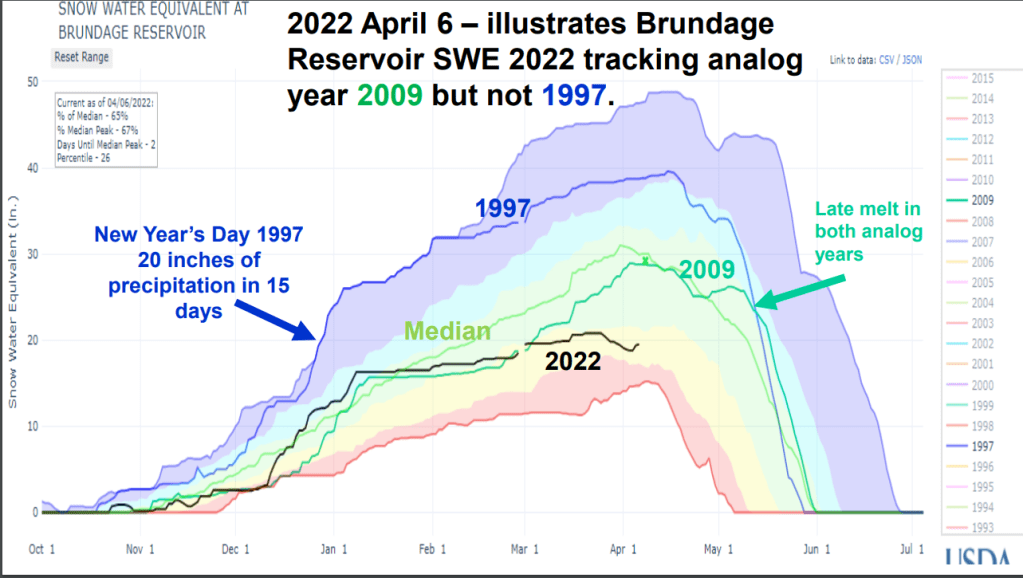
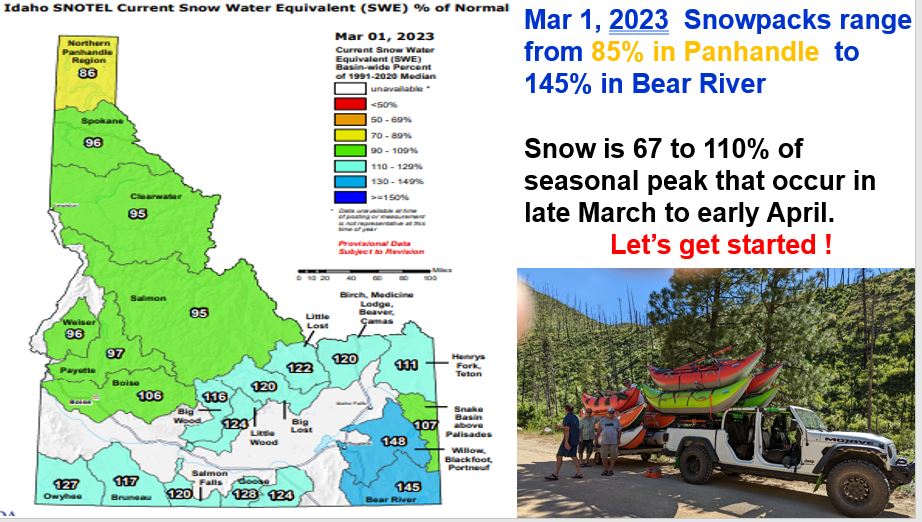
Here’s an update given at the Idaho Whitewater Association March 1 meeting. We start where we left off last March because 2022 set the stage for this 3rd consecutive La Nina winter. Included is current snowpack and similar (ocean condition analog) years for this winter. Most analog years had a delayed melt like 2022. Keep your eye on the sky as we watch to see what March brings and when warmer temperatures arrive. For now, cold is good to keep the snow in place and allow the mountainous snowpack to keep accumulating.

 Snow Weather and Flow