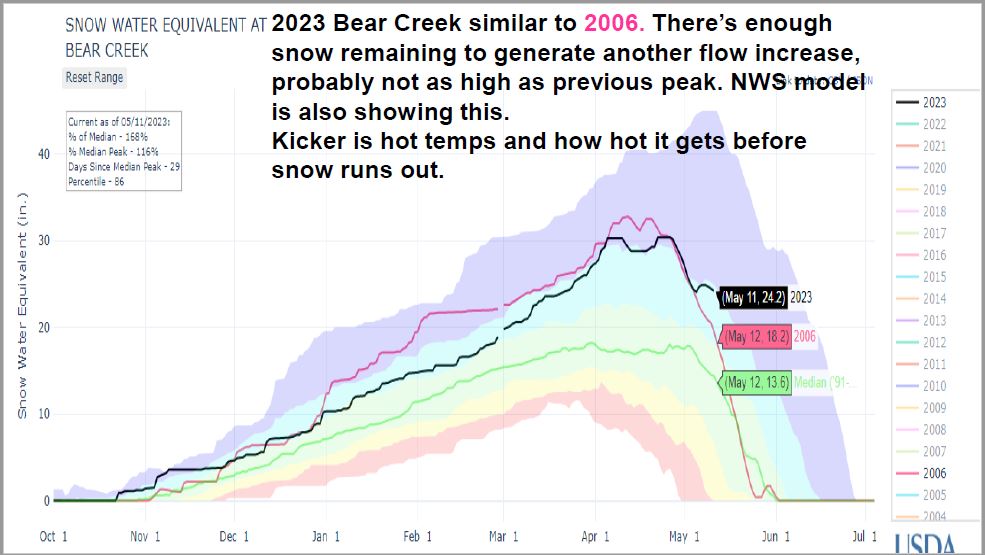
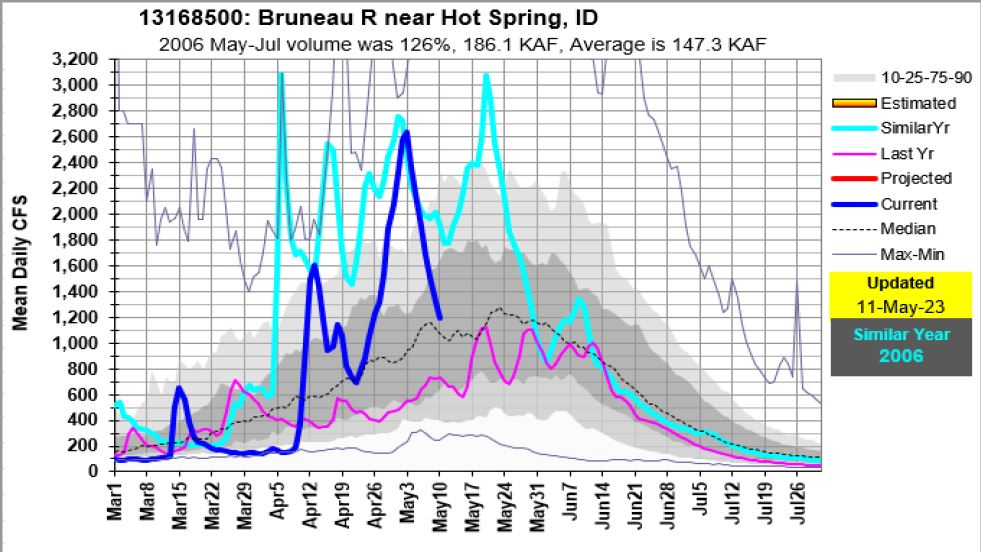
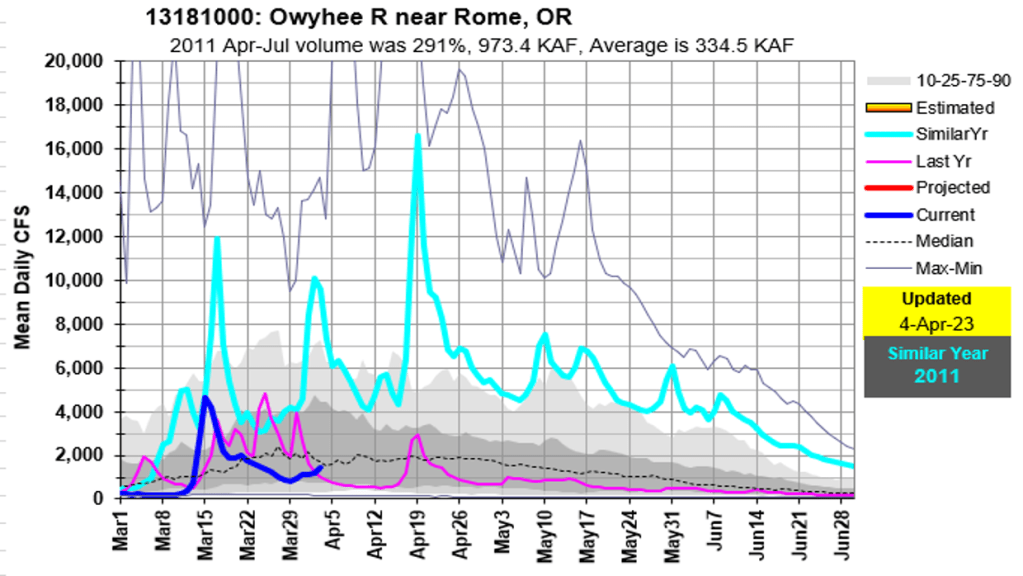
Here’s a short update, just dont tell Mike… The Bruneau is unique place, lets keep it that way. There’s enough snow to produce another increase, but the wild card are the extended period of hot temps. I didn’t look to see how much if any rain fell in May 2006 that added to flow increase.
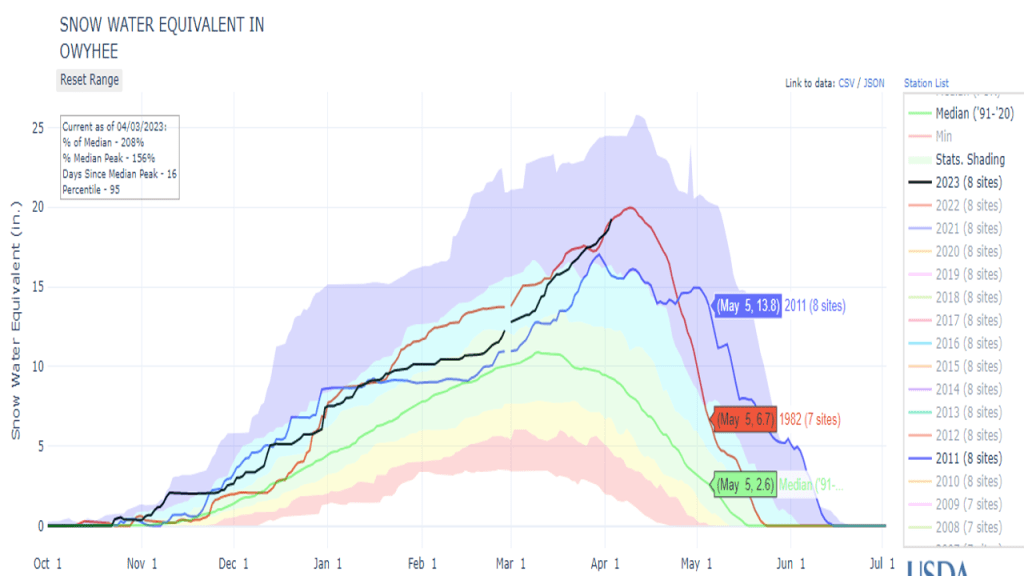
Update for Owyhee, Weiser, Camas, Salmon Falls, Bruneau, Boise & Big Wood
For complete Snow to Flow Relationships see:
Snow Melt / Peak Streamflow Relationships (PDF; 146 KB) – Report by Kara Ferguson (2017) summarizing the relationship between snowmelt and peak streamflow timing on rivers throughout Idaho.
With plenty of snow to melt, we’ll see an extended period of higher water and the highest flows in a few years. The warmest days of the season will start melting more snow to feed the river. A projected weekend storm may limit how high the river rises or add to it with rain. When the peak occurs is still a function of how hot it gets and when, along with input from spring rains or not. We know there is a good snowpack, best in years, to sustain flows for a while based on past similar snow years. Be safe, know your limits and keep an eye that flow gage, the melting snow sites and future weather as the Owyhee flows in this high desert can change quickly.
Now this is gonna get interesting… who remembers what the meaning of life is – from hitchhikers guide to the galaxy ? 42 and this is also Boise’s Magic temp for snow to be falling at Bogus, for most storms. Let’s Keep It Simple Silly (KISS) so we don’t have to explain the adiabatic temp lapse rate decreasing 3F /1000 ft increase in elevation.
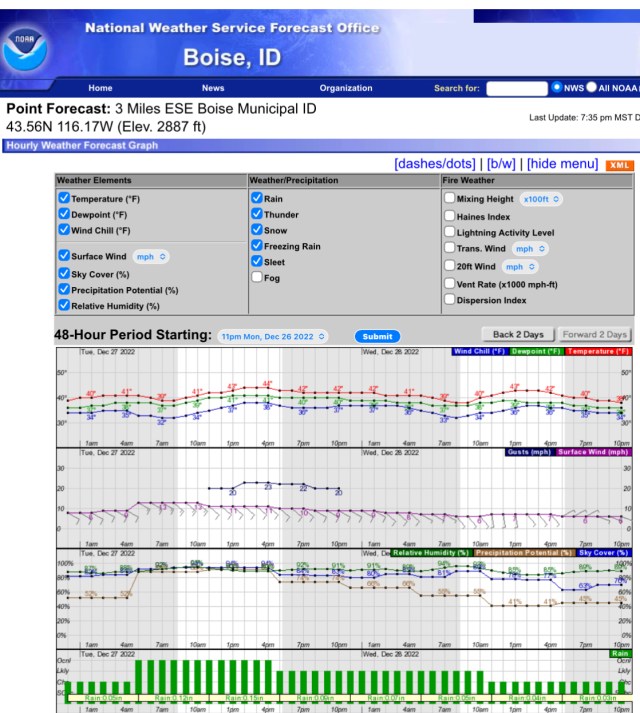
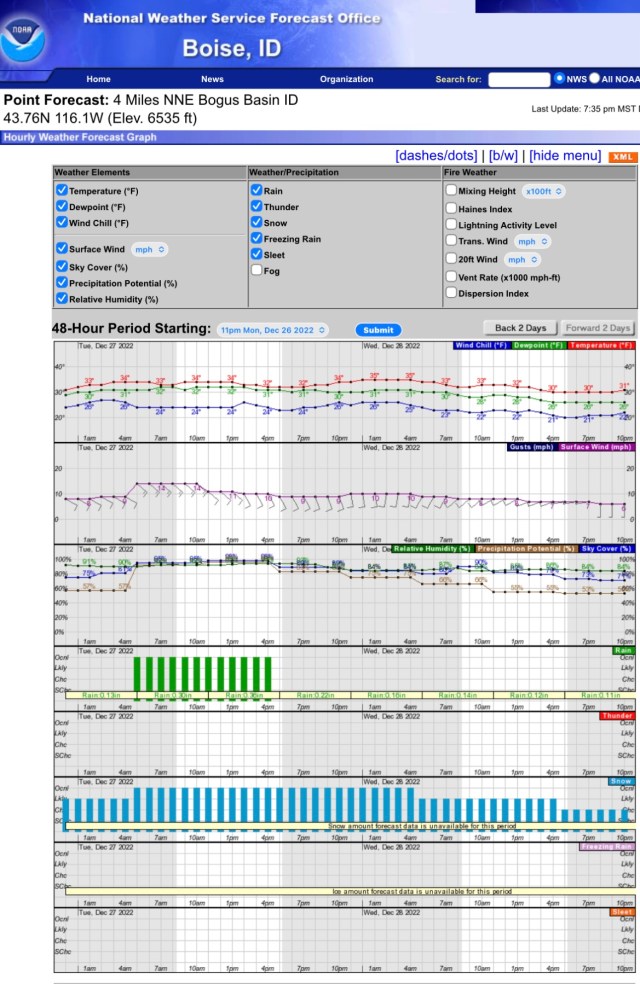
The NWS forecasts for Boise for Tues shows temps pushing 43 F and Bogus at 34 with rain snow mix and snow line / level around 6,600 ft !!! Elevation matters and makes a difference! Stay tuned and let’s hope the snow on ground and frozen soils can keep the temps cooler than the models are predicting and snow keeps falling above 6,000 ft !!!
In Idaho, rain-on-snow runoff events happen below 5,000 ft from mid-Nov to mid-Feb. We’re step-up nicely for rapid runoff if the rain intensity and duration occurs because of valley snow cover and frozen soils. Soils in my backyard are frozen deeper than my shovel can easily dig. What’s happening in your backyard ?
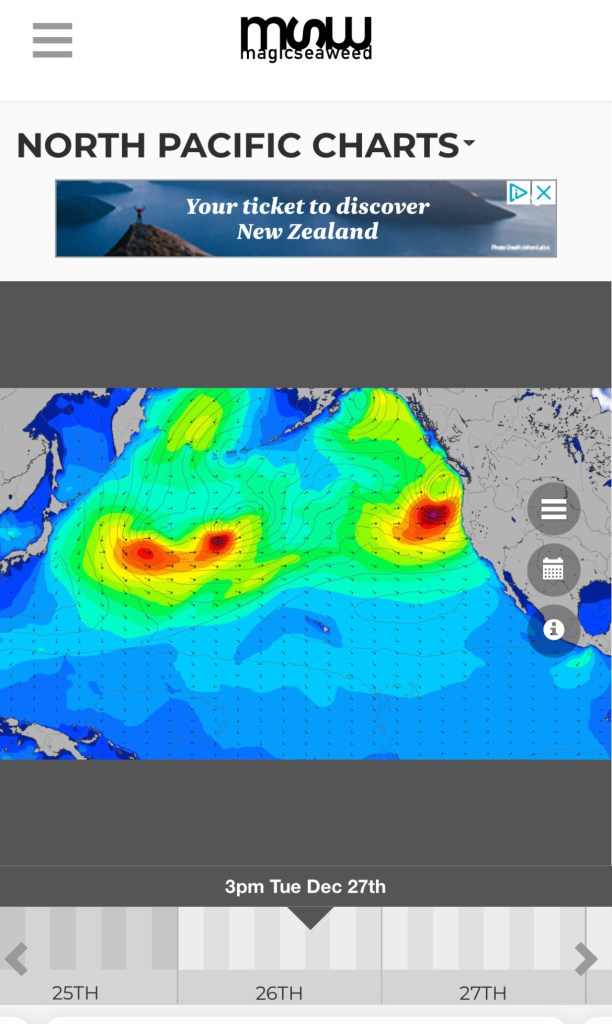
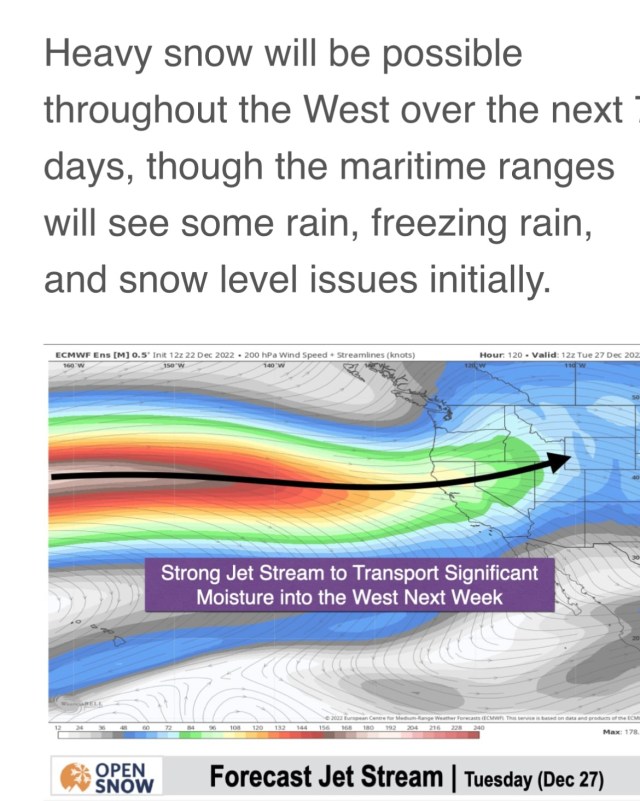
It’s always interesting to watch these storms set up as they cross the Pacific, the ocean swells they produce and becomes an Atmospheric River when they hit the west coast and move inland.
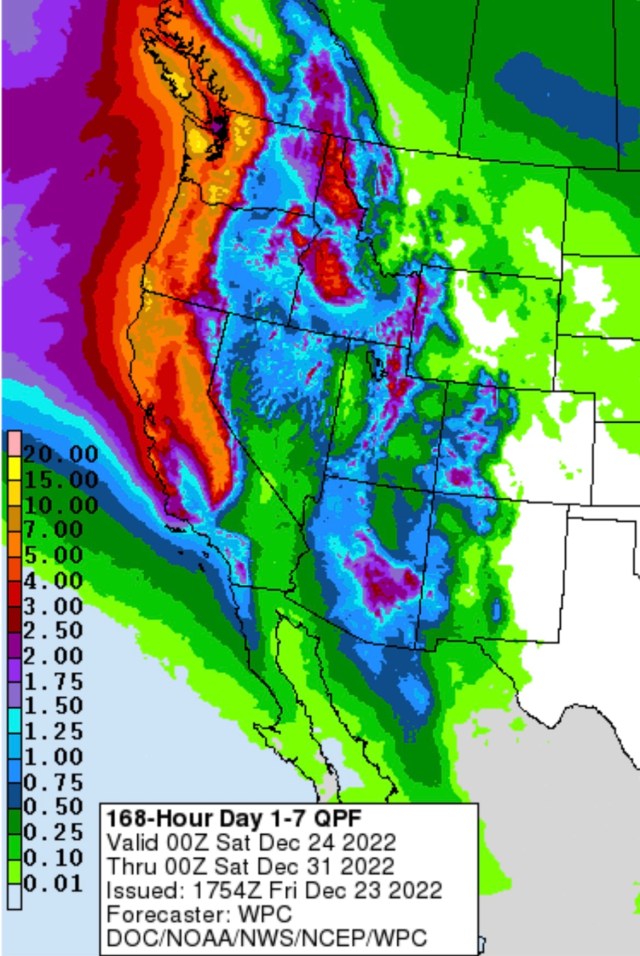
Get ready to enjoy the ride from this AR ! Be safe whether you’re deep in snow on a mountain side as avalanche danger will increase from this heavy snowfall on the colder lighter older snow layers OR if you’re watching the creeks and rivers rise in the valley bottoms! How high the rivers rise depends on duration / intensity of rain and temps above 32F.
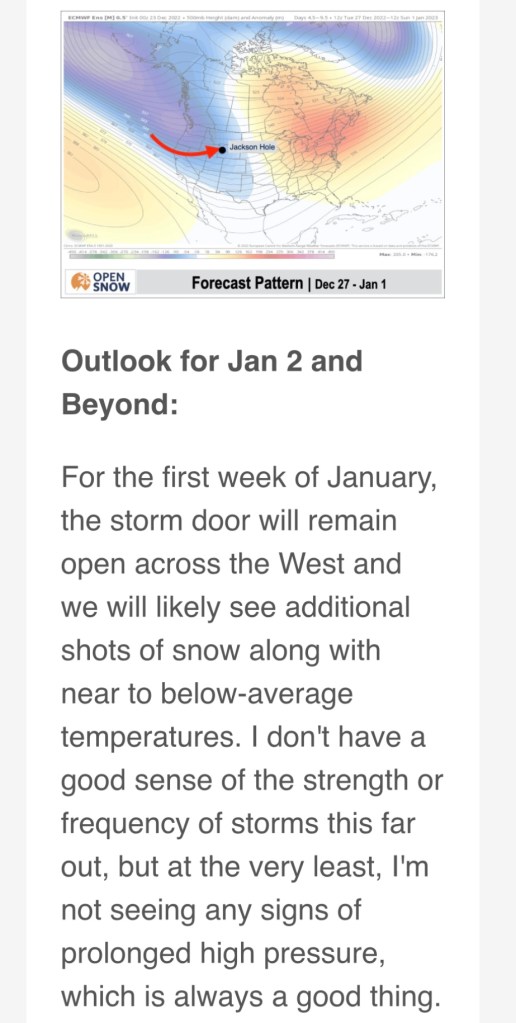
The good news from OpenSnow mentions the weather door in PNW may remain open in early Jan to start the New Year !!!
Above NWS hourly temp and precip outlook for my Boise house and for Bogus below.
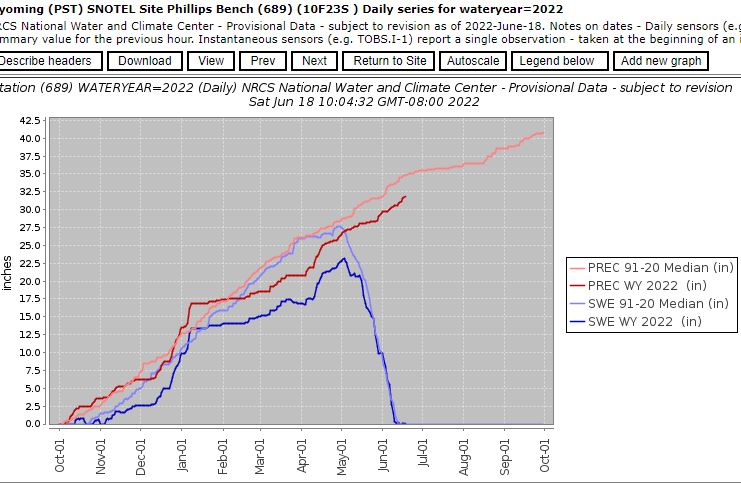
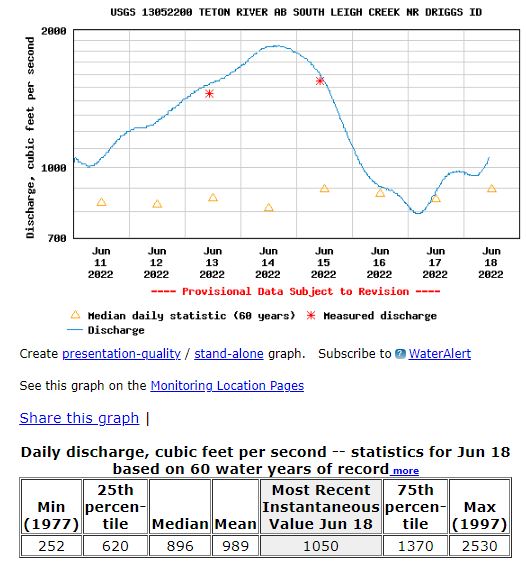
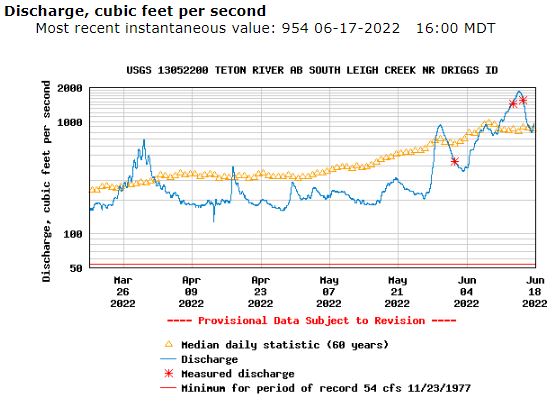
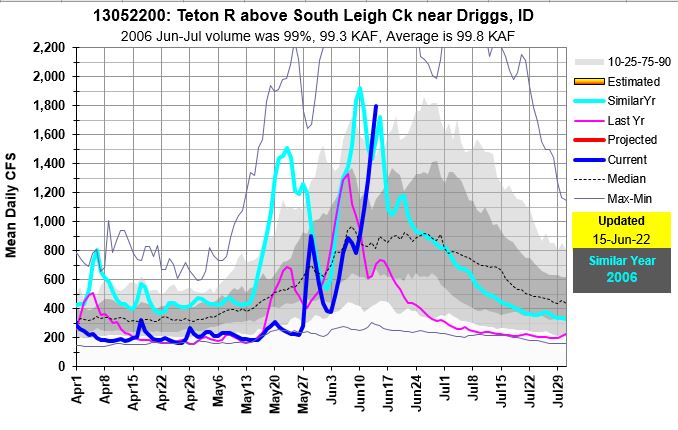
This Teton River runoff is a great example to explain of how these Snow to Flow Relationships are used to predict the ‘snowmelt peak’ as opposed to the ‘absolute peak’, a rain influenced peak which may be higher. Teton R still has enough remaining snow for another bump in flows from the remaining snowpack based on snow to flow relationship with Phillips Bench and Grand Targhee SNOTEL sites.
We’re now 7 days after Phillips melt out and right at Targhee’s half melt with 15.7” on the snow pillow. Flow is rising as seen with the diurnal snowmelt. Cooler temps will arrive Sunday to slow melt. Remaining snow will help sustain flows as they decrease again.
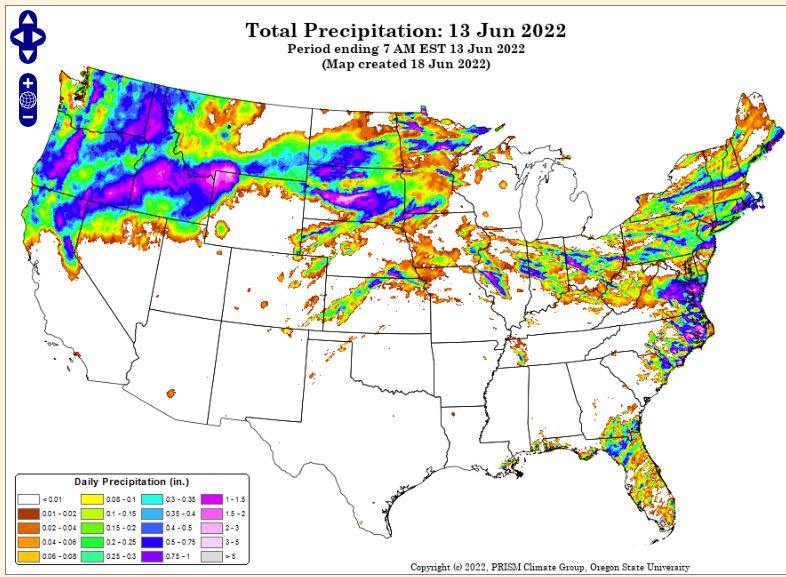
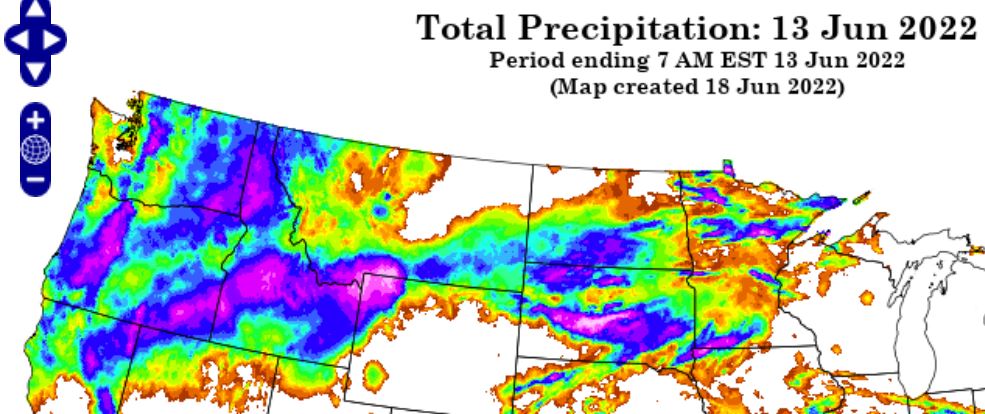
SWE at Grand Targhee peaked at 37 or 32” which puts half melt at 18-16” SWE, today’s SWE.SWE at Phillips peaked at 22.8” and melted out June 11. Peak occurs an average of 5 days after meltout.Note peak on Jun 14 was the absolute peak, highest for the season, and snowmelt peak will occur in few days which agrees with the Snow to Flow Relationships. Hydrograph below shows the full runoff season. Precipitation totals in inches for June 12 (5 AM MT to 5AM MT) to June 13 from PRISM, and zoomed in below.https://prism.oregonstate.edu/
A major cold front decreased temperatures allowing precipitation to fall as snow above 6,000 to 7,000 feet rather than as rain to bring an end to this unusual June Atmospheric River event. Unfortunately, our neighbors and friends to our east in the Greater Yellowstone area and Red Lodge area received higher rainfall amounts that combined with snowmelt to produce historic runoff amounts primarily on the eastside of the continental divide. Our thoughts are with you as continue to dig out and rebuild.
Temperatures, in Idaho’s west-central mountains at SNOTEL sites like Jackson Peak at 7,070 feet, reached highs of 60-65F for several days prior to June 11 and above freezing nighttime temperatures allowed the snowpack to melt 24/7. On June 11, the temperature reached 63F at 2pm and gradually decreased to 32F by 3AM Monday morning June 13. Sunday Jackson Peak received 1.5 inches of total precipitation as temperatures played a critical role allowing the precipitation to change from rain to snow in the higher elevations. These near freezing temperatures also slowed the snow melt that was feeding the streams prior to the storm. Temperatures remained in the 30s until noon Tuesday, June 14.
Monday morning, we headed north, packed the Subaru and dog (got 35.5 mpg traveling 870 miles in two days). You could see the new snow from Tamarack Resort to the Seven Devils range and in the Selway-Bitterroot mountains on Tuesday. What a beautiful site with green valleys below.
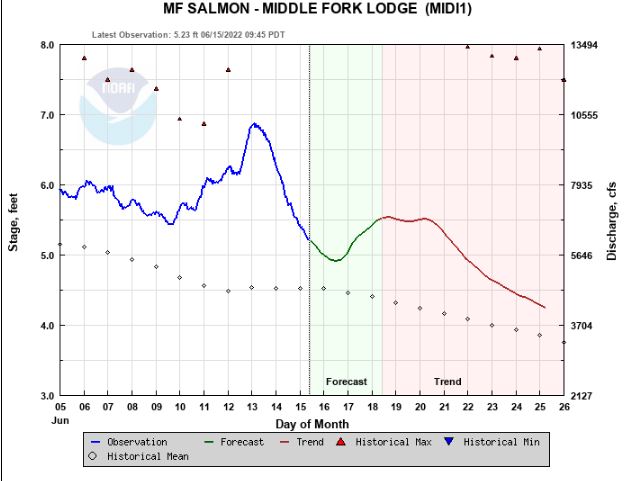
These freezing night temperatures slowed the melt as rain subsided forcing streams to peak lower and recede earlier than streamflow models were trending. Rain turned to snow to melt later which will help extend recession flows. This is good news as many were running bankfull and approaching record flows for this time of the year in the Clearwater basin.
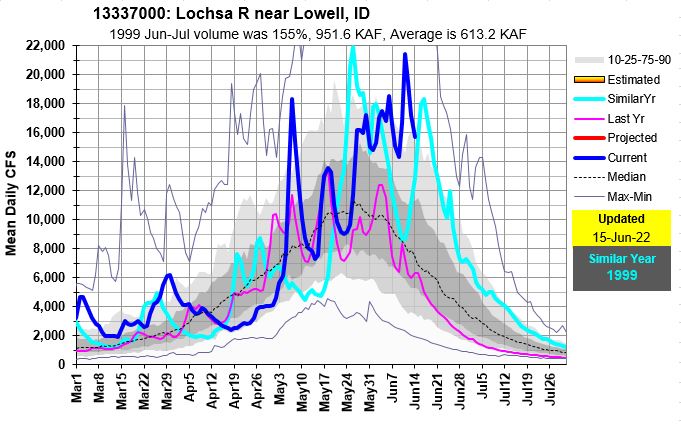
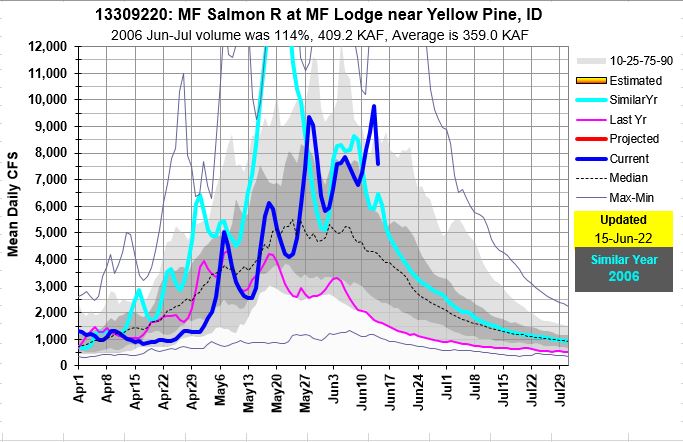
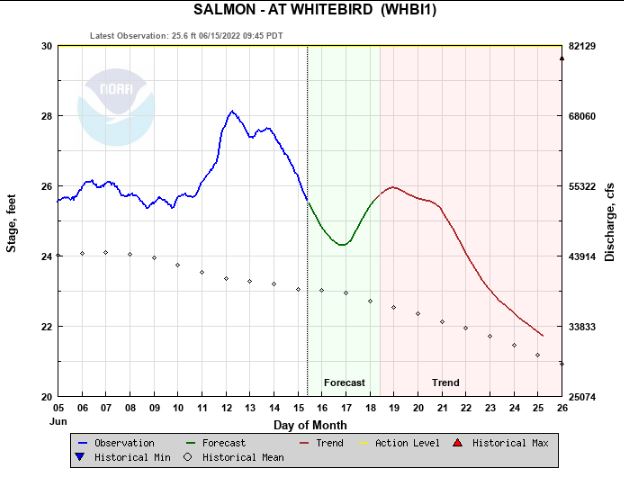
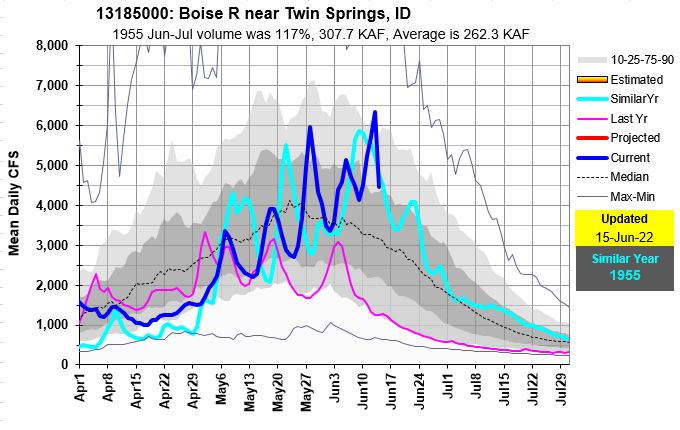
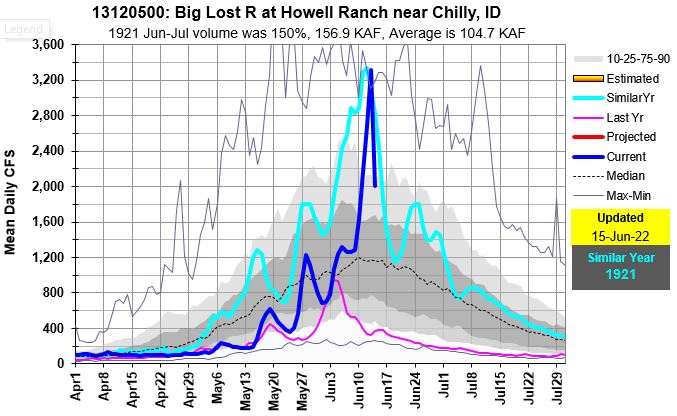
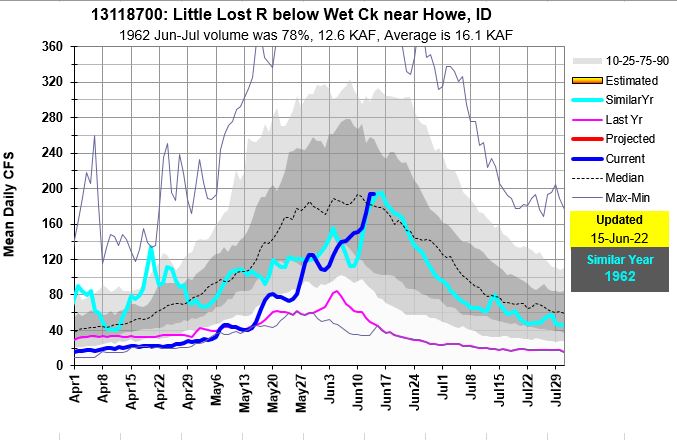
Following are current flow graphs showing this year, last year and similar year based on current flow. I included the Wood and Lost rivers, our next road trip that starts today. Who’s in or wants to talk rivers in the Ketchum area this weekend?
And post by Cliff Mass about why thunderstorms develop over mountainous areas. Cliff is from Seattle and his long range PNW temperature forecasts were right on for this area too. Not sure who to reach out to about Idaho tornadoes because we don’t have many. https://cliffmass.blogspot.com/2022/06/why-do-thunderstorm-prefer-mountains.html
Be safe as rivers are still running high and flowing fast with swift currents and strong eddies that are fun to watch from a distance. Rivers are bankfull with steep drops into the cold water. Know your river running limits if you are putting on the river. If you are a fair weather floatier, I’ve seen two forecasts that says warm, dry, hot weather will arrive for the last 10 days of June. Be safe and enjoy another cool, wet weekend!
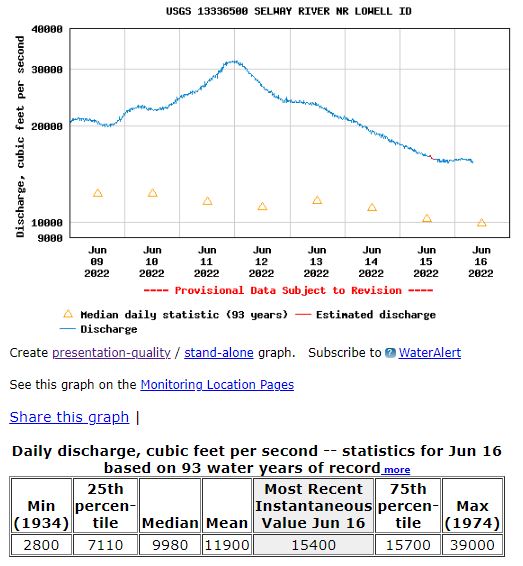
Major increase followed by decrease from cooler temperatures. 1974 was a huge snow year with record high flows.Some missing data…







 Snow Weather and Flow