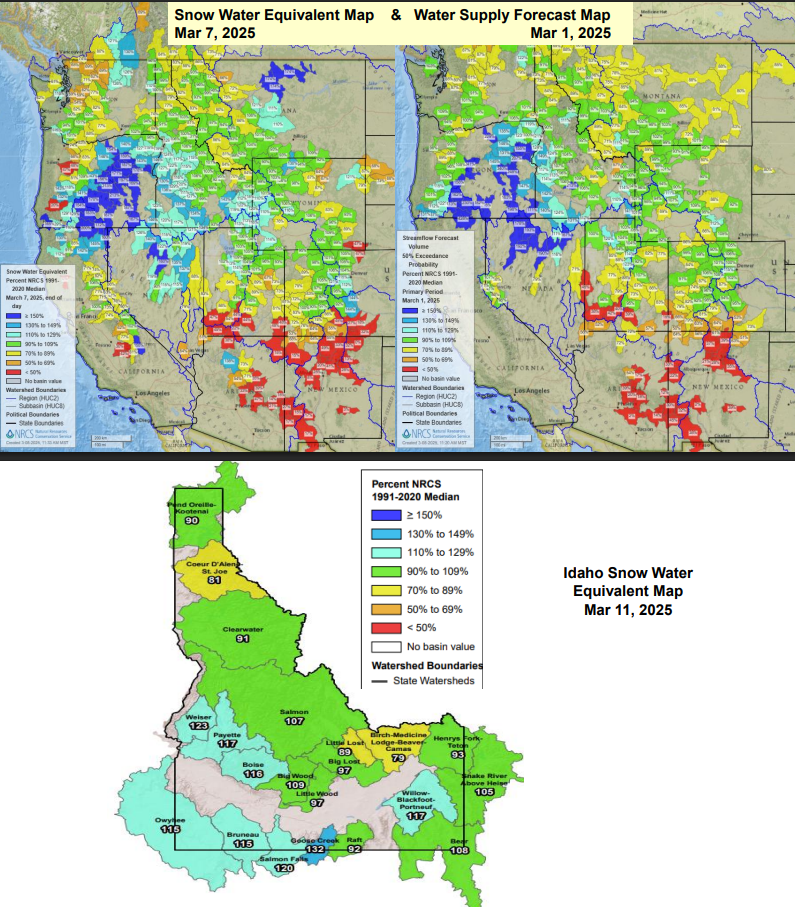

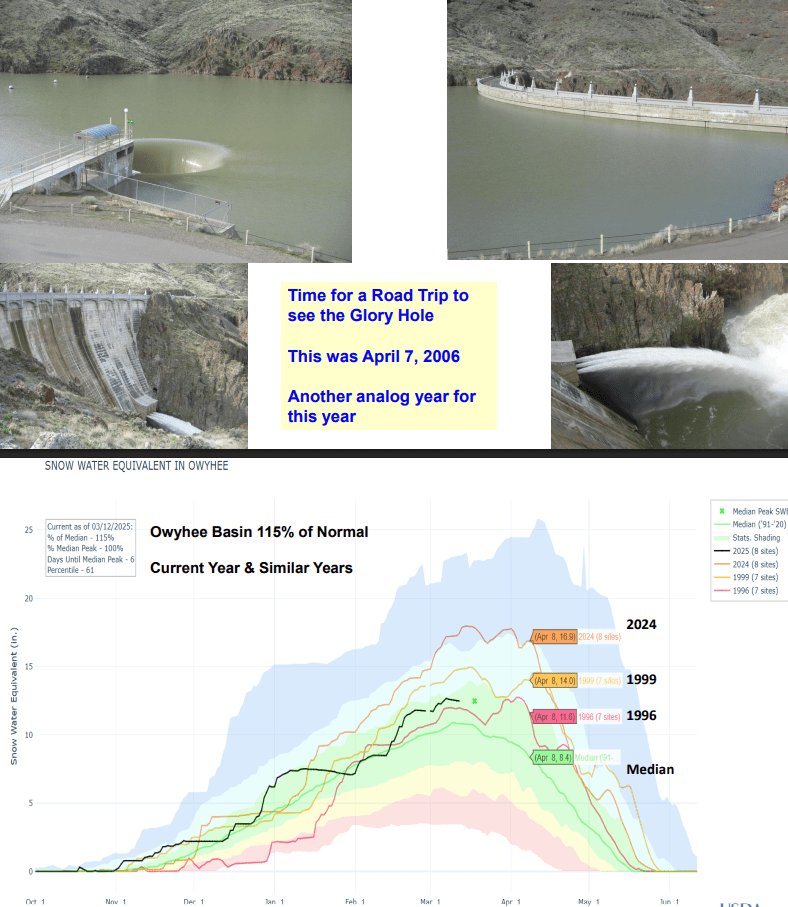
Idaho Museum of Mining & Geology talk from March 9 about 1. Current Ocean and Atmosphere Teleconnections, 2. Conditions Leading to this Year, 3. 2024 Extreme Weather & Natural Disasters, 4. Current Stream, Snow and Water Supply Forecasts with Highlights for the Payette, Boise and Owyhee Basins, and Weather Outlooks.


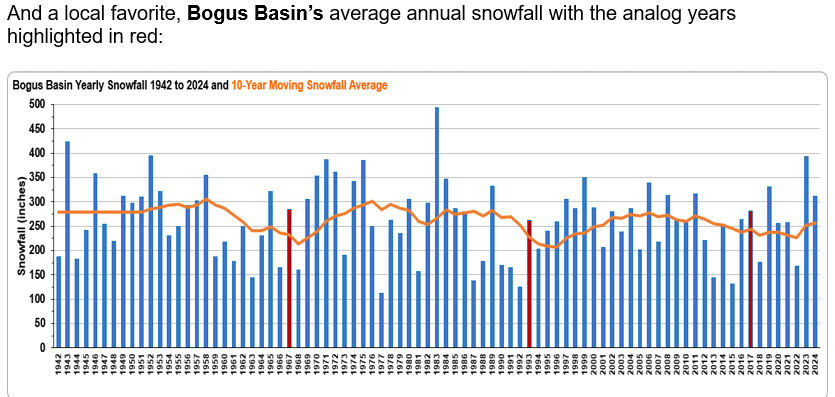
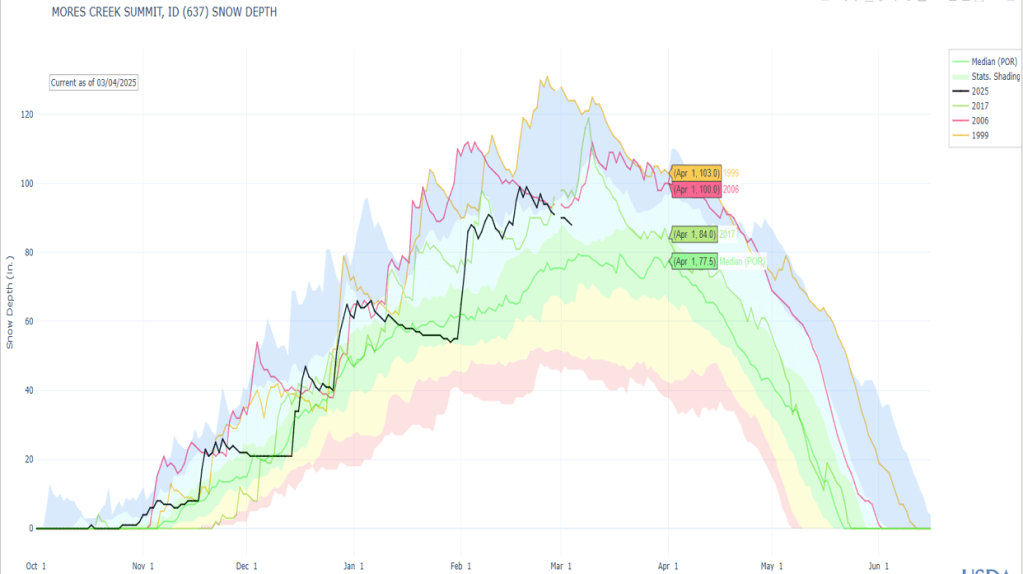
February brought snow measured in feet. A summary of snow depths at many ski locations across the state follows. Here are some quick facts about February’s snowfall at Bogus Basin. March 1 Bogus Basin snow depth of 83″ is the 11th deepest since 1944. SWE increase of 8.7″ during February was the 8th highest since measurements start in 1944. The snow depth on Feb 1 was 50″ and increased to 83″ by months end; this is tied for 2nd greatest change with 1949. February 2019 was huge with an increase from 36″ to 95″ by the end of February.


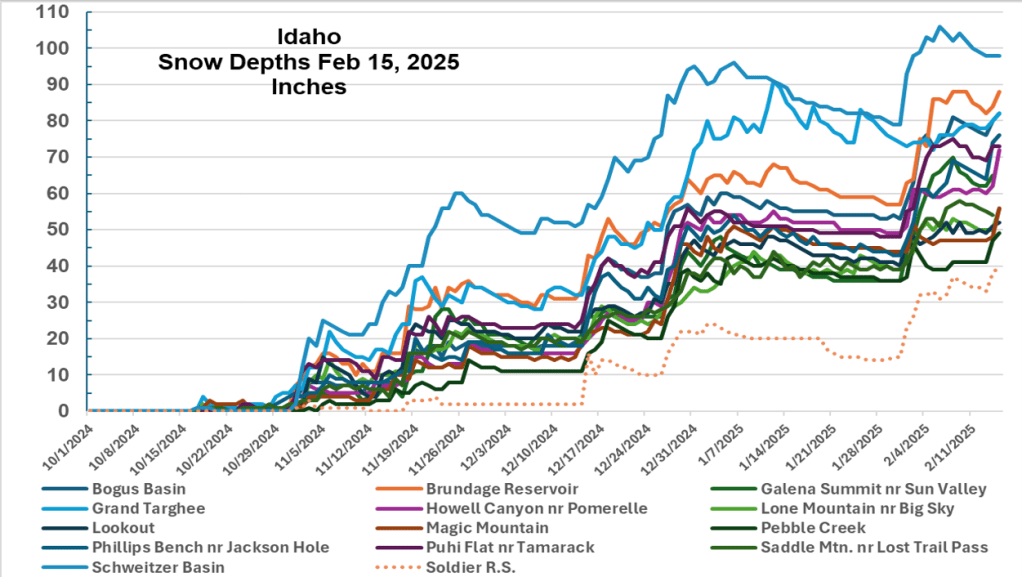
Here’s a snow depth summary for sites around your favorite ski areas. More storms on the way this week, 17, 19 and potentially around March 1.

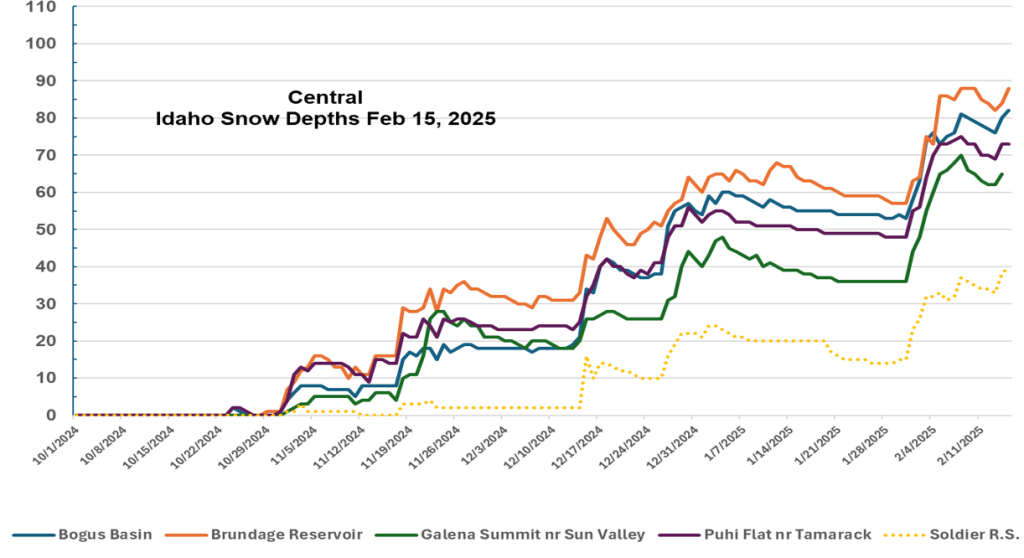
Here is quick update of CPC’s short and longer-term Outlooks for February with all Outlooks favoring cool & wet for PNW. Jan and Feb 1-4 precipitation summary, and snow depths graphs across the state are included. Enjoy and be safe. Winter is back on.

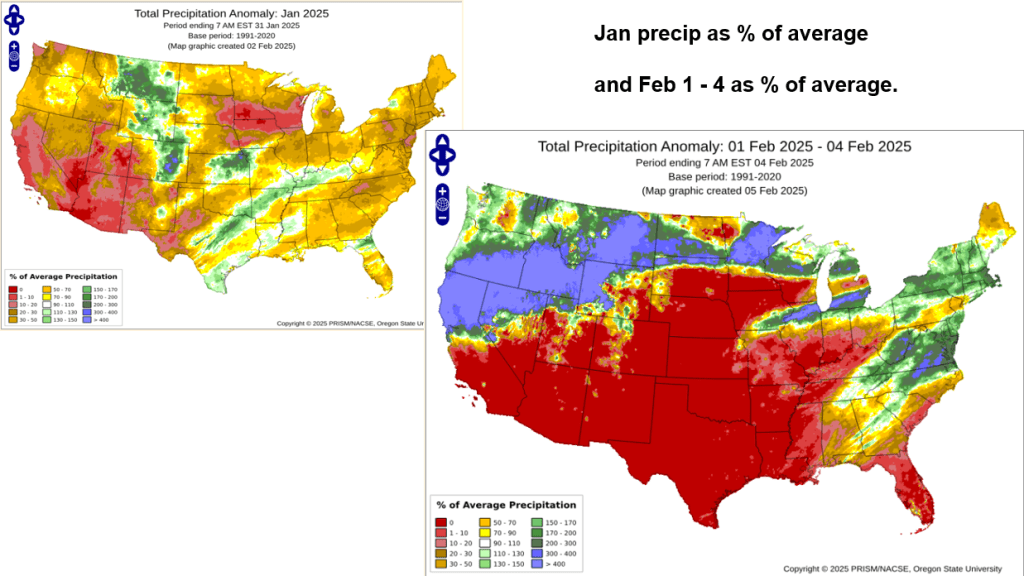
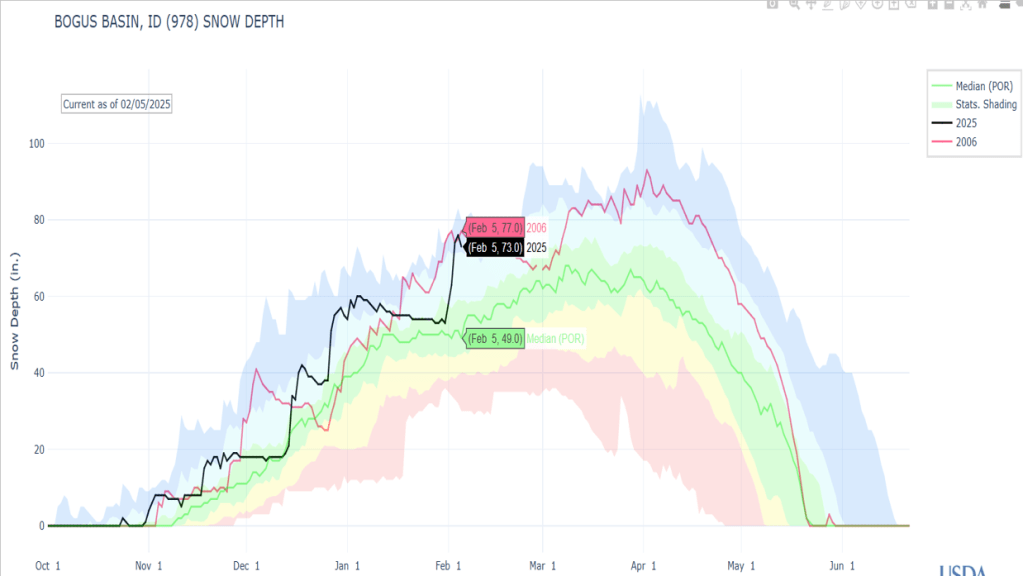

Here’s a snow & flow update for the Salmon, MF and Selway rivers and a Lochsa Bonus. Current snow conditions are displayed with analog years mentioned in previous posts. Streamflow forecast are from the NWS around Jan 20 and compared to observed runoff the analog years. January 15 is consider the half way point for winter. Overall the snow is in good shape because of the great start, but more snow is need after this dry January as show in image below.
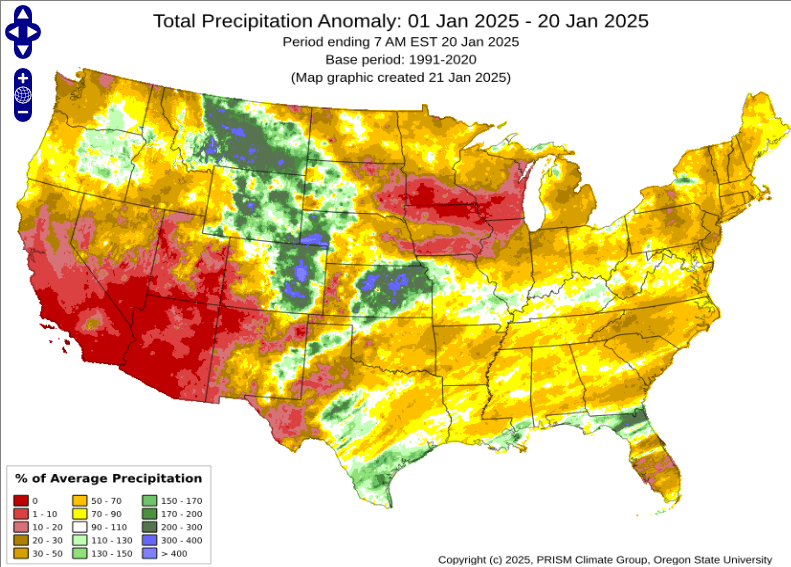
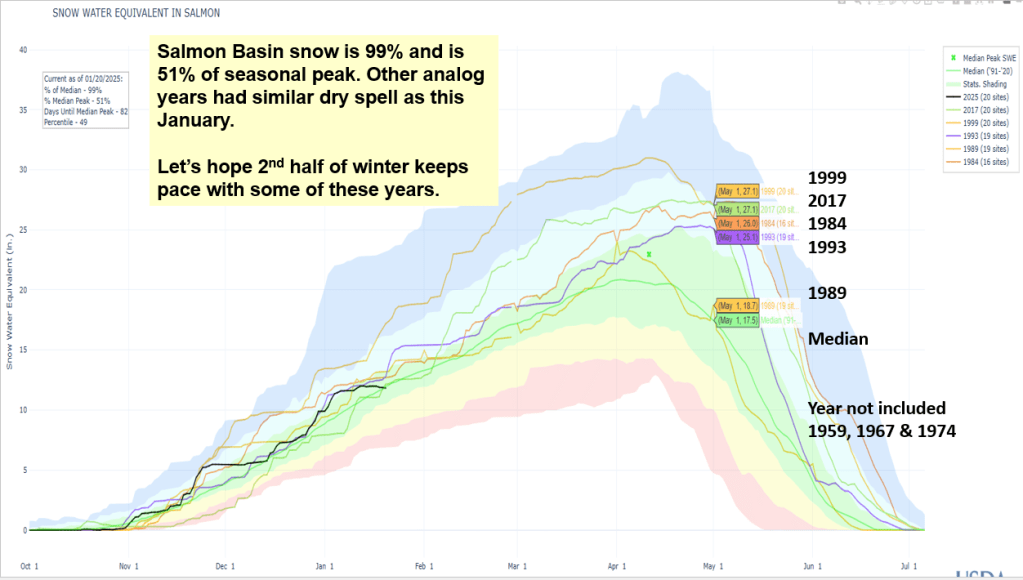

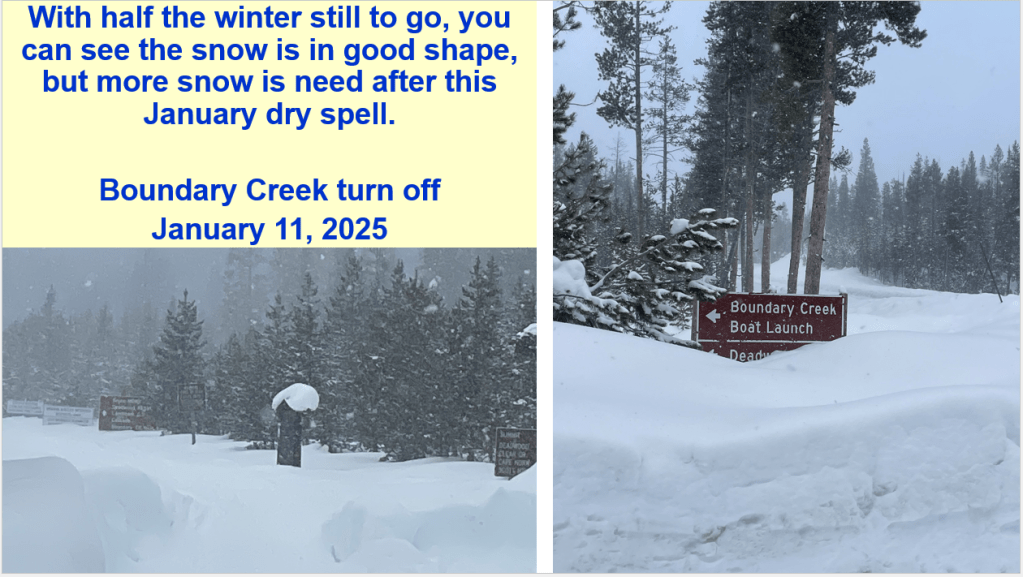
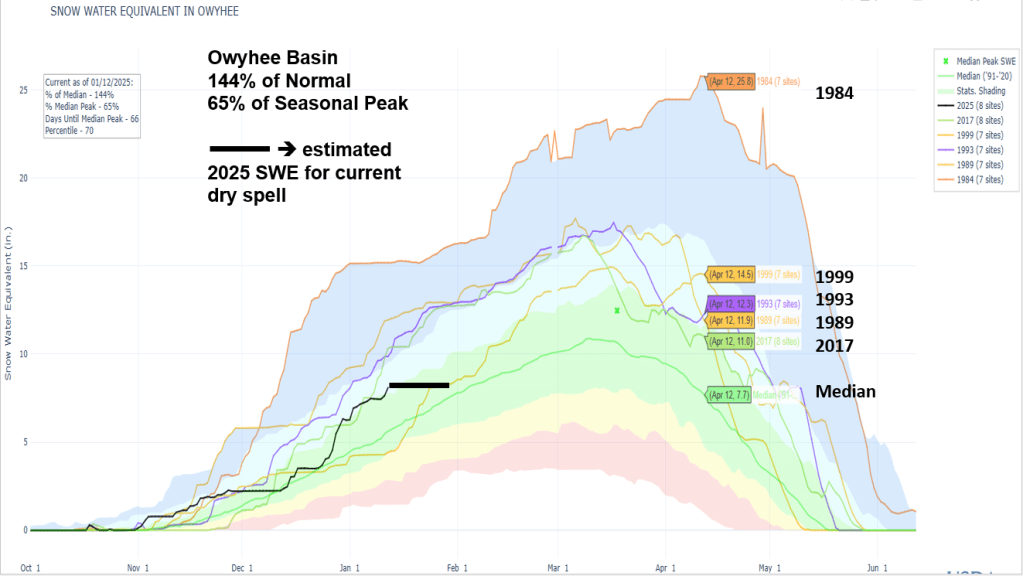
Here’s a talk given to Idaho Alfalfa & Clover Seed Growers about current conditions, analog years, acres burned, a few slides about 2024 extreme weather and disasters, and the snow & flow outlooks for the Weiser, Payette, Boise and Owyhee basins. With high, dry and cold weather here for a bit, we’re gonna loose about 1% a day, but the snow won’t be melting. Cold is good! We’ve seen winter dry spells in other years and lucky for us, SW Idaho got off to a great start this winter. Let the 2nd half of winter start – any day now…


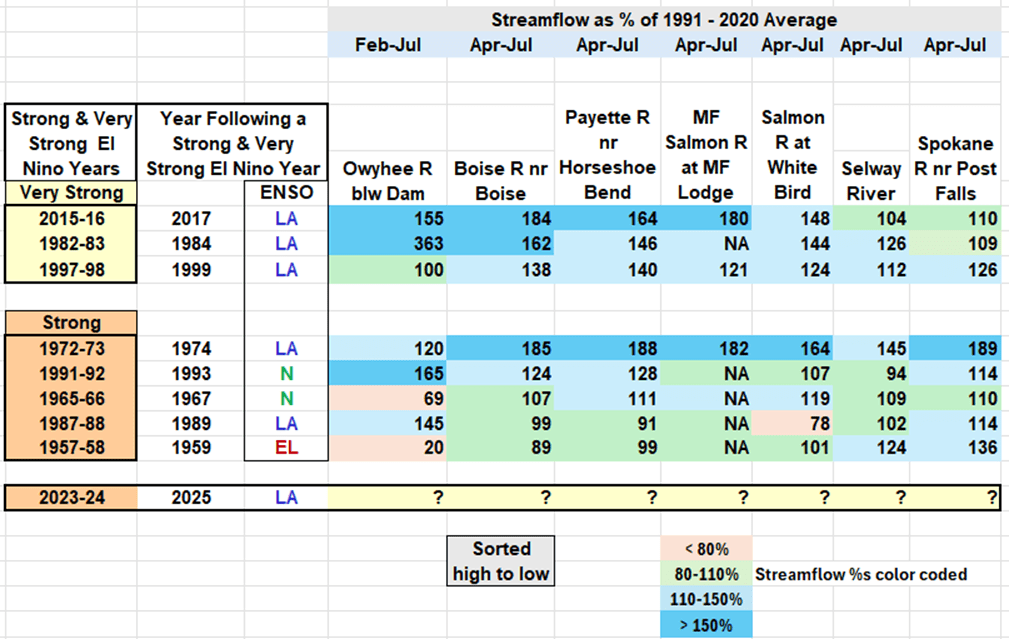
With more snow accumulating in our mountains, let’s look at how this year compares with other years that follow Strong El Nino Years. In the past, we’ve had some good snow and flow years following Strong El Nino Years. The easiest way to explain this is – it seems the oceans and atmosphere has a lot of energy to get rid of the following year. Let’s see if we can still use the past to predict the future and how the snow is tracking.
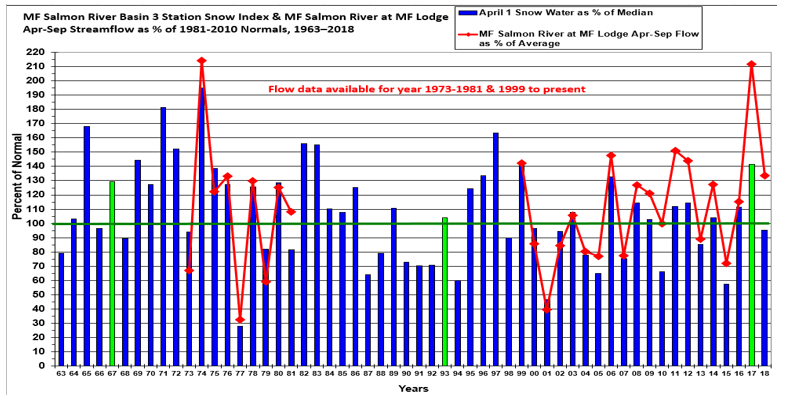
Here’s our new table of Strong and Very Strong El Nino Years and the years that follow. You can quickly see by the color shading that only a few are below 80% of average, and rest are near average, above average or outstanding with greater than 150% of average runoff.
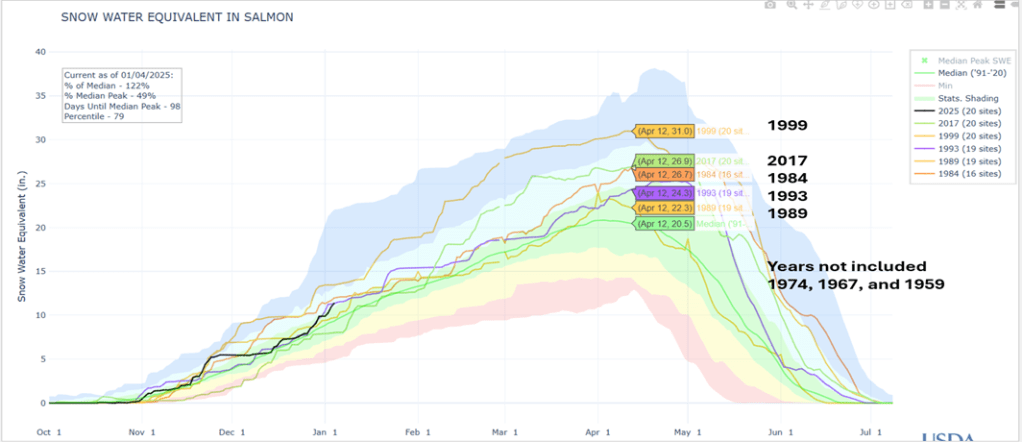
Here’s the big picture for the Salmon River. This snow index is based on about 20 SNOTEL sites. It also shows that this year, 2025, is tracking these years that follow a Strong El Nino Year.
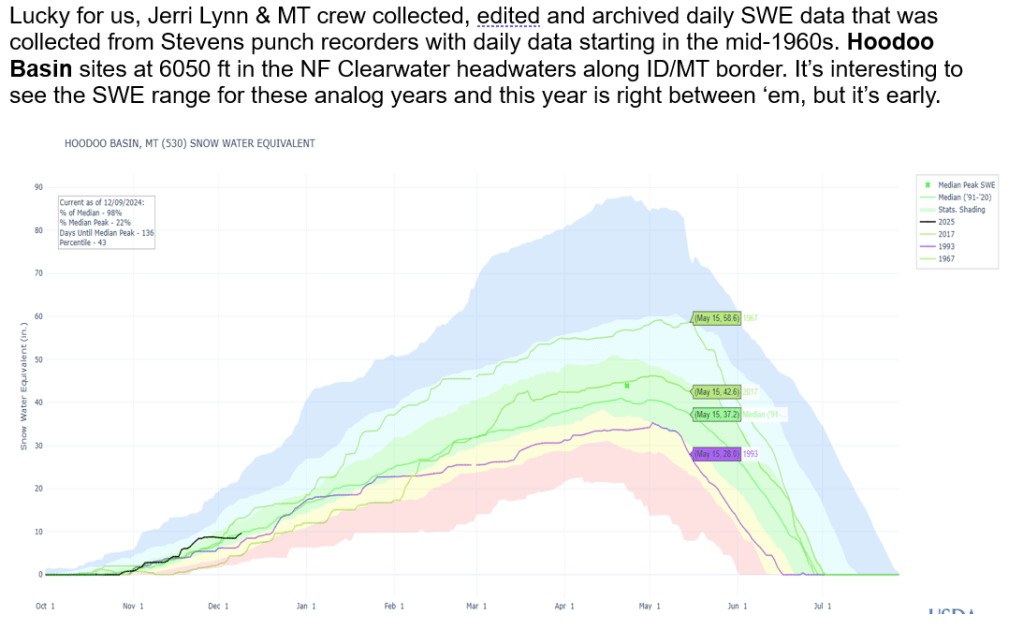
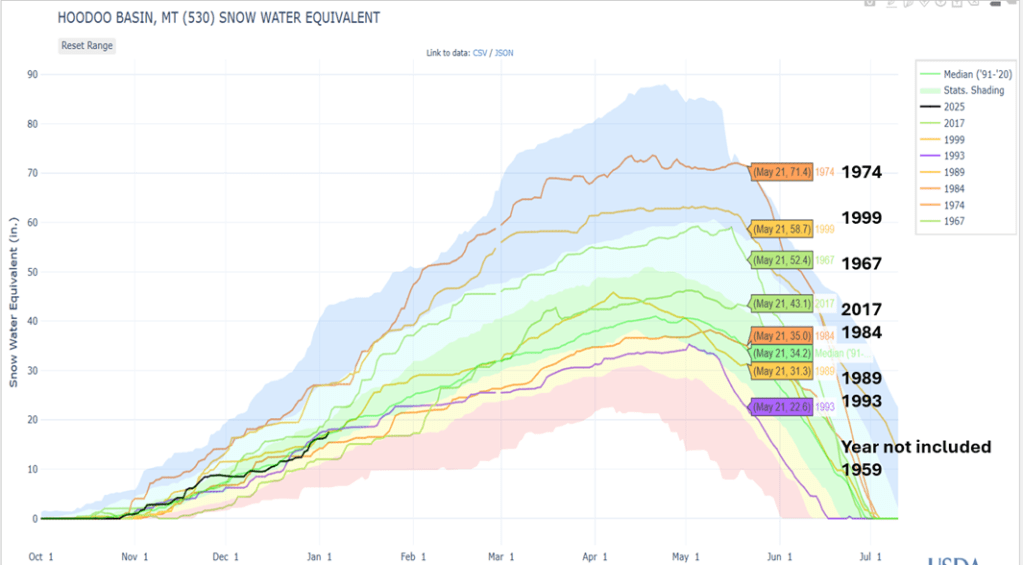
Looking at Hoodoo Basin which has daily SWE starting in 1967 also shows it was a good snow year. Interesting to note that Pete’s analog years were also 1967, 1993 and 2017 which all followed Strong El Nino Years.
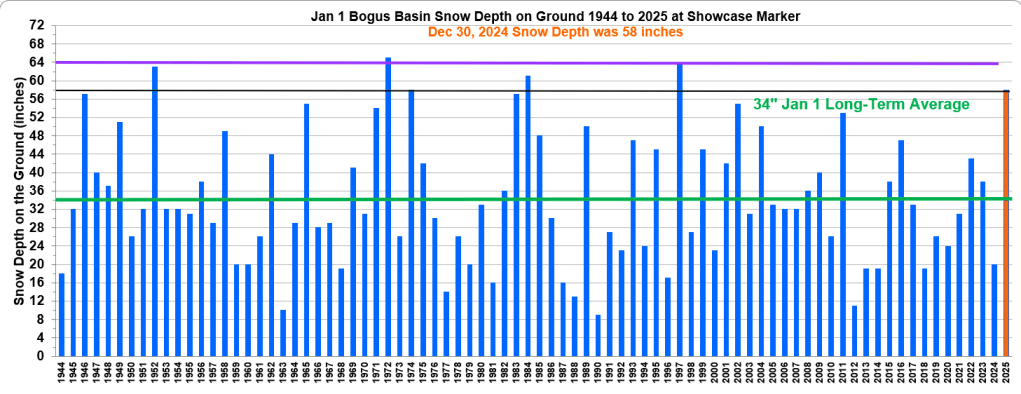
Updated graph Jan 2 with Dec 30 Snow Depth measurement value of 58” for the long-term snow course at the Showcase Marker. This winter is off to the best start since 2011 and in the top 5 highest years since daily snow depth measurements start in 2000.
Compared to historic Jan 1 data, that starts in 1944, this year is tied for 5th for the most snow on the ground for the Jan 1 snow survey. Other high years were 1997, 1984, 1972,and 1952.
Storms are still expected but smaller in size compared to recent ones. Winter like temps finally arrive as cold temps dip into mid-West in mid-Jan.
Lots going on with the Polar Vortex stretching and pulling, and lots to learn about Greenland’s weather impacts on our weather. We know we are in for a colder ride between now and mid-Jan, especially in the Mid-west. Here are Judah’s thoughts for the 3rd week of Jan. Stay tuned as lots gong on 3rd week of Jan along with my birthday !
“So, during the third week of January this will result in a transition to milder weather in both Europe and the Eastern US with cold weather becoming more entrenched in the Western US. But it also appears Siberia will turn colder at this time, so I don’t think winter weather in the Eastern US is done just yet like last winter.” http://www.judahcohen.org/
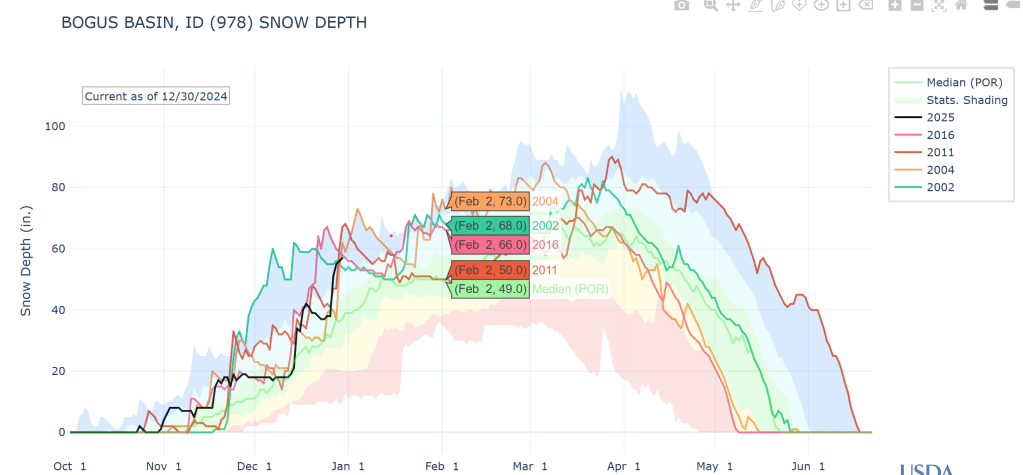
Now with snow starting to accumulate in the mountains, let’s look at the start of this winter’s snowpack and compare it to the analog years we’ve been talking about. Here’s a recap of Pete Parsons, Oregon Dept of Ag, Seasonal Climate Forecast from November 21, 2024 Update.
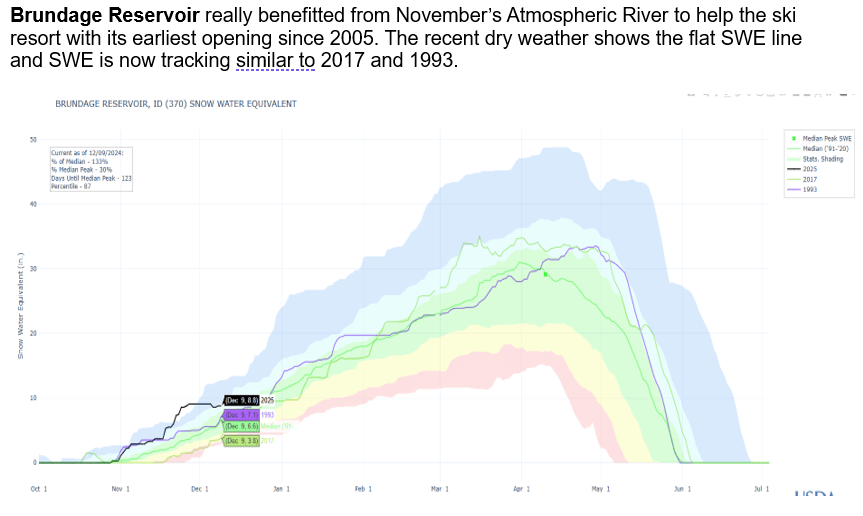
Let’s have some fun and look at how this year’s snowpack is starting to accumulate and compare with the analog years 1967, 1993 and 2017. We’ll look for similar snow accumulations patterns and as we progress deeper into winter, we’ll see if one year stands out more than the others and use it to provide some insight about next summer’s river flows.