April Fool’s Day Storm

Wow – what just hit us? Here’s a summary of the key indicators I was watching leading up to this storm. Never stop learning and watching the weather to better understand what’s happening here, around us and why.

The PNA started hinting at weather system brewing back on Mar 13 with sharp decrease and biggest drop since last Nov storm. A Buoy Pop was also marked on my calendar from around same time. Always nice to see in agreement of indicators two weeks out.
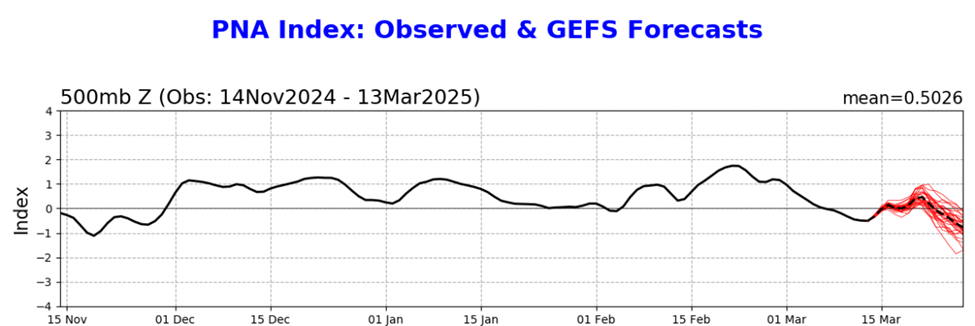
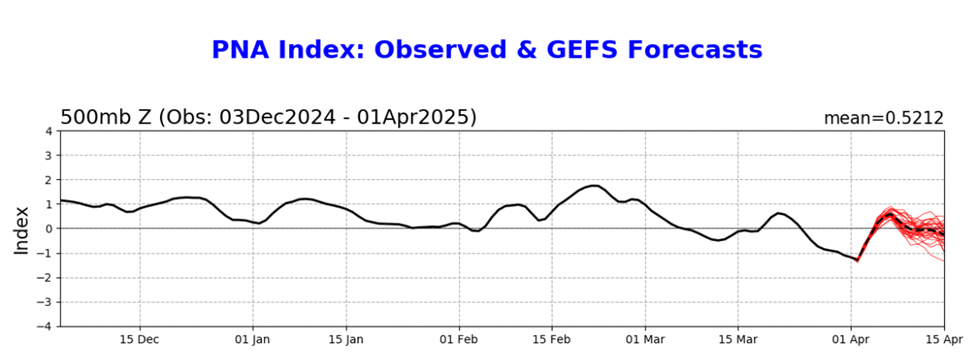
Here’s current PNA which shows the Apr 1 drop, then going positive which means return to high pressure in early April.
Severe Weather Europe from Mar 31 provides a good explanation, just need to read between the Ads. They summarize the springtime battle between winter and summer patterns fighting for the lead. This probably led to the isolated weather pattern and intense storm with 10” falling at Brundage and a couple at Bogus Monday morning followed 24 hours later with 10” at Bogus while Tamarack & Brundage received a little Tuesday morning. OpenSnow forecast weather radar nailed storm hitting Bogus early Tuesday morning and not pushing north. I should have been watching the radar loop for Brundage storm. https://www.severe-weather.eu/global-weather/april-2025-forecast-stratospheric-polar-vortex-impact-cold-air-united-states-canada-fa/

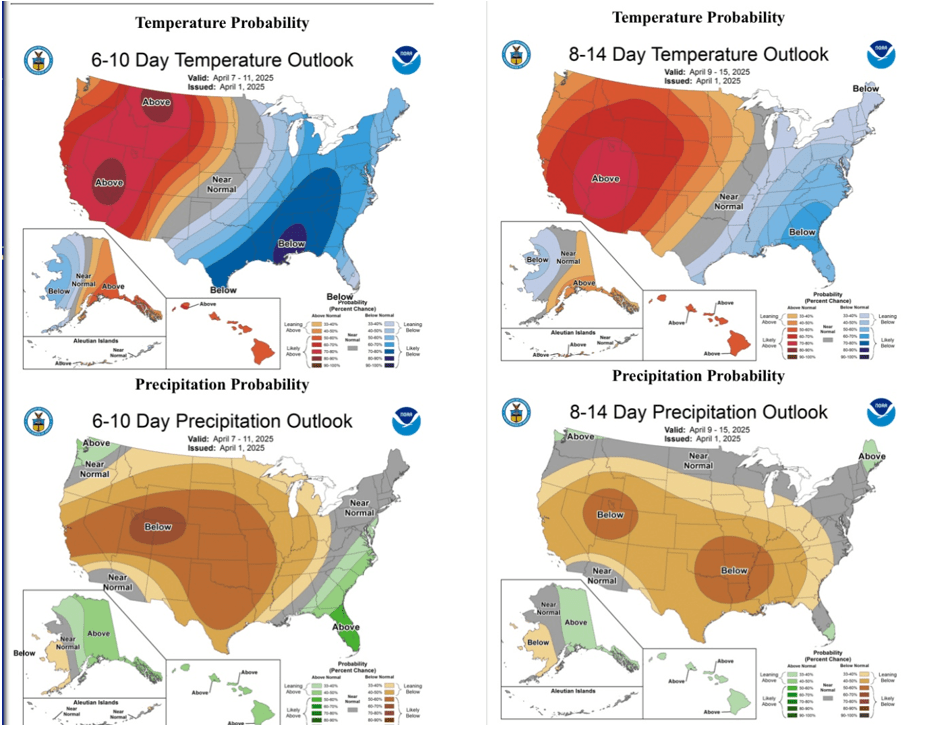
Severe Weather also provides a good summary of early April weather and why we’re gonna be warm & dry in the West and the East needs to prepare for colder and wet. Many other models are picking up intensity of this event now. Stay safe.

Spring skiing returns this weekend to Idaho’s southern resorts with freezing night temps and warm day temps. Enjoy while the nights are still freezing in the mountains.
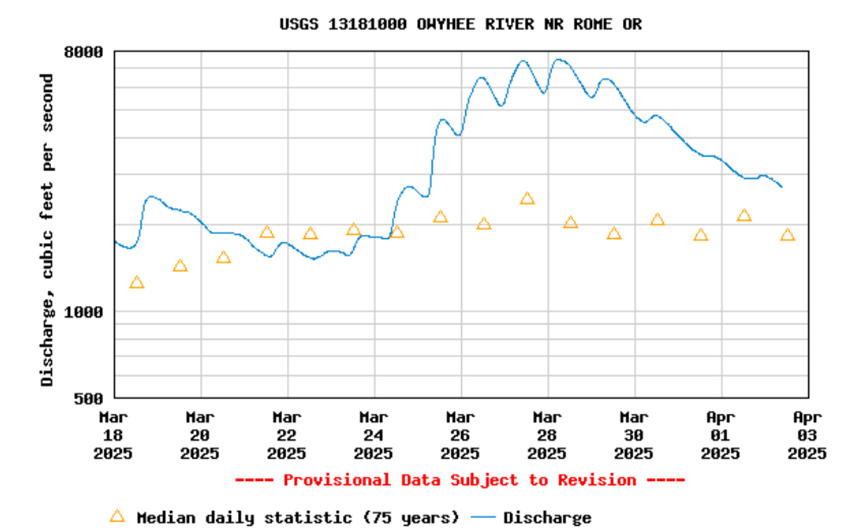
This also means the rivers will rebound with the warmer temps. Be safe out there – a friend is on a solo trip down the Main Salmon this week.

Bogus Rocks & Cold is good !!

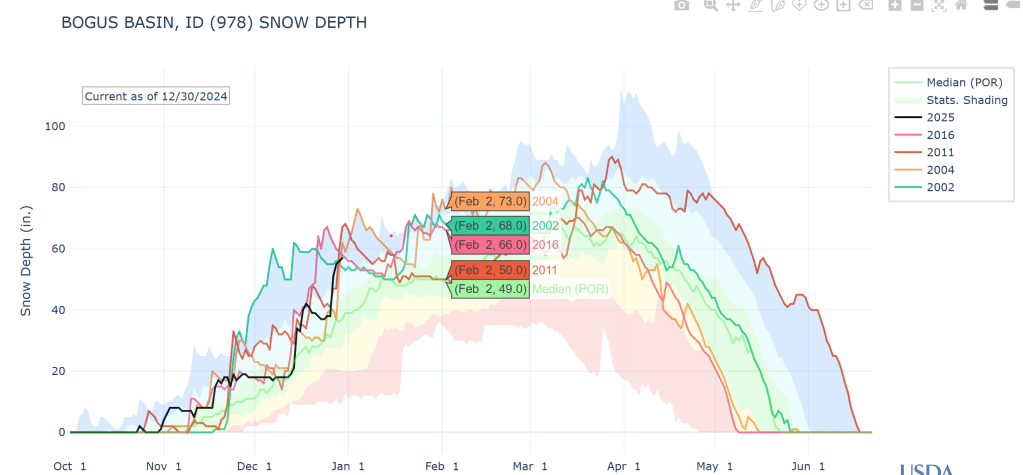
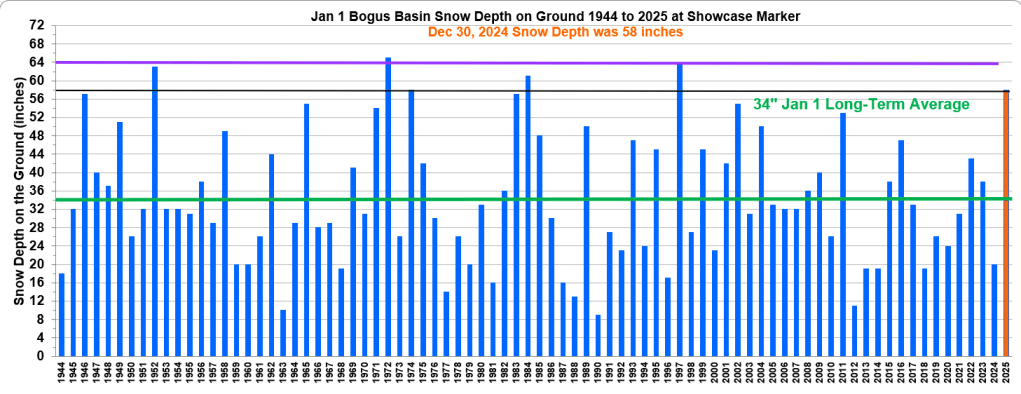
Updated graph Jan 2 with Dec 30 Snow Depth measurement value of 58” for the long-term snow course at the Showcase Marker. This winter is off to the best start since 2011 and in the top 5 highest years since daily snow depth measurements start in 2000.

Compared to historic Jan 1 data, that starts in 1944, this year is tied for 5th for the most snow on the ground for the Jan 1 snow survey. Other high years were 1997, 1984, 1972,and 1952.

Storms are still expected but smaller in size compared to recent ones. Winter like temps finally arrive as cold temps dip into mid-West in mid-Jan.

Lots going on with the Polar Vortex stretching and pulling, and lots to learn about Greenland’s weather impacts on our weather. We know we are in for a colder ride between now and mid-Jan, especially in the Mid-west. Here are Judah’s thoughts for the 3rd week of Jan. Stay tuned as lots gong on 3rd week of Jan along with my birthday !

“So, during the third week of January this will result in a transition to milder weather in both Europe and the Eastern US with cold weather becoming more entrenched in the Western US.  But it also appears Siberia will turn colder at this time, so I don’t think winter weather in the Eastern US is done just yet like last winter.” http://www.judahcohen.org/

Early Bird Forecasts and Analog Year Summary

Early Bird Forecasts or are they called Outlooks – either way, you got to know when to hold them, know when to believe them, know when to walk away and know which areas are favored for more snow and why. There are lots of late summer/early fall Winter Outlooks being shared and passed around. Recently, it seems there is a race to see who releases the first Outlook. Here’s a summary about what I’ve been watching for a while. See if it helps or share what you watch and works for you. Don’t believe the first forecast you hear or until you hear the same forecast from 2 or 3 unrelated friends.
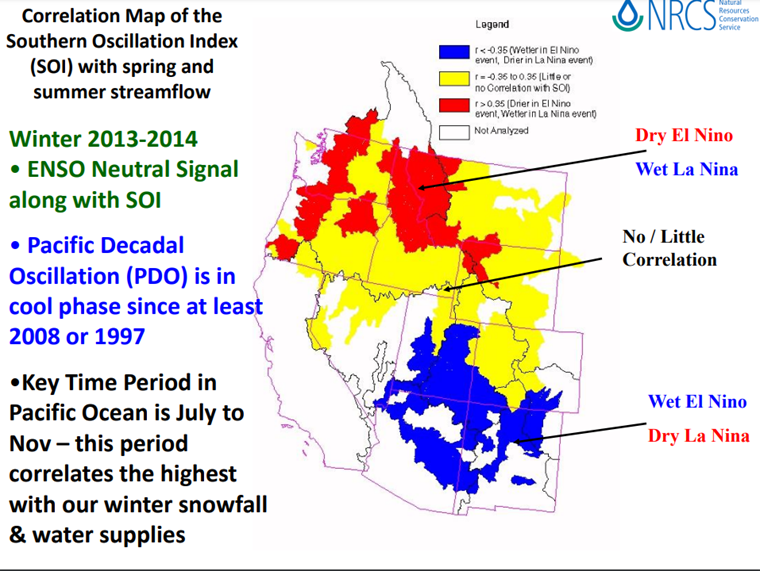
Read on for more info about SOI correlation with western rivers and how analog years are identified and used to help with predicting / monitoring this winter.

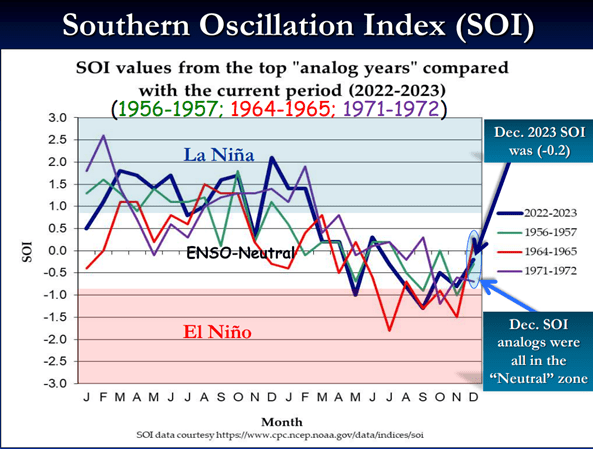
Analog years used for this winter (water years):

1956-57 is water year 1958

1964-65 is water year 1966

1971-72 is water year 1973

Another analysis shows this year’s El Nino initially was tracking 2009-10 El Nino winter. Next post: SWE plots of analog years and 2010 to how snow is tracking or not.

Interesting Weather on the Way…

Now this is gonna get interesting… who remembers what the meaning of life is – from hitchhikers guide to the galaxy ?  42 and this is also Boise’s Magic temp for snow to be falling at Bogus, for most storms. Let’s Keep It Simple Silly (KISS) so we don’t have to explain the adiabatic temp lapse rate decreasing 3F /1000 ft increase in elevation. 

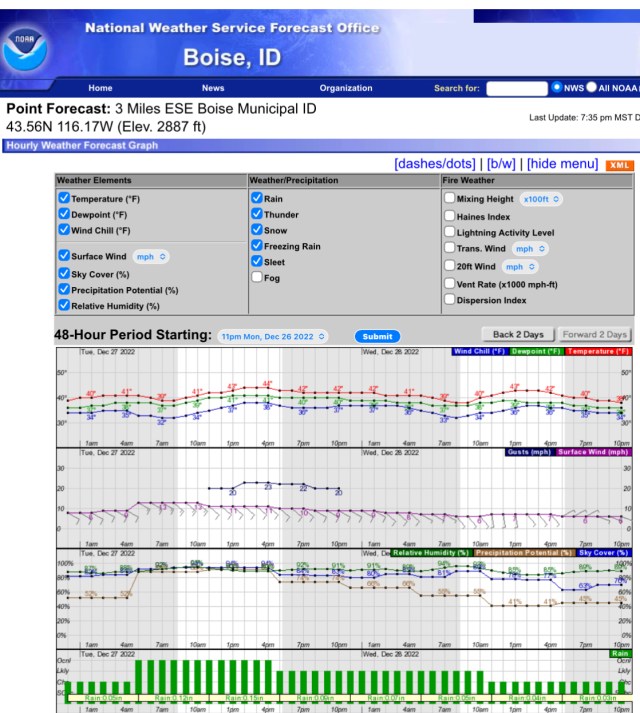
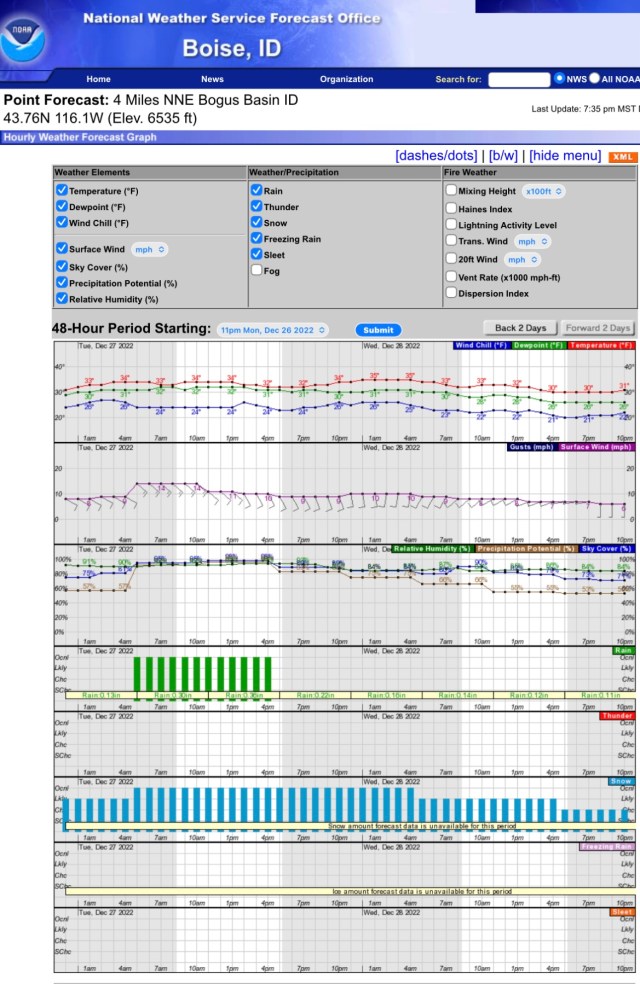
The NWS forecasts for Boise for Tues shows temps pushing 43 F and Bogus at 34 with rain snow mix and snow line / level around 6,600 ft !!! Elevation matters and makes a difference! Stay tuned and let’s hope the snow on ground and frozen soils can keep the temps cooler than the models are predicting and snow keeps falling above 6,000 ft !!!

In Idaho, rain-on-snow runoff events happen below 5,000 ft from mid-Nov to mid-Feb. We’re step-up nicely for rapid runoff if the rain intensity and duration occurs because of valley snow cover and frozen soils. Soils in my backyard are frozen deeper than my shovel can easily dig. What’s happening in your backyard ?

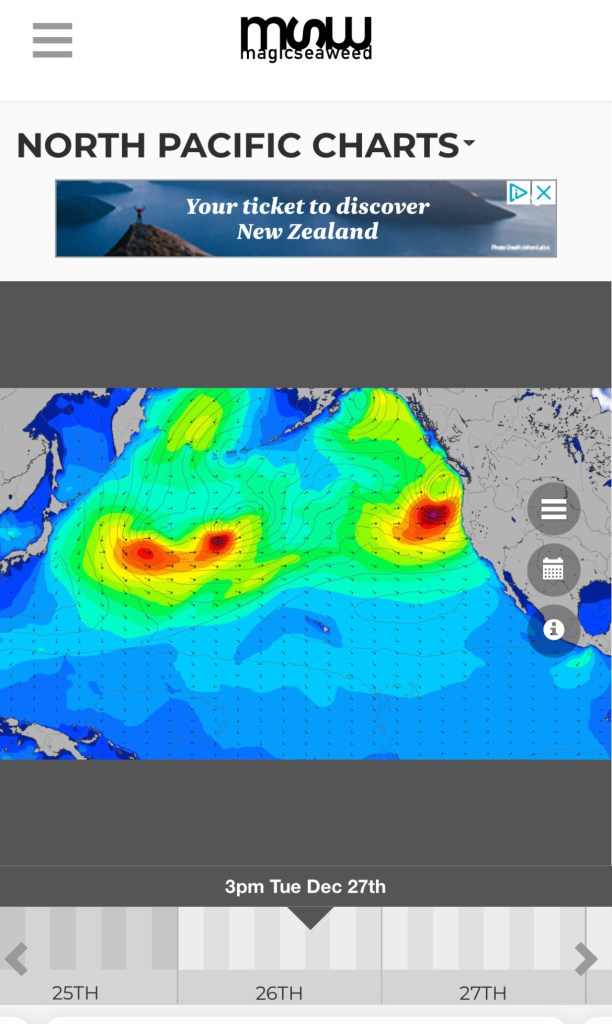
It’s always interesting to watch these storms set up as they cross the Pacific, the ocean swells they produce and becomes an Atmospheric River when they hit the west coast and move inland.  

Get ready to enjoy the ride from this AR ! Be safe whether you’re deep in snow on a mountain side as avalanche danger will increase from this heavy snowfall on the colder lighter older snow layers OR if you’re watching the creeks and rivers rise in the valley bottoms! How high the rivers rise depends on duration / intensity of rain and temps above 32F.

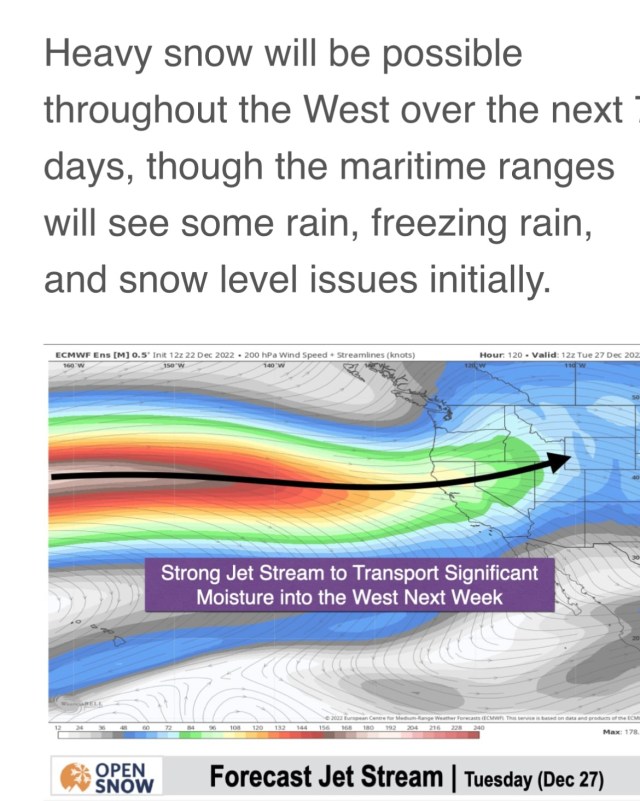
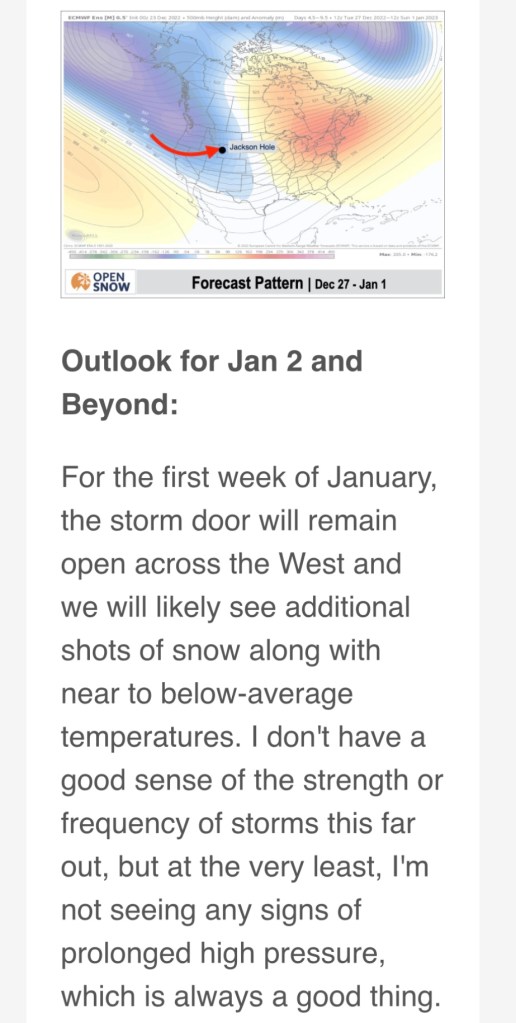
The good news from OpenSnow mentions the weather door in PNW may remain open in early Jan to start the New Year !!!

Above NWS hourly temp and precip outlook for my Boise house and for Bogus below.

Ocean swells tracking across Pacific as it brings in next week’s AR.
https://magicseaweed.com/North-Pacific-Surf-Chart/80/?type=swell

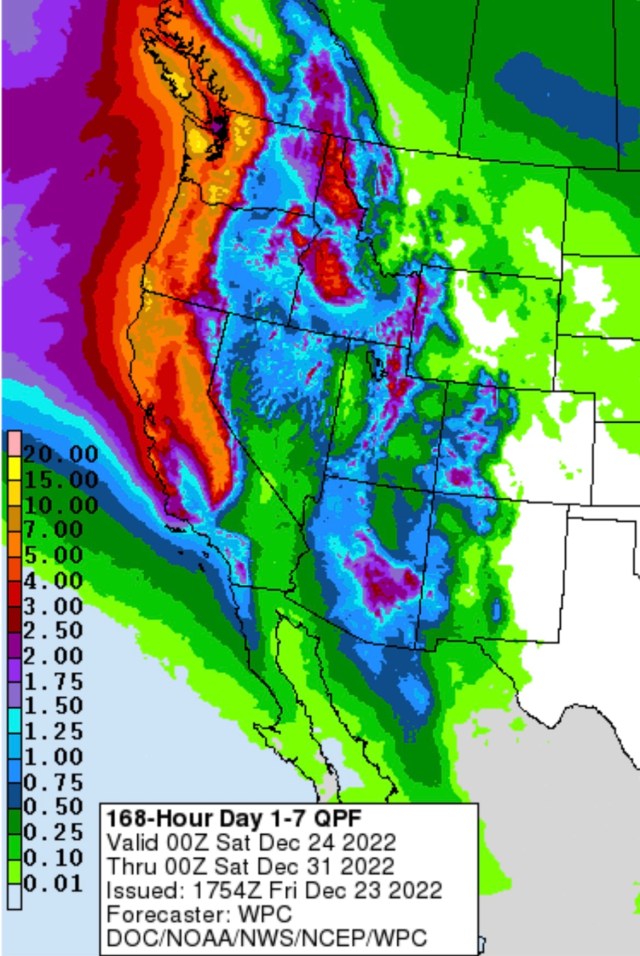
7-day total precipitation for Dec 24-31. And OpenSnow outlook for start of the new year. Happy New Year 2023 !!!

A perfect ending to the perfect storm that brought abundant moisture across most of Idaho.

A major cold front decreased temperatures allowing precipitation to fall as snow above 6,000 to 7,000 feet rather than as rain to bring an end to this unusual June Atmospheric River event. Unfortunately, our neighbors and friends to our east in the Greater Yellowstone area and Red Lodge area received higher rainfall amounts that combined with snowmelt to produce historic runoff amounts primarily on the eastside of the continental divide. Our thoughts are with you as continue to dig out and rebuild.

Temperatures, in Idaho’s west-central mountains at SNOTEL sites like Jackson Peak at 7,070 feet, reached highs of 60-65F for several days prior to June 11 and above freezing nighttime temperatures allowed the snowpack to melt 24/7. On June 11, the temperature reached 63F at 2pm and gradually decreased to 32F by 3AM Monday morning June 13. Sunday Jackson Peak received 1.5 inches of total precipitation as temperatures played a critical role allowing the precipitation to change from rain to snow in the higher elevations. These near freezing temperatures also slowed the snow melt that was feeding the streams prior to the storm. Temperatures remained in the 30s until noon Tuesday, June 14.

Monday morning, we headed north, packed the Subaru and dog (got 35.5 mpg traveling 870 miles in two days). You could see the new snow from Tamarack Resort to the Seven Devils range and in the Selway-Bitterroot mountains on Tuesday. What a beautiful site with green valleys below. 

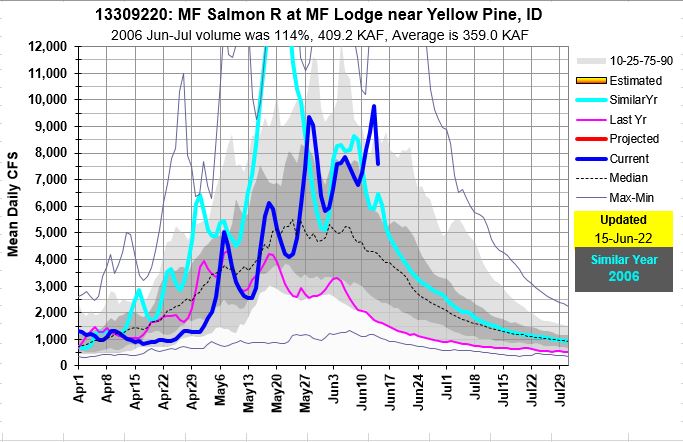
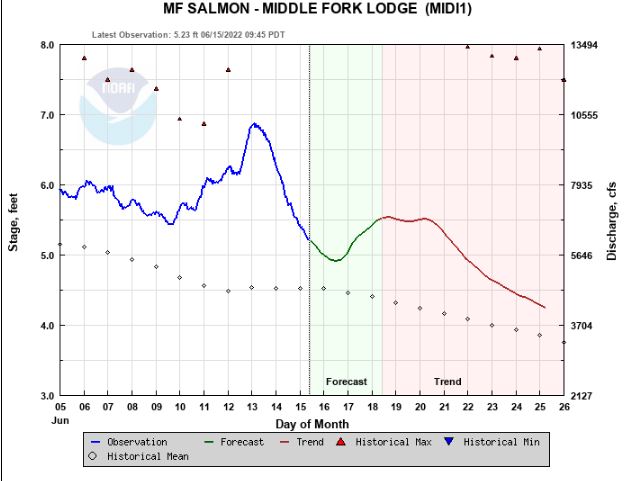
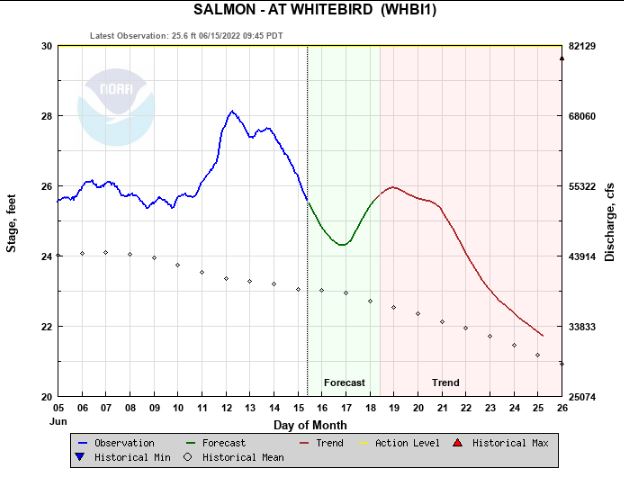
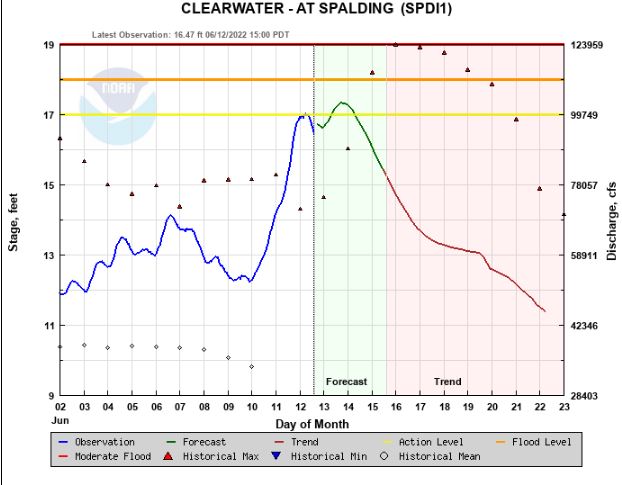
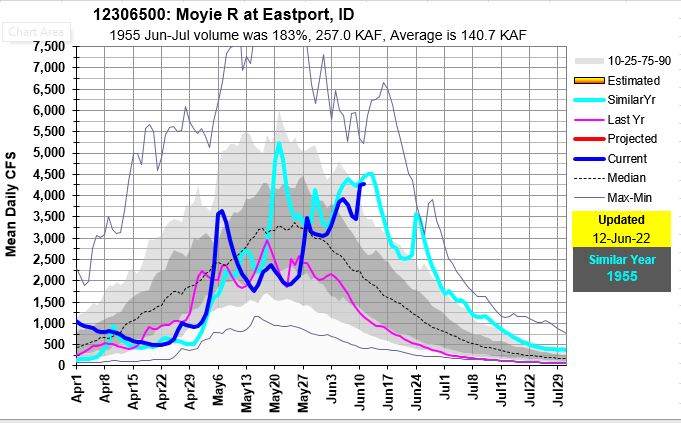
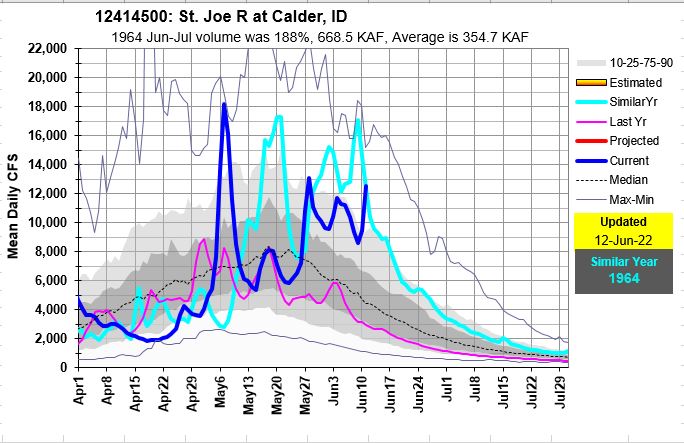
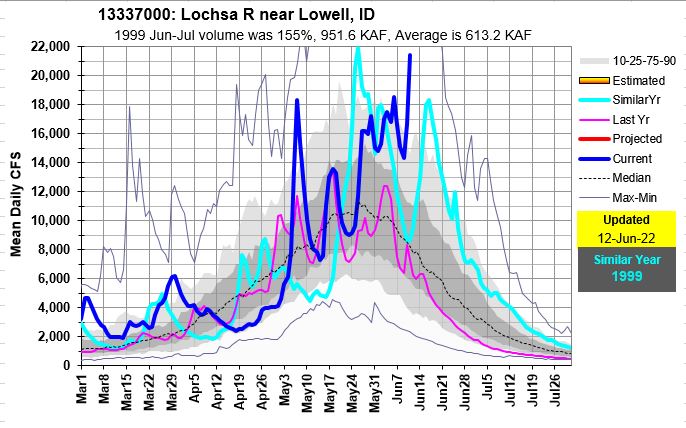
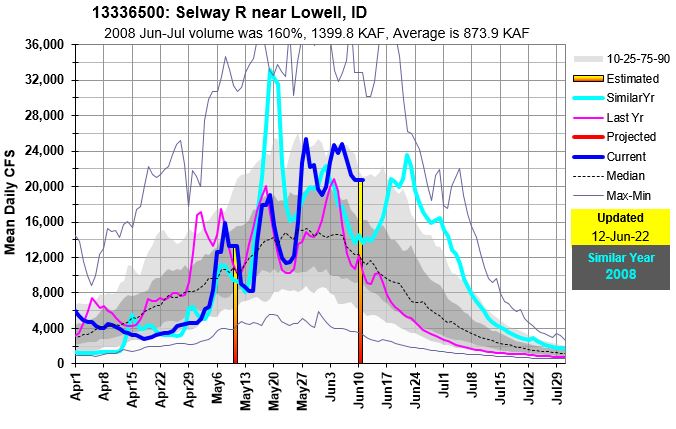
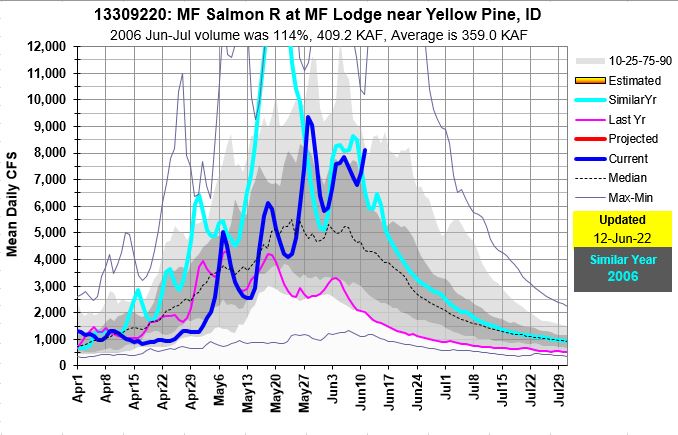
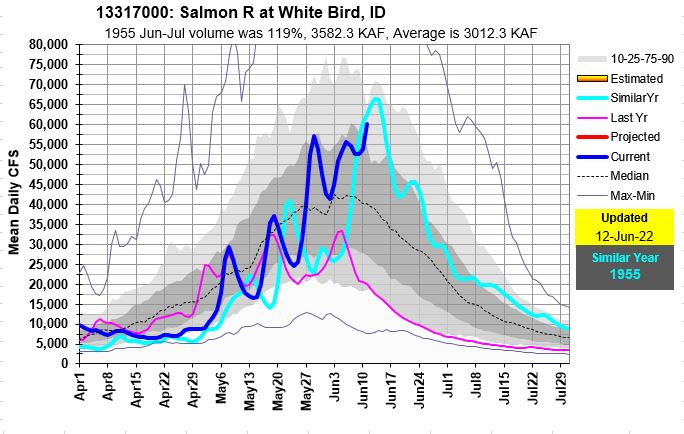
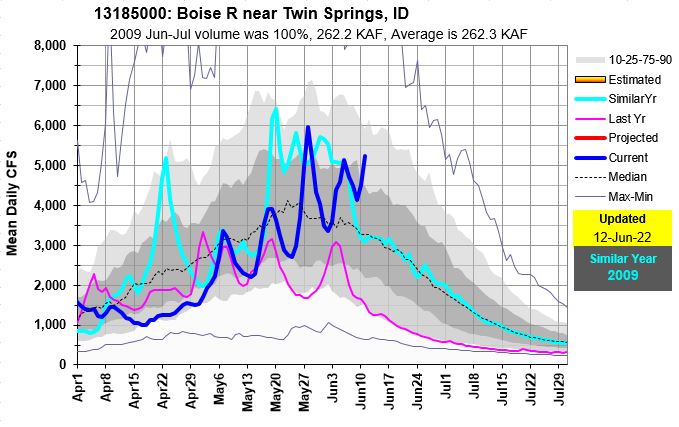
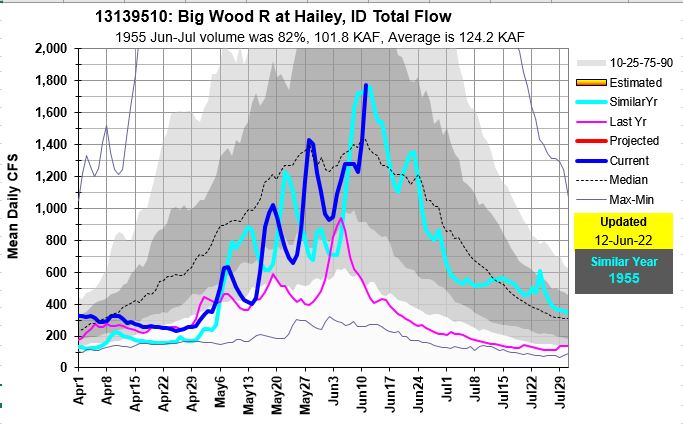
These freezing night temperatures slowed the melt as rain subsided forcing streams to peak lower and recede earlier than streamflow models were trending. Rain turned to snow to melt later which will help extend recession flows. This is good news as many were running bankfull and approaching record flows for this time of the year in the Clearwater basin.

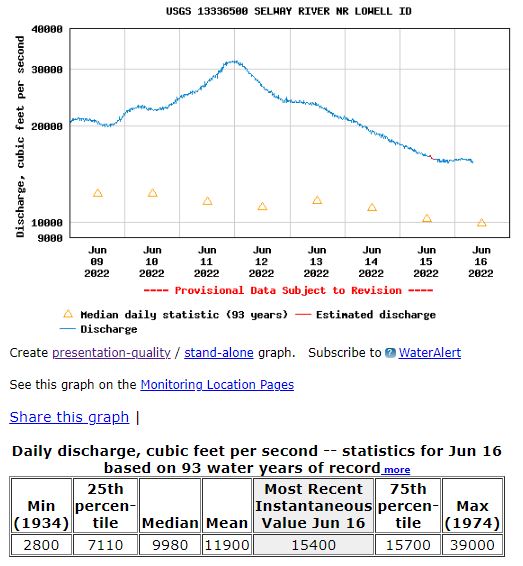
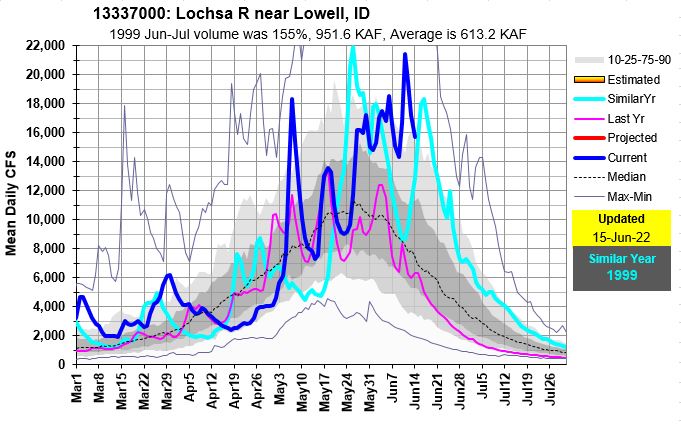
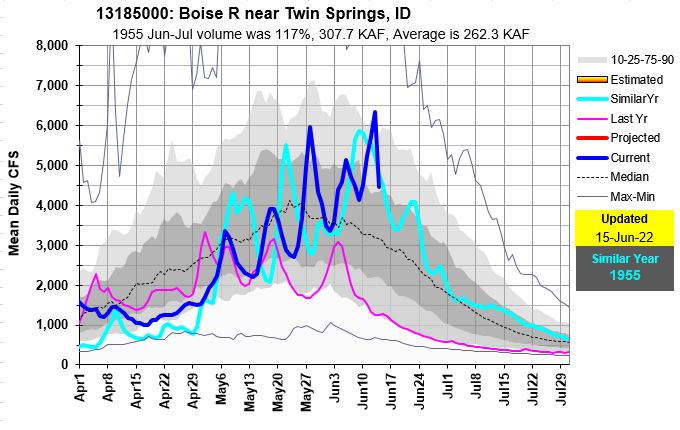
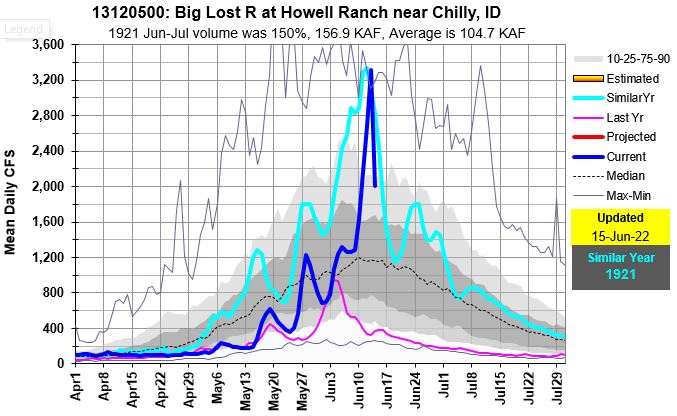
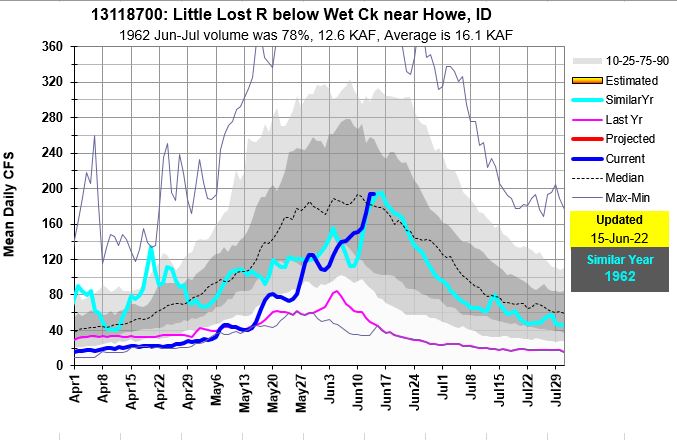
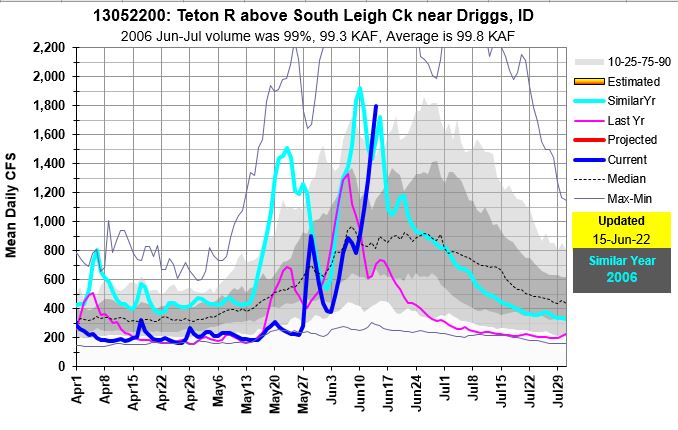
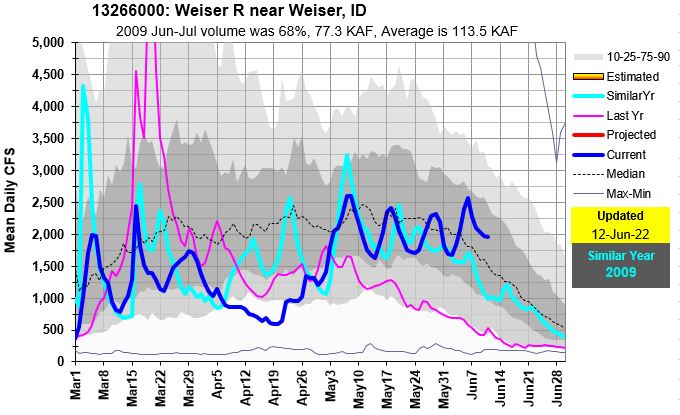
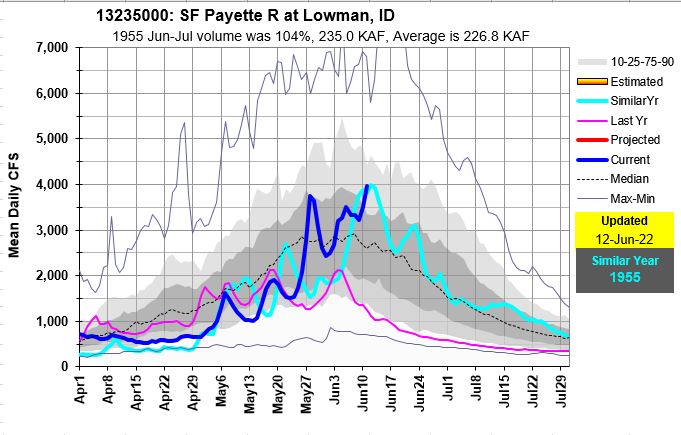
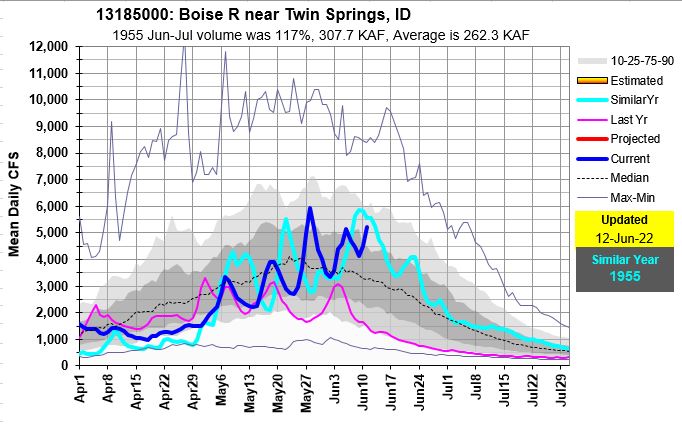
Following are current flow graphs showing this year, last year and similar year based on current flow. I included the Wood and Lost rivers, our next road trip that starts today. Who’s in or wants to talk rivers in the Ketchum area this weekend?

Also included is Alan Smith, an OpenSnow Jackson Hole meteorologist, and his excellent summary of the super cell storm that quickly developed over YNP. https://opensnow.com/dailysnow/jacksonhole/post/26668

And post by Cliff Mass about why thunderstorms develop over mountainous areas. Cliff is from Seattle and his long range PNW temperature forecasts were right on for this area too. Not sure who to reach out to about Idaho tornadoes because we don’t have many. https://cliffmass.blogspot.com/2022/06/why-do-thunderstorm-prefer-mountains.html

Be safe as rivers are still running high and flowing fast with swift currents and strong eddies that are fun to watch from a distance. Rivers are bankfull with steep drops into the cold water. Know your river running limits if you are putting on the river. If you are a fair weather floatier, I’ve seen two forecasts that says warm, dry, hot weather will arrive for the last 10 days of June. Be safe and enjoy another cool, wet weekend!

Major increase followed by decrease from cooler temperatures. 1974 was a huge snow year with record high flows.
Some missing data…

The perfect storm – primed soils, rivers flowing high, remaining high snow to melt – just add rain.

Saturday mountain temps were around 50F in northern Idaho allowing about a dozen SNOTEL sites to melt 1.5 to 3.0 inches of snow water in a day in addition to the 1 to 1.5 inches of rain that fell. End result – rivers are very high, some at record high. Clearwater R at Spalding is pushing 100,000 cfs, record high for today based on 50 years of data.  More rivers will continue rising after Sunday’s rain and snowmelt.

Flood control releases start Monday at 8AM for Boise R with flows at Glenwood Bridge going from 1250 to 2750 cfs by 10AM.

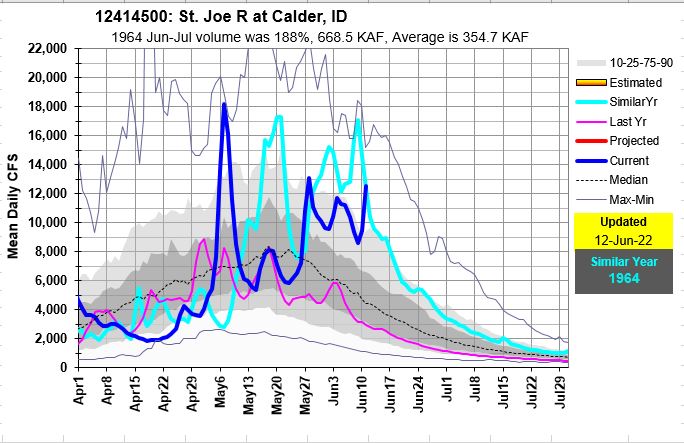
Here are few graphs to illustrate how high these flows are compared to historic exceedances, and max levels that show this year, last year and similar current flow year.

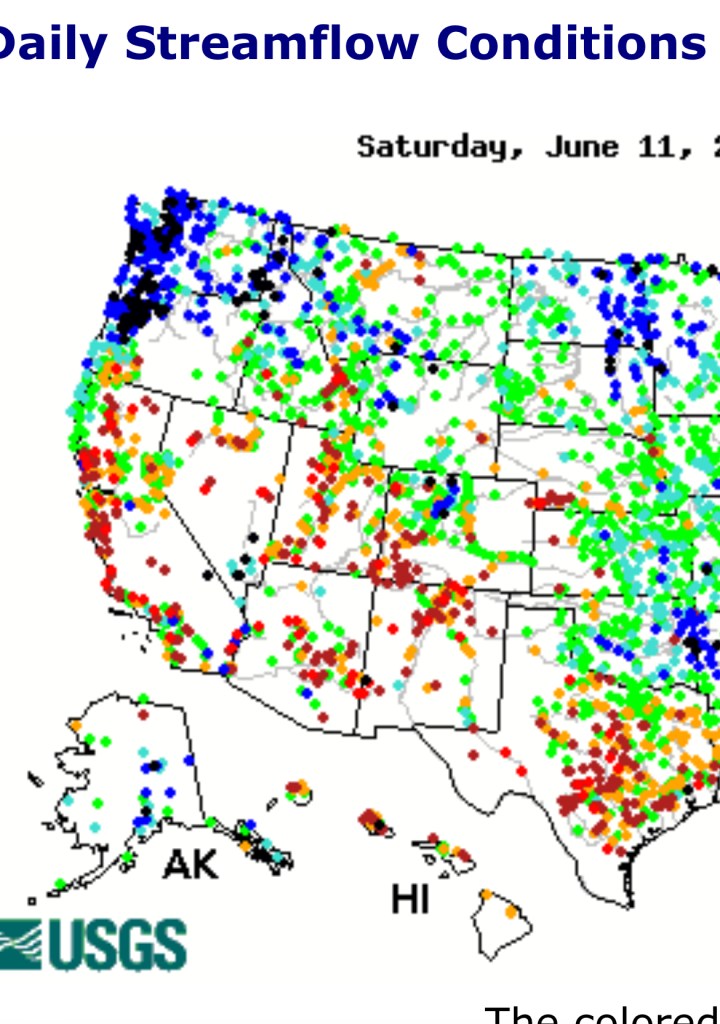
These current USGS flow conditions map for today and yesterday are always cool to watch as the wet basins move across the nation. Black pins represent record high flows. I’m sure we’ll see more in Idaho tomorrow. https://waterdata.usgs.gov/usa/nwis/rt
Link to NWS Forecast Center for streamflow forecasts/trends.
https://www.nwrfc.noaa.gov/rfc/hydrographs/