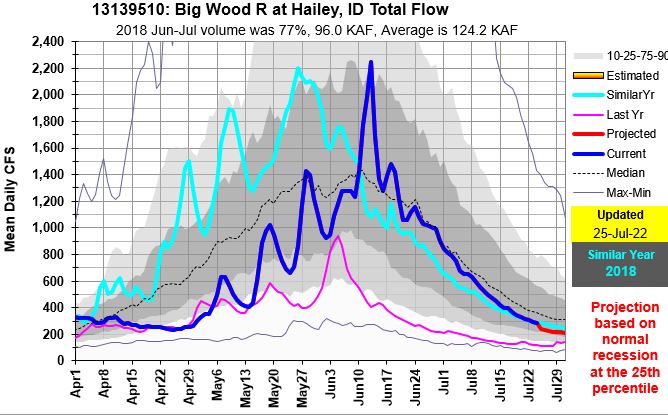
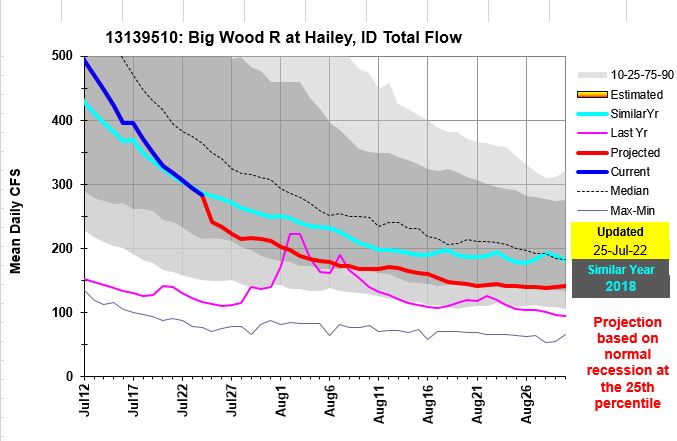
This might not help you win the River Lottery but might shed some light on how this year’s snow compares with other analog years and runoff that occurred.
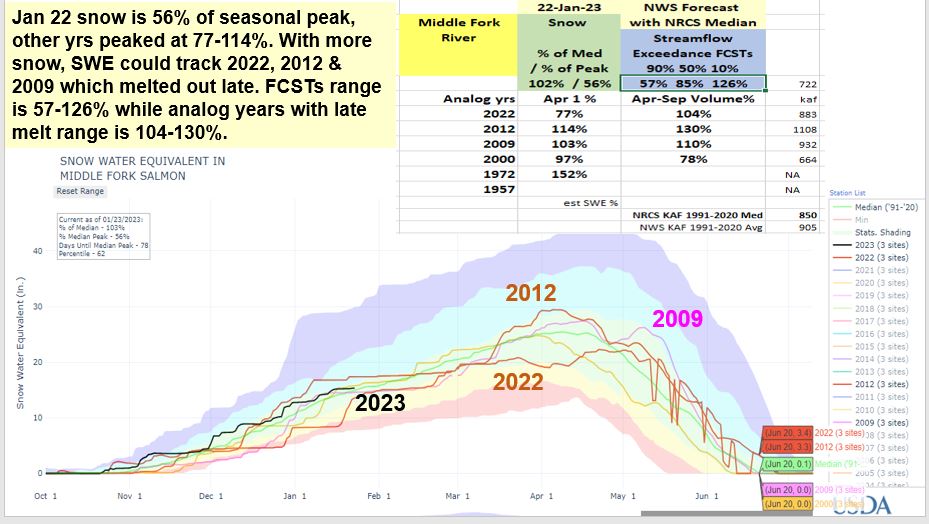
This might not help you win the River Lottery but might shed some light on how this year’s snow compares with other analog years and runoff that occurred.
Here’s a long PDF talk explaining 2022 snowfall and runoff compared to analog year 2009. This provides the background to better understand Pete Parson’s 2023 analog years. These current analog years are 2000, 2009 (again), & 2012 and runner up years of 1957 & 1972. January 15, marks the half way point of winter. A return to stormier and cooler PNW is predicted next week, which is great and unlike last year! Time will tell if we track one of these analog years or not. And if a late snowmelt as observed in the analog years occurs as winter ends and flows into spring. Spring melts away as rivers increase. Stay tuned and enjoy the ride…
Keep your eye on the horizon and let’s hope the storms continue building snowpacks across Idaho in the 2nd half of winter!!!
Now this is gonna get interesting… who remembers what the meaning of life is – from hitchhikers guide to the galaxy ? 42 and this is also Boise’s Magic temp for snow to be falling at Bogus, for most storms. Let’s Keep It Simple Silly (KISS) so we don’t have to explain the adiabatic temp lapse rate decreasing 3F /1000 ft increase in elevation.
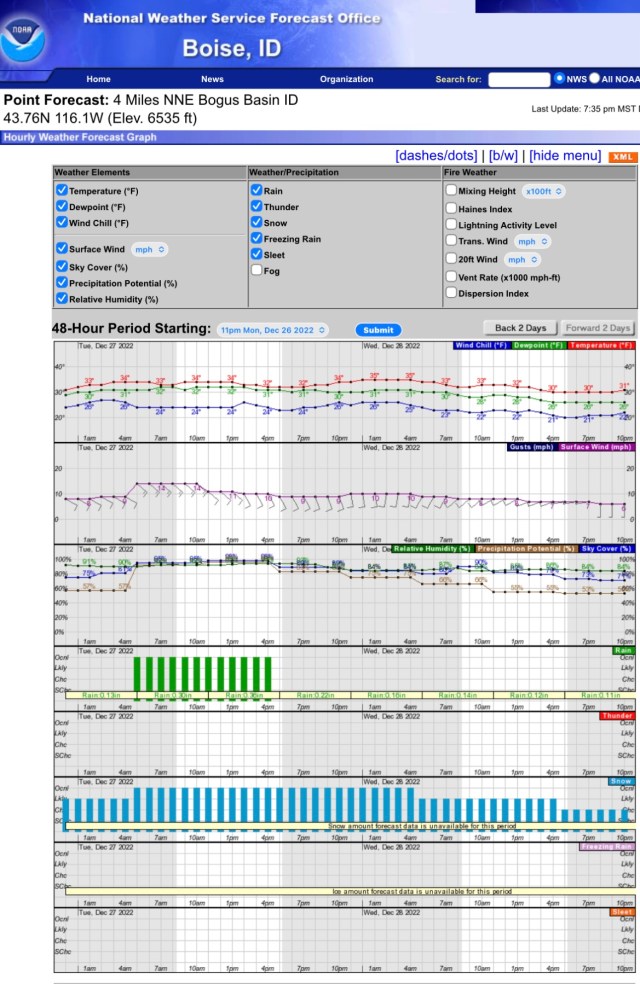
The NWS forecasts for Boise for Tues shows temps pushing 43 F and Bogus at 34 with rain snow mix and snow line / level around 6,600 ft !!! Elevation matters and makes a difference! Stay tuned and let’s hope the snow on ground and frozen soils can keep the temps cooler than the models are predicting and snow keeps falling above 6,000 ft !!!
In Idaho, rain-on-snow runoff events happen below 5,000 ft from mid-Nov to mid-Feb. We’re step-up nicely for rapid runoff if the rain intensity and duration occurs because of valley snow cover and frozen soils. Soils in my backyard are frozen deeper than my shovel can easily dig. What’s happening in your backyard ?
It’s always interesting to watch these storms set up as they cross the Pacific, the ocean swells they produce and becomes an Atmospheric River when they hit the west coast and move inland.
Get ready to enjoy the ride from this AR ! Be safe whether you’re deep in snow on a mountain side as avalanche danger will increase from this heavy snowfall on the colder lighter older snow layers OR if you’re watching the creeks and rivers rise in the valley bottoms! How high the rivers rise depends on duration / intensity of rain and temps above 32F.
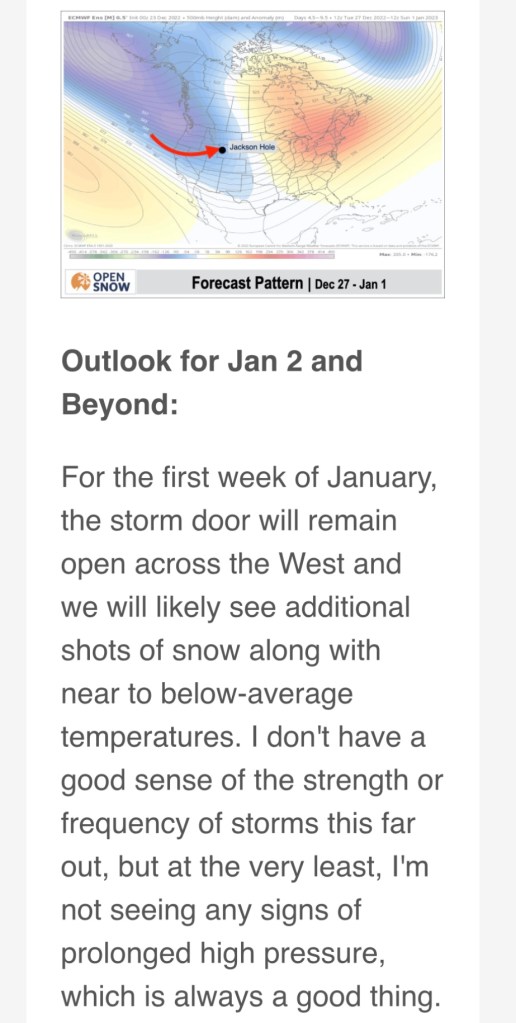
The good news from OpenSnow mentions the weather door in PNW may remain open in early Jan to start the New Year !!!
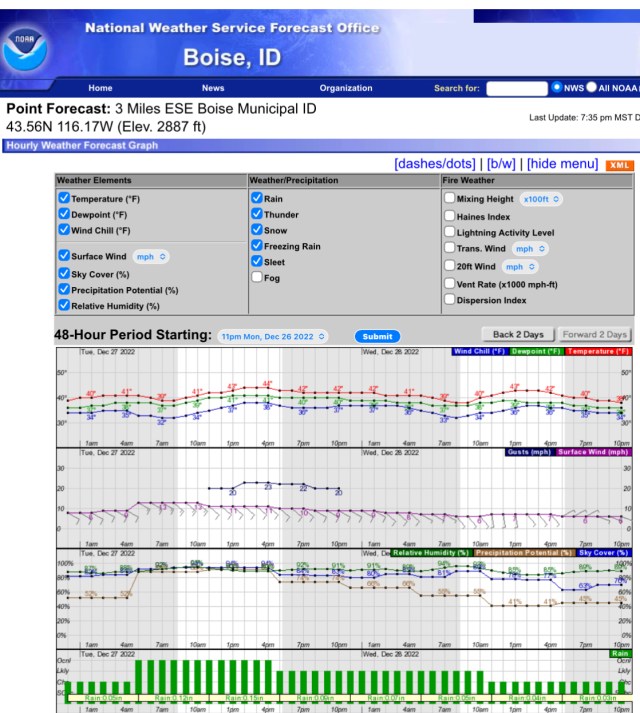
Above NWS hourly temp and precip outlook for my Boise house and for Bogus below.
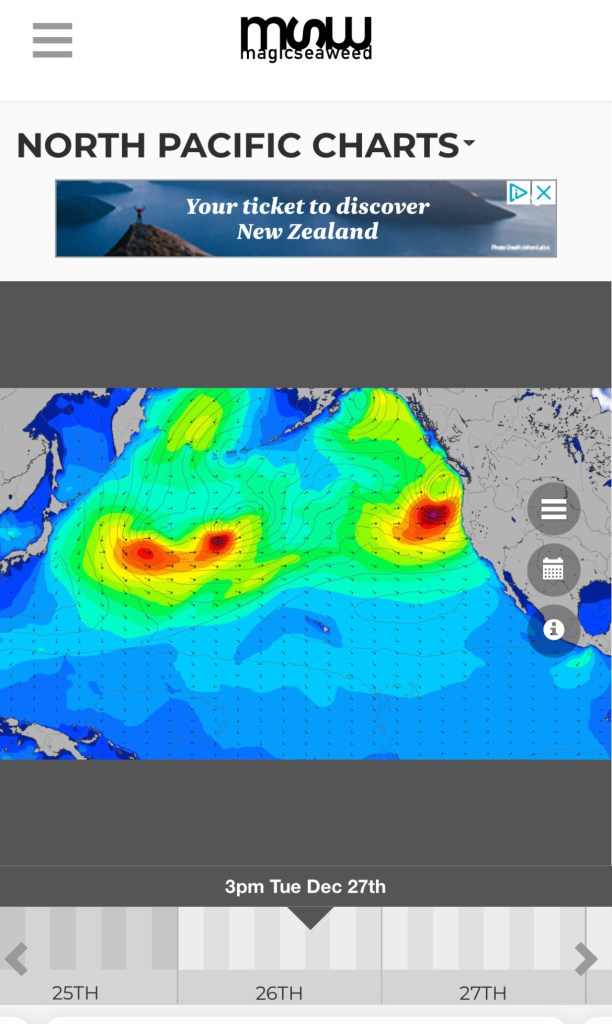
Ocean swells tracking across Pacific as it brings in next week’s AR.
https://magicseaweed.com/North-Pacific-Surf-Chart/80/?type=swell
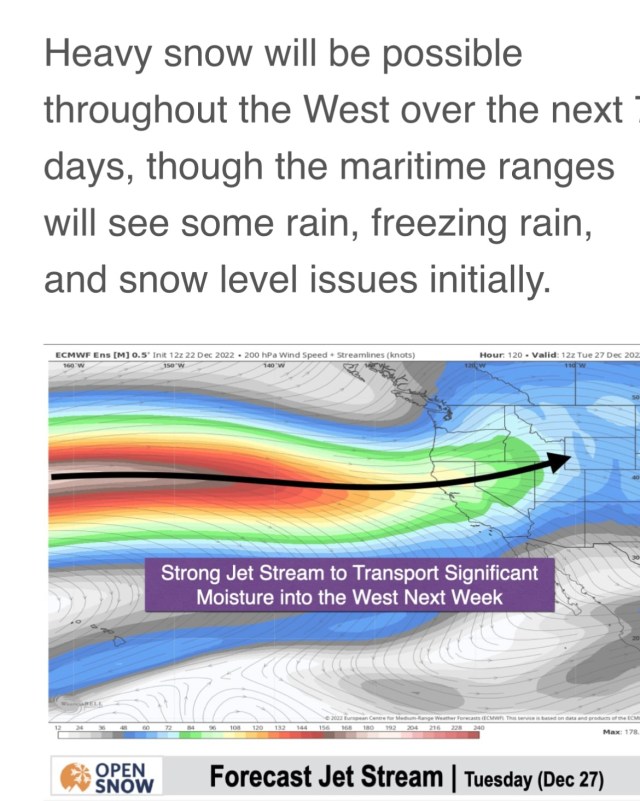
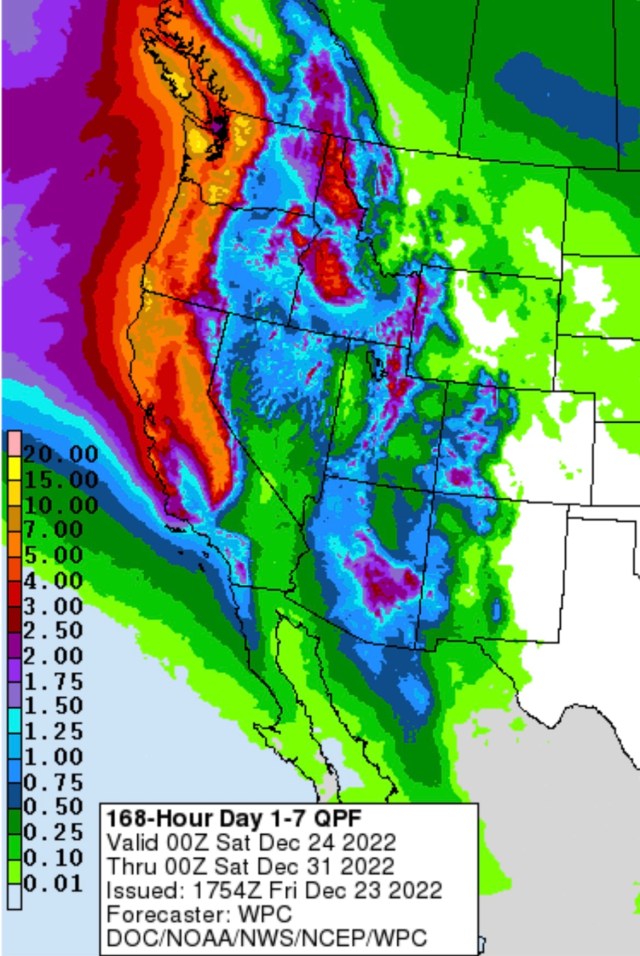
7-day total precipitation for Dec 24-31. And OpenSnow outlook for start of the new year. Happy New Year 2023 !!!
Now to answer the question everyone has been asking… This is the best start at Bogus since 2002 and best at Brundage since 2015! This analysis is based on Dec 15 snow data. Keep in mind Bogus’s daily SNOTEL record starts in water year 2000 and Brundage in 1986. Snow depth sensors were in installed in late 90s early 2000s.
Comparison years may change to the better with more storms coming next week and before the new year starts! Here’s the details and forecasts follows…
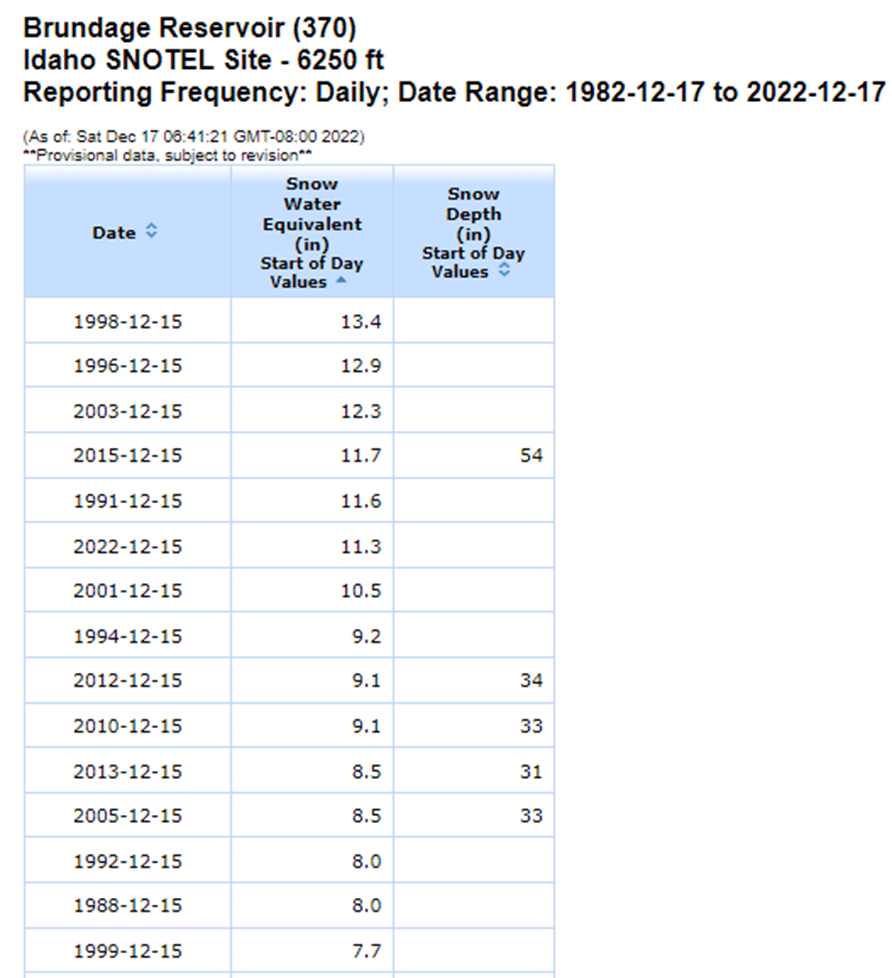
Below are Bogus & Brundage Dec 15 Snow Water Equivalent (SWE) values sorted high to low. Snow depths are included if the depth sensor was installed in that year.

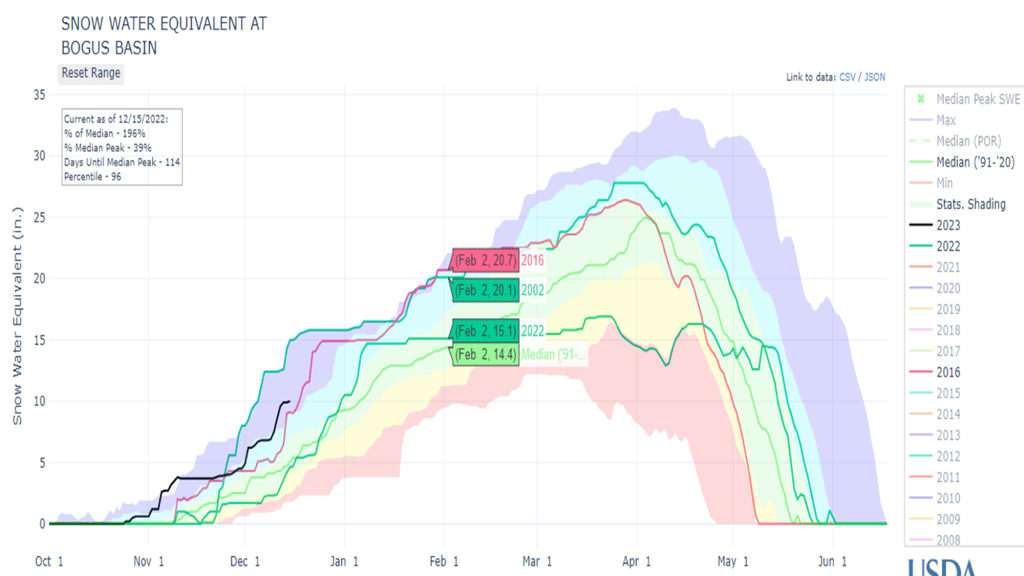
Bogus Basin’s Dec 15 SWE & Depth are 10.0” and 46”, highest since Dec 15, 2001 when there was 15.0” of SWE with depth of 61”. Wow, that was good year!
Keep in mind the water year is the year designated in graphs below and runs from Oct 1 to Sep 30. So this water year is for the winter of 2022-2023 and is called water year 2023.
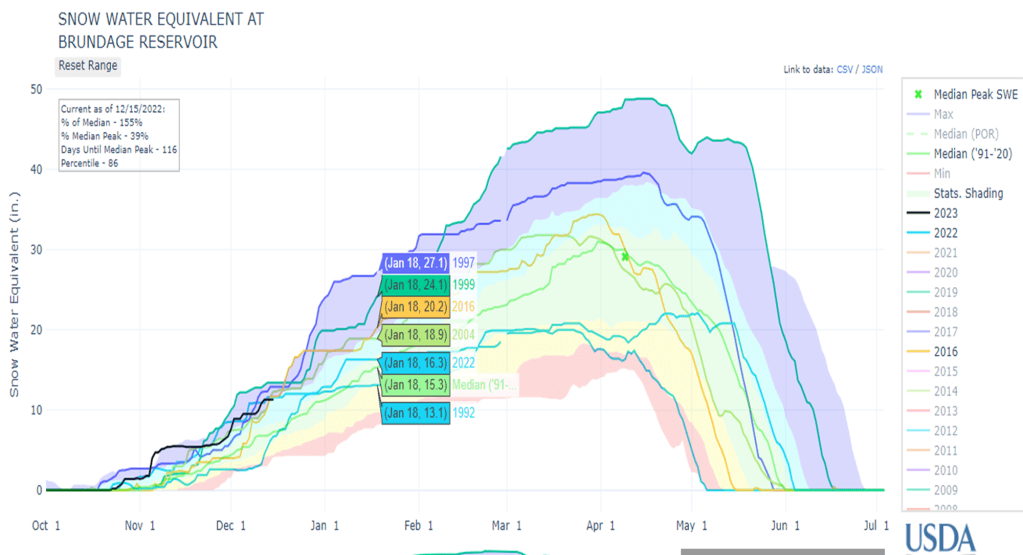
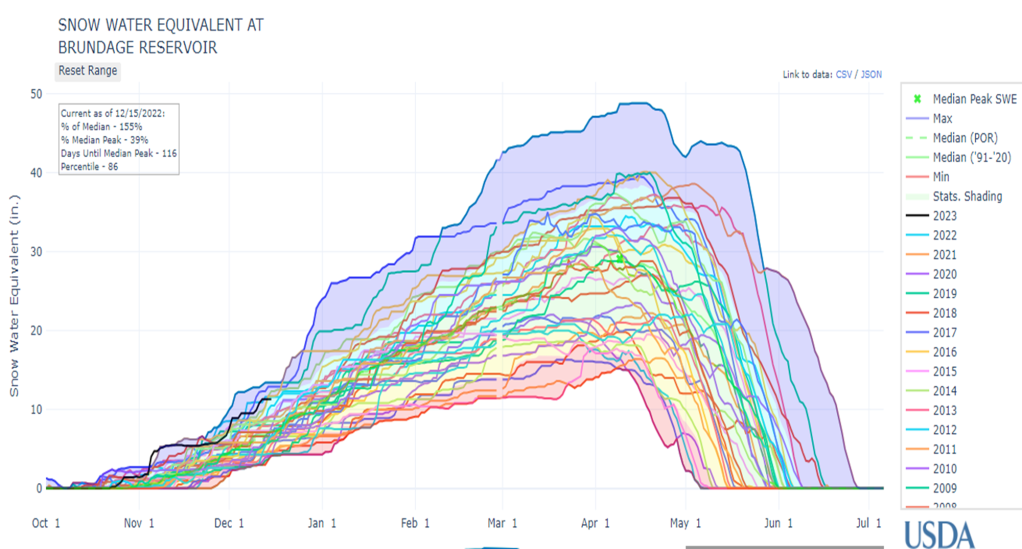
Brundage Reservoir SNOTEL site on Dec 15 had a SWE of 11.5″ with an estimated 45″ of snow depth, best since 2015 and 6th highest since records start in 1986. Top 5 years with more SWE on Dec 15, in order, are 1998, 1996, 2003, 2015 and 1991 followed by 2022. Remember those good wet snowy cold years in the mid to late 90s.

Busy but interesting graph above showing the SWE for all Bogus Basin years for the winter accumulation and melt season.
Bogus Basin time series SWE graph below shows 2002 with highest SWE on Dec 15 and this year, 2023 in black, with a little less and a bit more than 2016. Last year, 2022, is included to see how flat (dry) the SWE line was after Jan 1 and until the the wet weather returned in March/April to push the melt out later than normal. This means you should ski now and don’t wait for next Pow day. It is always interesting to see how close the SWE lines are in January for the different years and how what happens in January typically to determines the outcome trends for rest of winter. Later, we’ll talk more on last year’s dry Jan & Feb spell that also bled into March and if this is likely to happen again this year.
Similar with Brundage Reservoir you can see this year’s SWE, 2023 in black, is 6th highest with higher Dec 15 amounts in 1998, 1996, 2003, 2015 and 1991. These are actually Water Years – 1999, 1997, 2004, 2016, 1992 and 2023 this year.
With a break between storms of blue skies and cold temps, it’s time tune & wax those boards for when the moisture returns. These two 7-day precipitation forecasts show more moisture coming the 2nd 7-days. Lets hope it stays on the radar for Santa’s arrival and beyond.
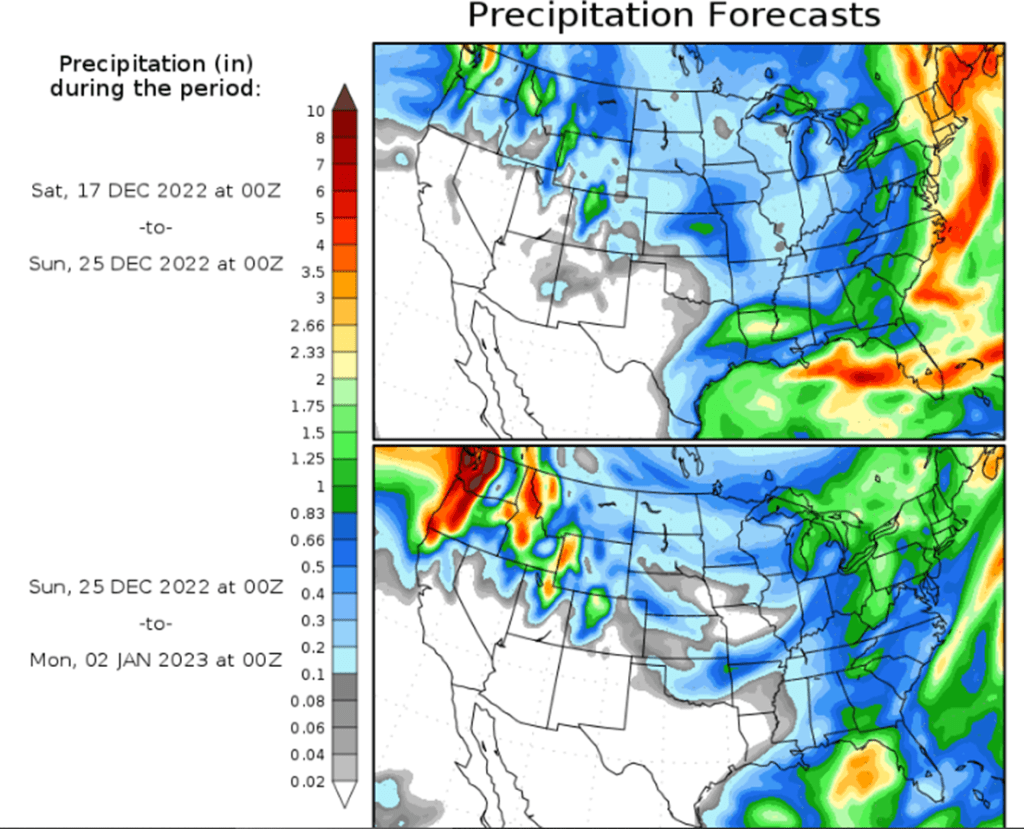
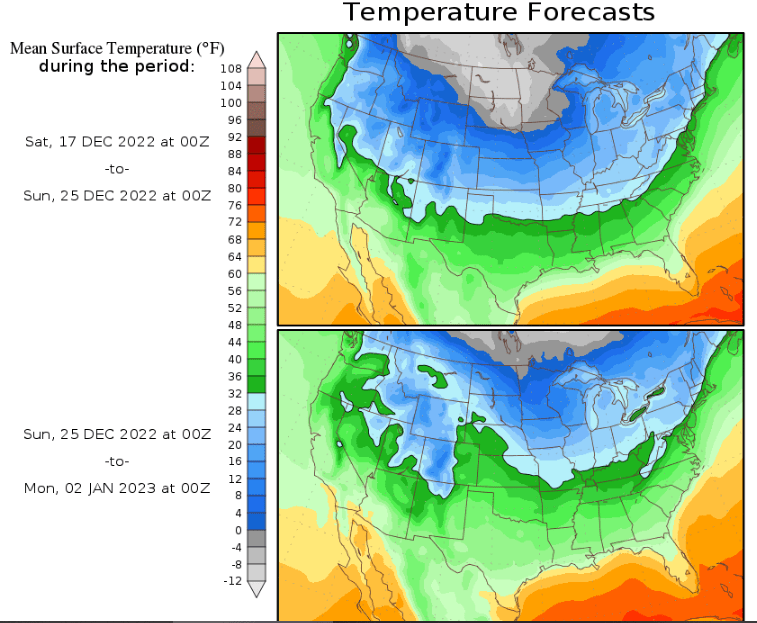
Top temp map shows cold temps upon us now with 7-day average temps averaging -12F in the mid-west and less cold the 2nd week, Dec 25-Jan 2. Remember cold is good, don’t let anyone kid you.
For the many years/decades I’ve been watching these 7-day forecasts, its interesting to point out that this 7-day temp anomaly for Dec 17-25 is one of the first times that I have seen so much blue & white and so little red that signifies above average temps. Cold is good.

Thanks for reading and if still looking for a stocking stuffer – check out Airflare. An inexpensive phone wilderness rescue app that can be used by rescuers to determine your exact location. https://airflare.com/
If the Hunga Tonga volcano went off above ground, we’d still be talking about it !
Lisa L – this is probably reason you got meters of rain in the land down under. Was it colder and more humid than normal too?
1st time for me cutting grass and mulching leaves with snow on the ground and leaves on the trees ! Meg R – There’s still time to cut your grass short to make snow look deeper this winter !
Any dendrologists out there know how the cold nights temps near 20F will impact trees that haven’t shed their leaves yet ? Moisture /sap freezing in trees – remember a few years ago the Nov cold spell that spilled over from Lost Trail Pass ID/MT went up the Salmon basin and deposited temps near 10F in the Treasure Valley? MF River froze over night and temps killed many red /cherry trees in town…
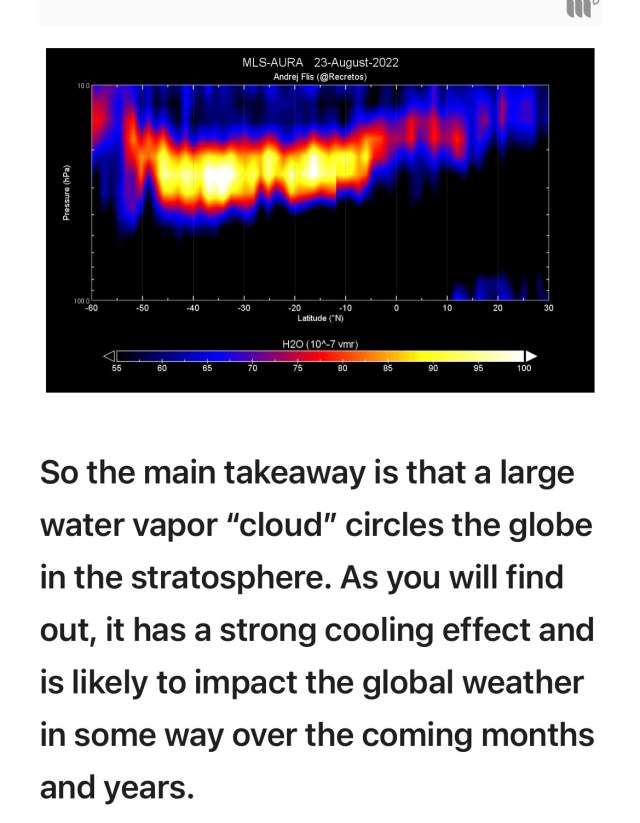
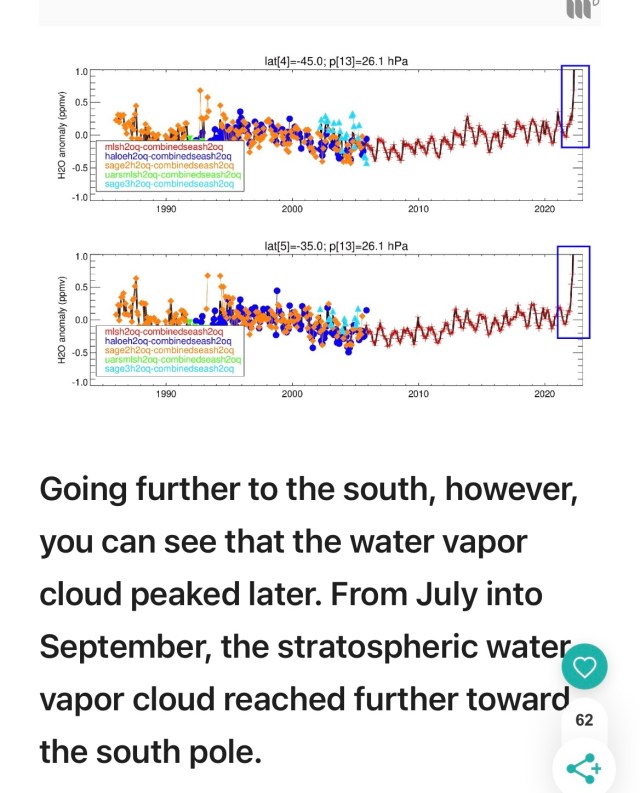
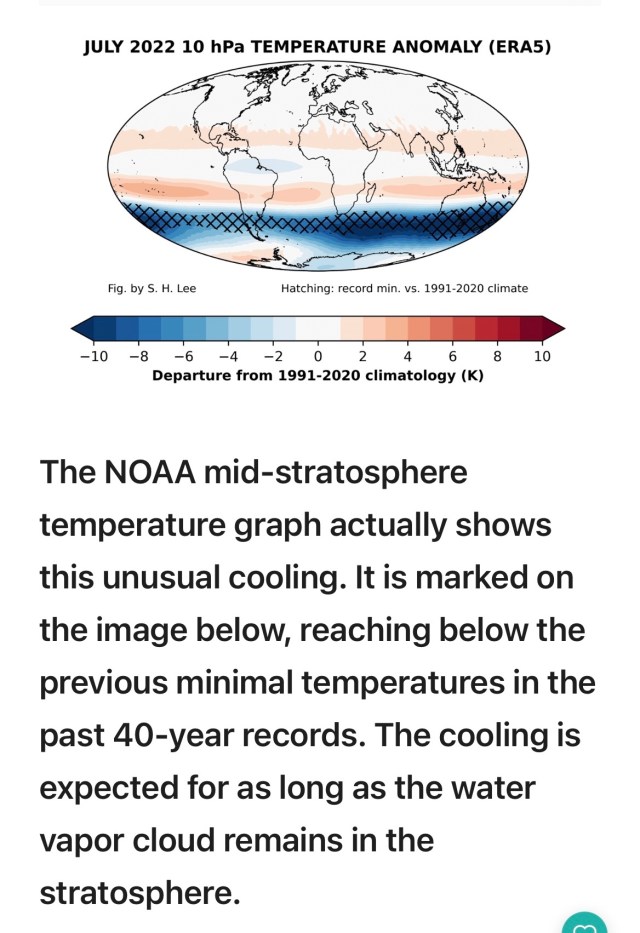
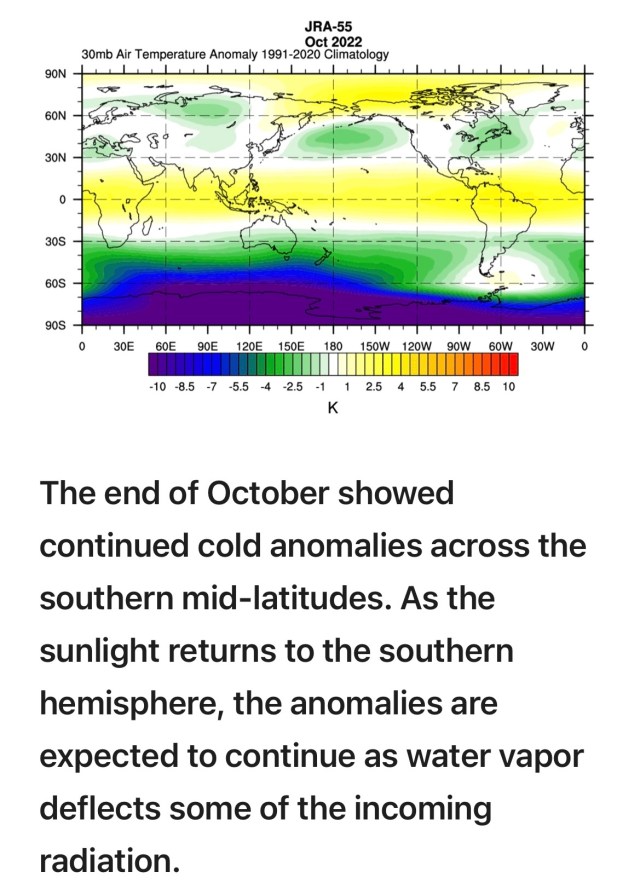
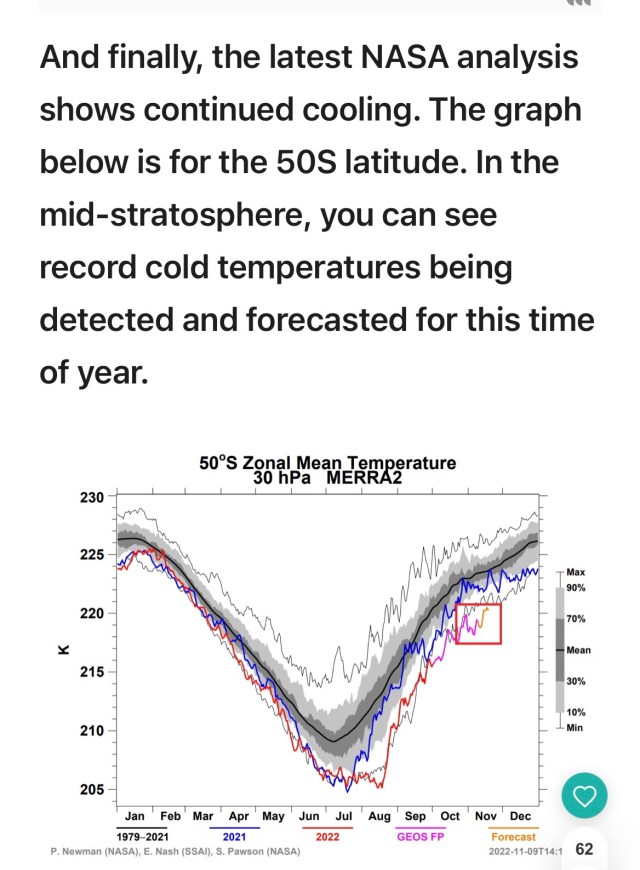
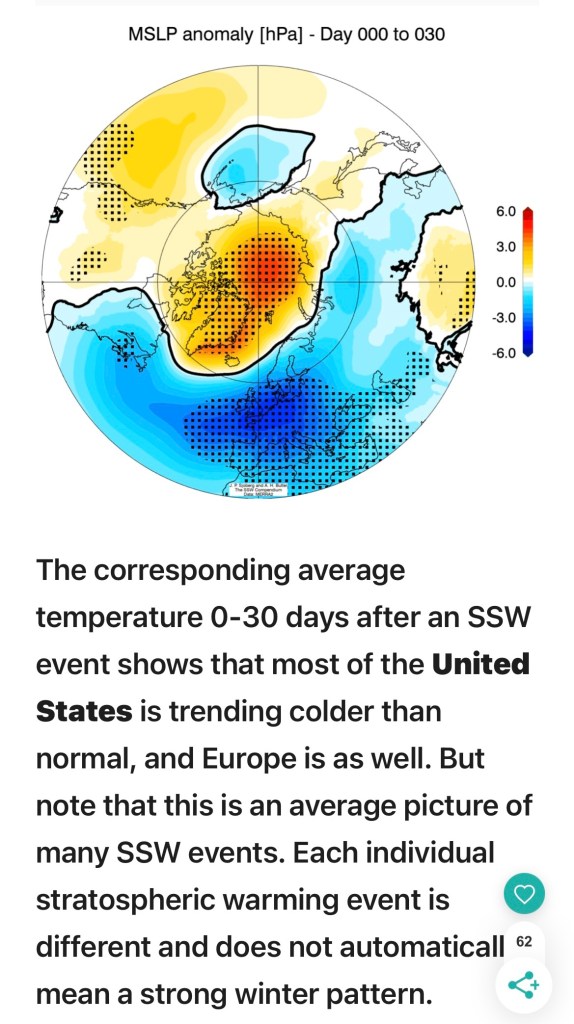
Here’s a long article explaining impacts of Hunga Tonga volcano Jan 15 2022 and the water vapor now circulating the Southern Hemisphere. Key is under the relationship between the south and the north atmospheres. I clipped the highlights if you don’t like all the ads… You’re welcome !!!
By Author Andrej Flis
Posted on Published: 14/11/2022
Categories Global weather


•Increase soil moisture to improve next year’s runoff.
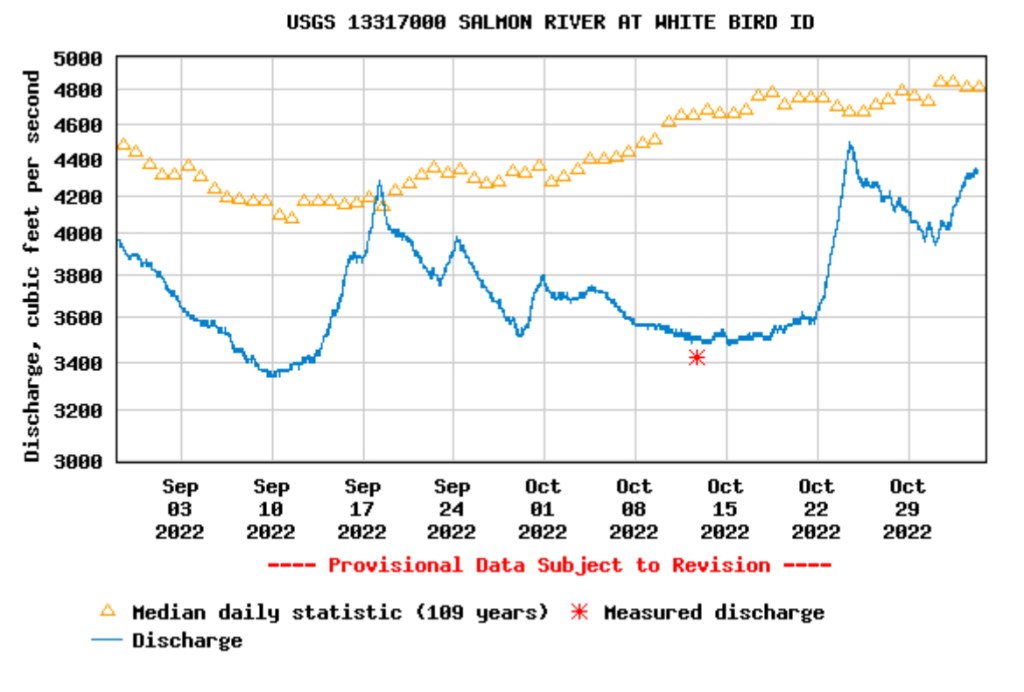
•Increase streamflow levels from their summer/fall lows – actual low point was mid-Oct, but I didn’t save image.
•Start accumulation of mountain snowpack.
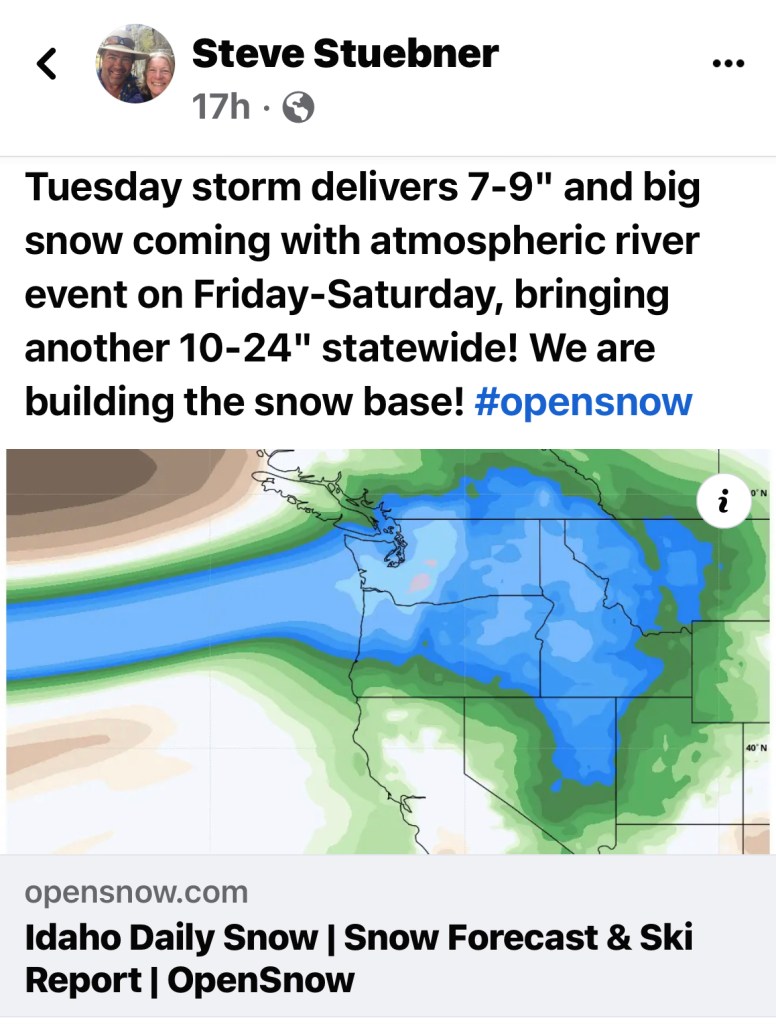
•Fish, farmers, hydropower, skiers, winter tire sales… who’s not gonna benefit from this first of many winter storms ?
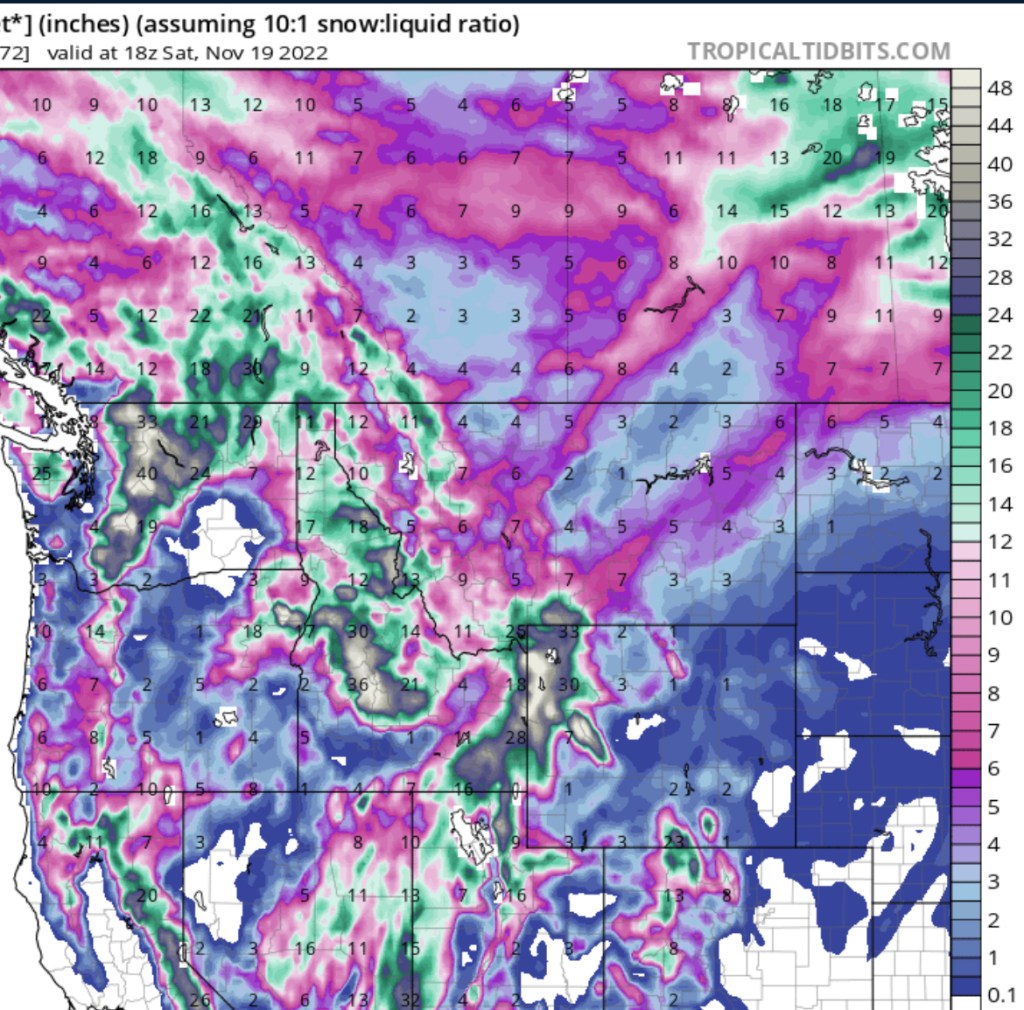
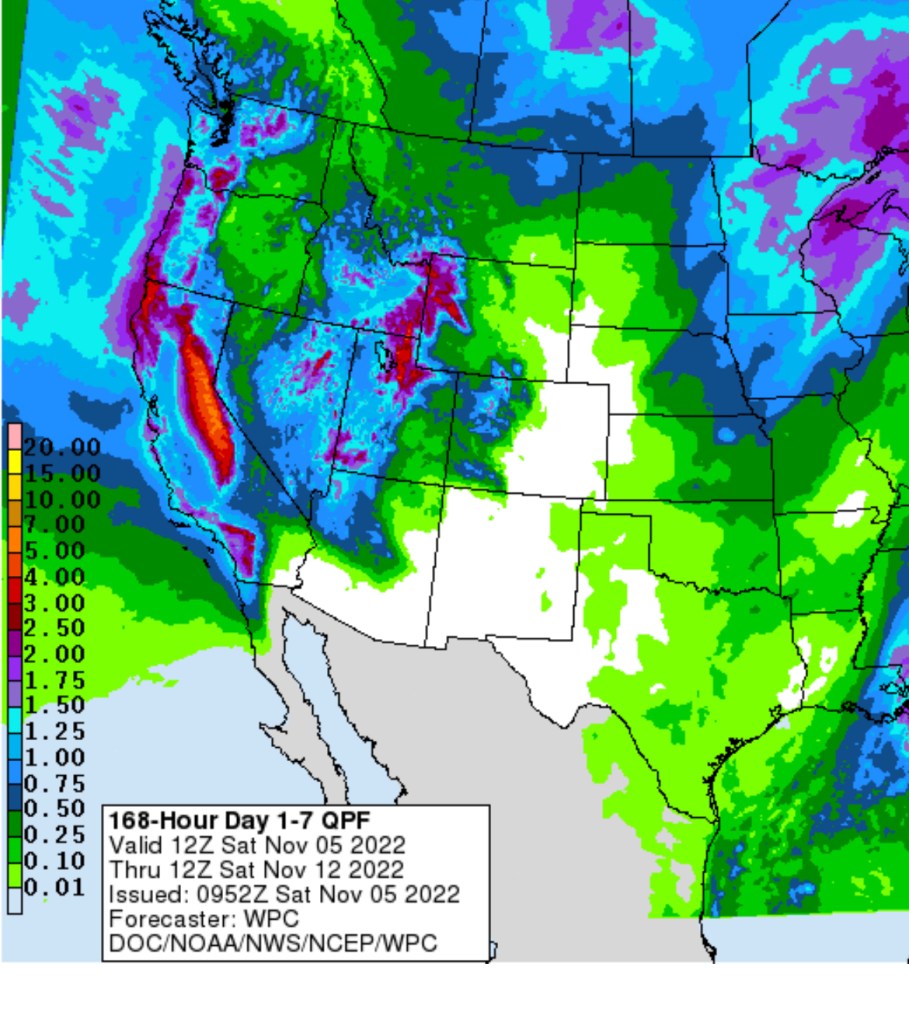
1st AR moving in
https://cliffmass.blogspot.com/2022/11/warm-and-very-wet-before-snow-and-cold.html?m=1


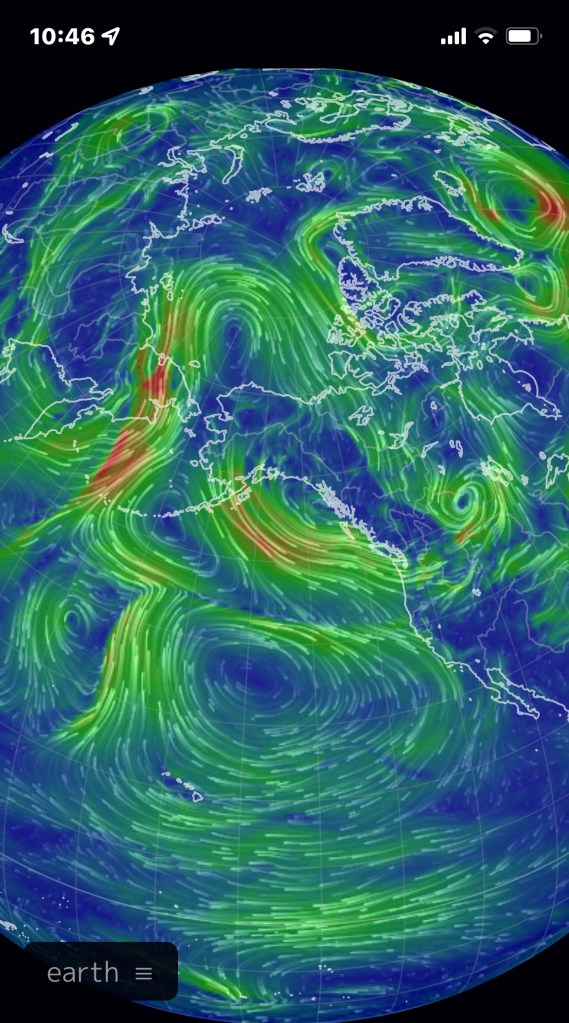
Interesting Pacific surface winds. https://earth.nullschool.net/?fbclid=IwAR1suej3Lwq8RkobH60bx7mdCIUgnRdZhJdwxCgRXxQC7ZDXCuzf0xCepRI#current/wind/isobaric/850hPa/orthographic=-144.42,51.88,331
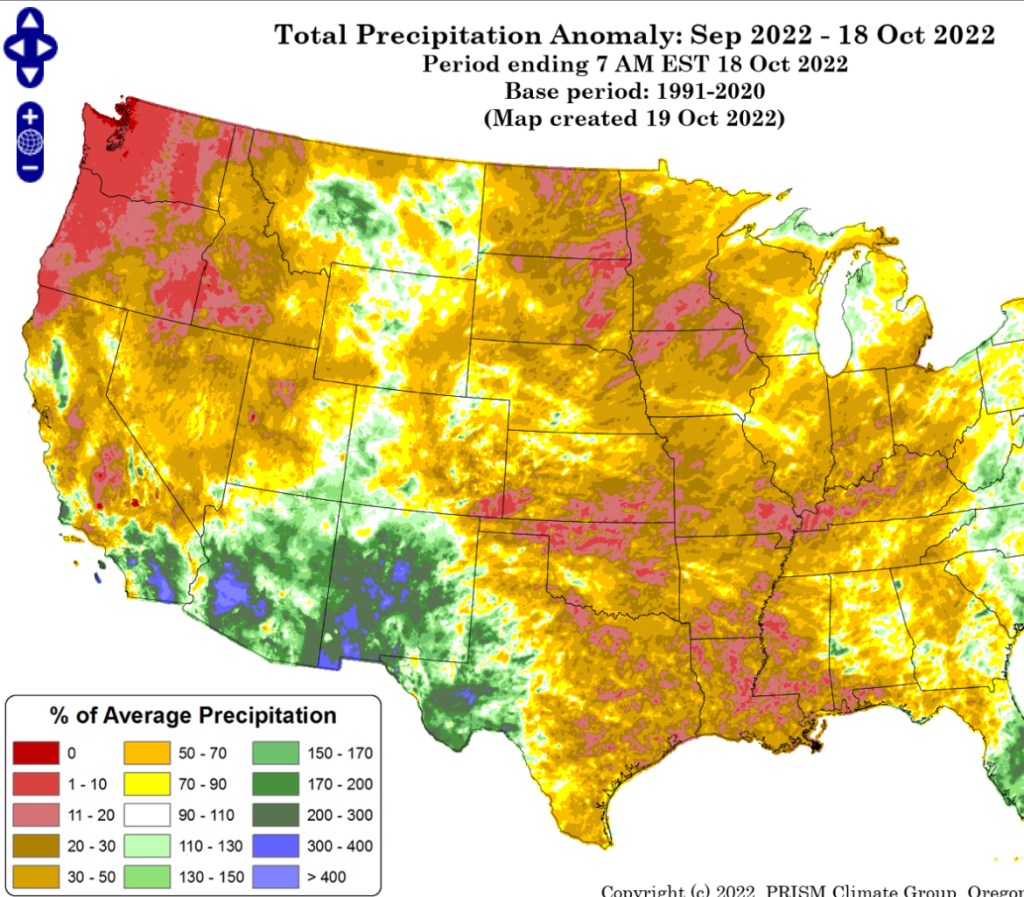
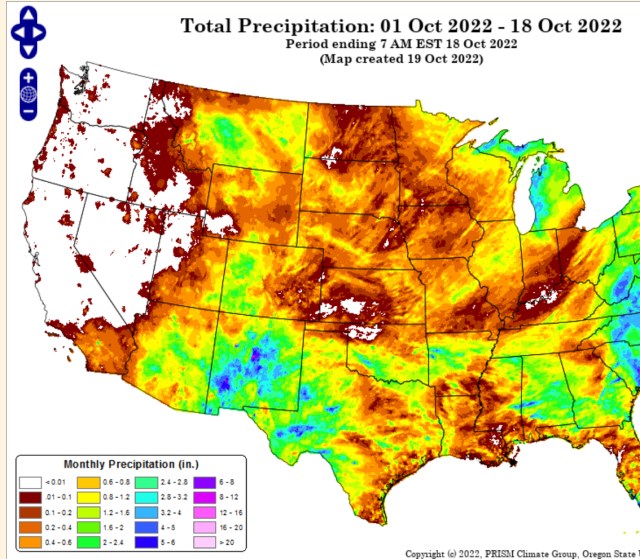
This has got to be one of the longest, driest falls in a while in the PNW and hot in Seattle!
All good things must end as winter arrives this weekend. While we’ve been enjoying fall colors with little wind that extended Nature’s Fall show, the winter stage was being set in Siberian with a currently an above normal snow cover area.
A good Siberian snow cover in Oct/Nov influences the jet stream across the US/Can border from PNW to Great Lakes region and Europe. Time will tell where the jet stream will cross the border, but several storms with colder temps and snow have already arrived in the Great Lakes Region.
This weekend, snow will fall down to 4000 ft. in central Idaho and more next week. Stay tuned as we ride in on a 3-peat of La Niña winters. More to follow as we review last year’s analog years and forecasts with what happened and end with this winter’s analog years.
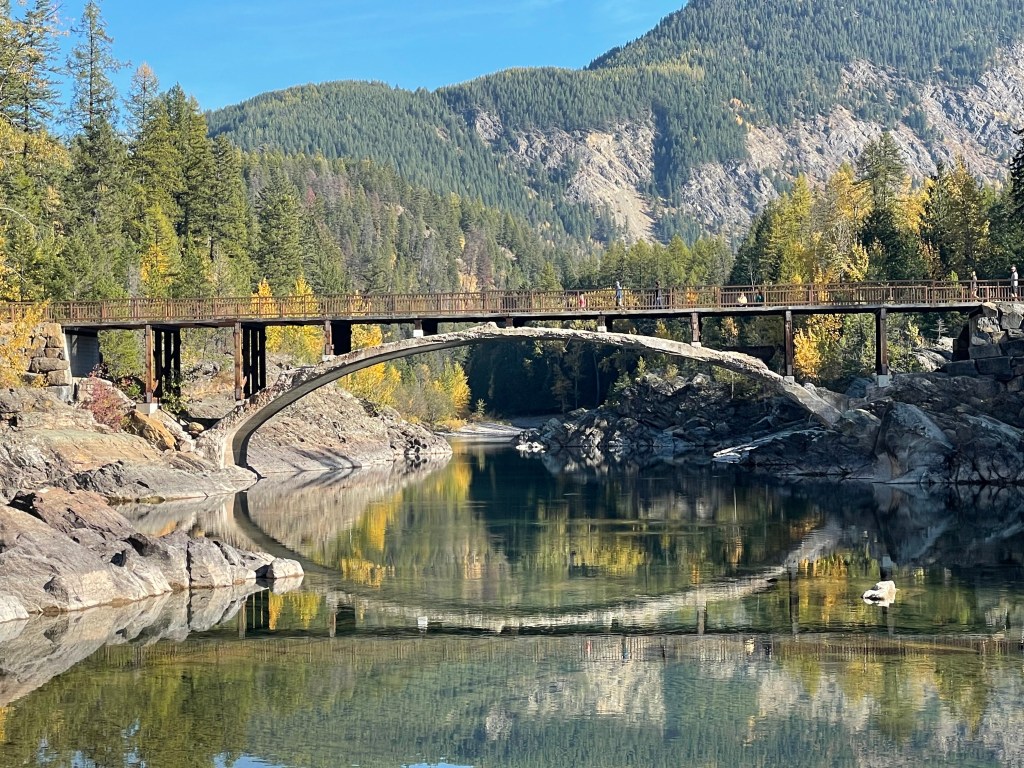

Fall pics from Glacier NP – October 17, 2022.
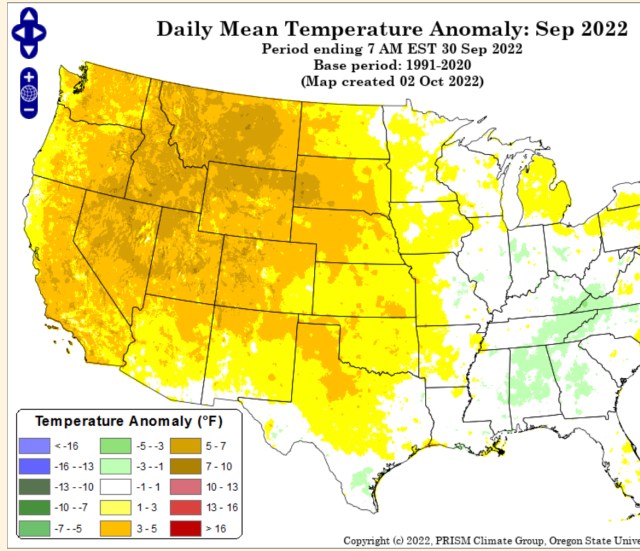
Here’s a few images to illustrate how dry and hot September & October have been.

For those who like details, here’s a long wordy article explaining the Siberian snow cover relationship, and more… or hang tight as we get ready for winter to enjoy the ride!!!
I’m sure you’ve seen the videos of hurricane Fiona in Puerto Rico… here’s some of the rain & flow data to better visualize the impacts of this storm.
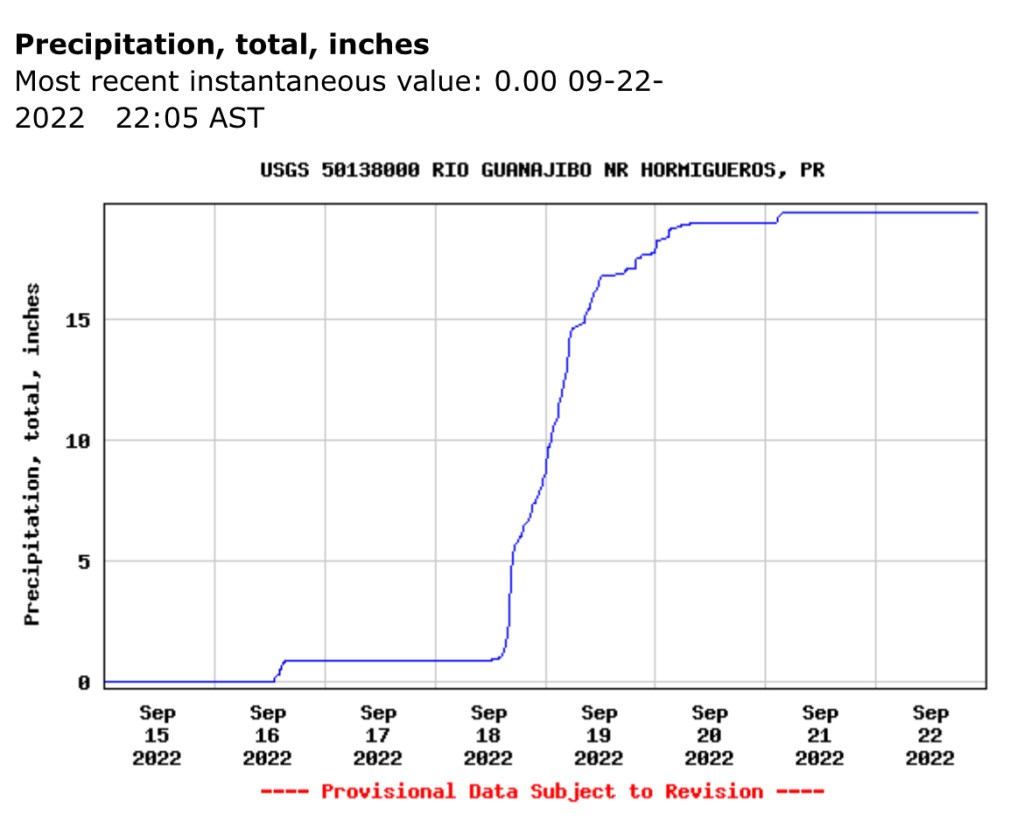
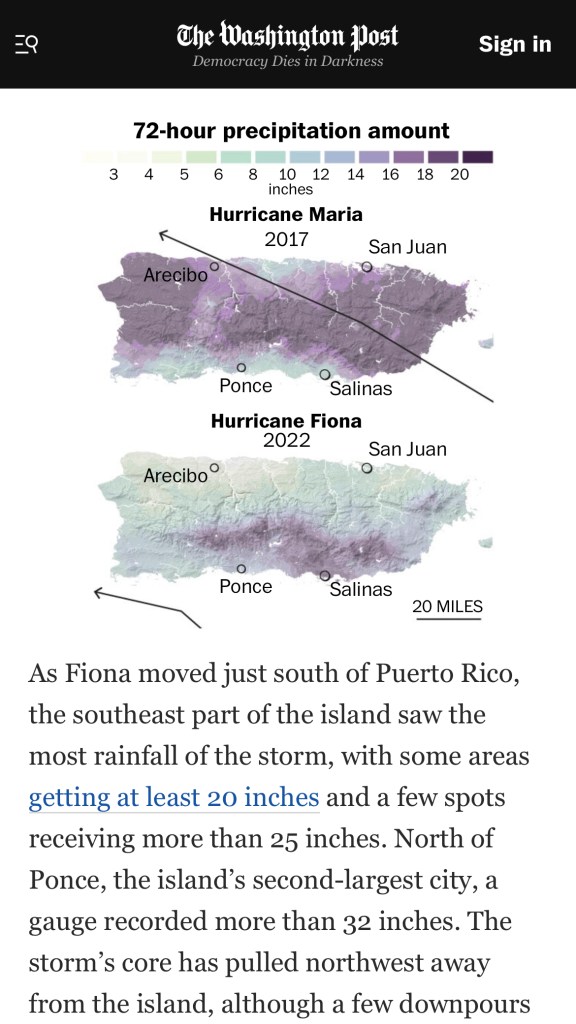
Flow – river increased from 150 cfs to 83,000 cfs in half a day. Watershed is only 120 sq miles. Gage sits 13’ above sea level.
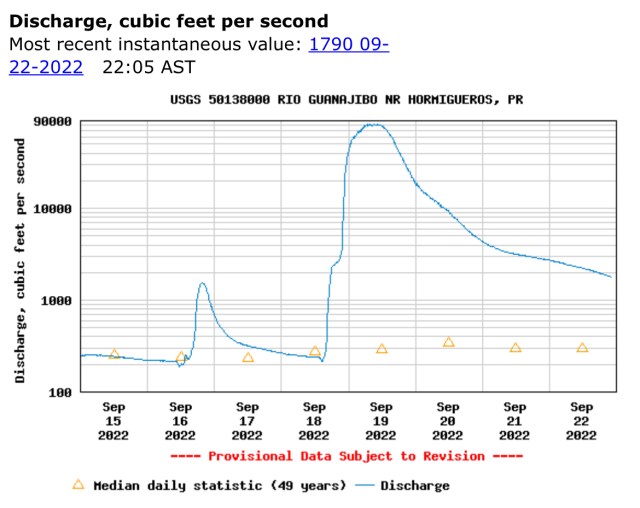
2017 Hurricane Maria had more rain to produce a peak flow of 68,300 cfs, 3rd highest peak in 49 years of data.
Highest peak flow recorded was 128,000 cfs, September 16, 1975 from Hurricane Eloise in a 120 square mile watershed ! Wow!

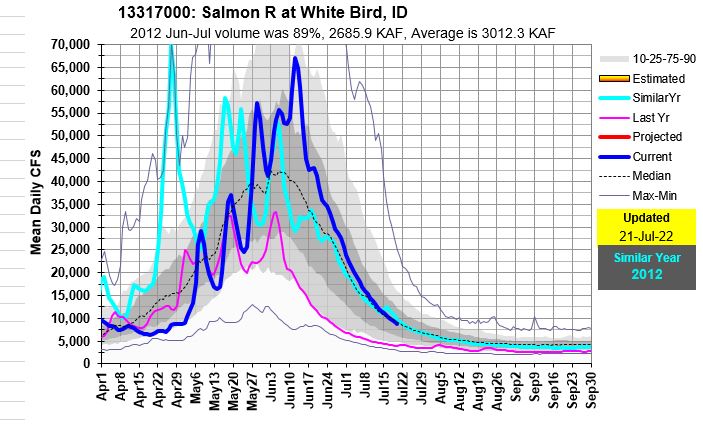
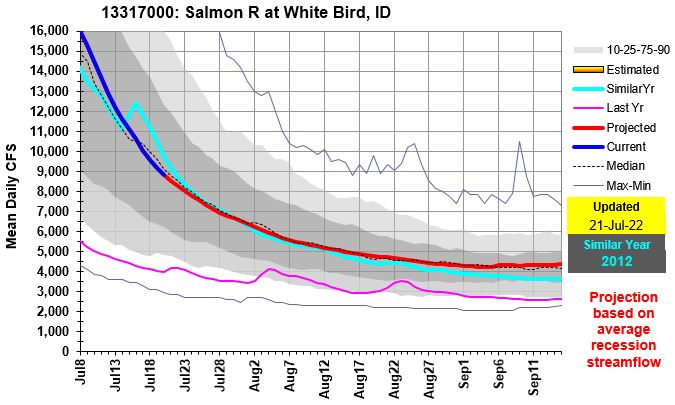
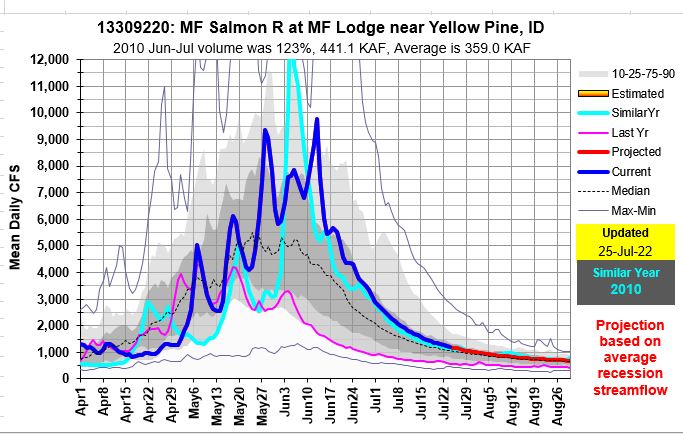
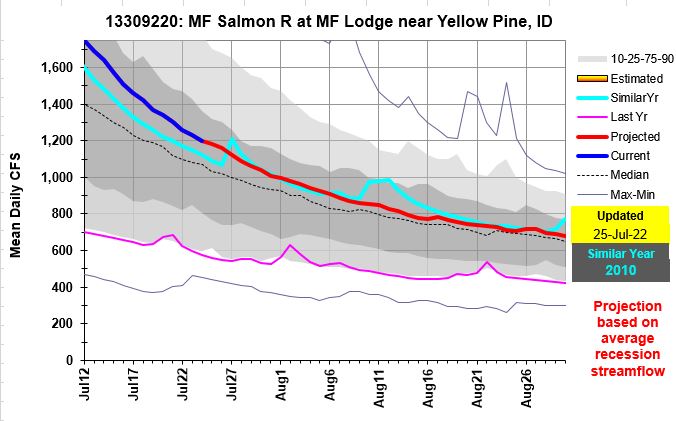
Looking at average flows. Very similar to 2012 and much better than last year, 2021. With the dry summer weather here, and I have not seen any indicators that precipitation will change to wetter or even normal. Expect this year to drop faster than 2012 until late summer rain occur or cooler temperatures arrive to reduced water up take by vegetation. You can see the long term average trying to increase in September.